Organic hydroponics is one of those phrases that sparks debate before anyone defines it. In practice, people use it in two ways: to ask whether hydroponically grown crops can be certified “organic,” and to describe hydroponic systems run with inputs and methods that align with organic principles (even if no certification is pursued). Both senses matter for operators, buyers, and auditors.
This explainer separates certification status (which is jurisdiction‑dependent) from organic‑aligned practice (which any grower can implement). It also offers practical guardrails for vertical tower systems so you can evaluate feasibility, risk, and next steps with your team.
Key takeaways
“Organic hydroponics” has two lenses: certification (label use allowed or not, depending on the jurisdiction) and practice (using organic‑aligned inputs and methods).
United States: Under the USDA National Organic Program (NOP), hydroponic and aquaponic operations may be certified when they meet all organic regulations; see the NOP’s 2019 memo allowing container/hydroponic certification and later AMS communications confirming ongoing attention to this category.
European Union: Regulation (EU) 2018/848 prohibits certifying hydroponic (soilless) crop production as organic; the Commission’s FAQ states this explicitly.
Whether or not you seek certification, operators can adopt organic‑aligned practices: choose permitted inputs, manage pH/EC carefully, emphasize prevention‑first IPM, use allowed sanitizers correctly, and maintain audit‑ready records.
Expect tradeoffs: recirculating hydroponics often saves water compared with field systems, while energy intensity varies widely by climate, lighting, and system design. Validate numbers for your site and crop before making claims.
What “organic hydroponics” means (and what it doesn’t)
Working definition for this article: organic hydroponics refers to hydroponic crop production that either (a) achieves organic certification where regulations allow and all requirements are met, or (b) follows organic‑aligned inputs and practices without claiming certification where it is not available.
Common misconceptions to avoid:
If it’s hydroponic, it can’t be organic. Not universally true. In the United States, certification may be possible under current policy when all NOP requirements are met. In the European Union, it is not permitted under Reg. (EU) 2018/848.
If I use “organic nutrients for hydroponics,” my crops are automatically organic. Not true. Certification depends on the entire system (inputs, records, inspections) and on jurisdiction. Using allowed materials is necessary but not sufficient for the label.
Organic always means lower yield. Not necessarily. Yield depends on genetics, environment, nutrition, and operations. Avoid blanket assumptions; measure your results over time.
Compliance snapshot: US vs EU
United States (USDA NOP): The NOP has stated that container systems—including hydroponic and aquaponic—may be certified organic when the certifier determines the system complies with the Organic Foods Production Act and USDA organic regulations. See the NOP’s memo “Certification of Organic Crop Container Production” (June 3, 2019), which affirms this allowance, and note that AMS has continued to address containers/hydroponics in recent communications to stakeholders. Sources: the 2019 NOP memo and AMS’s Fall 2024 response to the NOSB, which references containers/hydroponics as an active policy/enforcement topic. Read: the USDA AMS memo on container crop certification (2019) and the AMS NOP response to the NOSB (Fall 2024).
European Union (Regulation (EU) 2018/848): Hydroponic (soilless) crop production cannot be certified organic. The European Commission’s “Frequently asked questions on organic rules” (2023) states this explicitly with reference to the regulation’s soil‑related plant production principles. Read: the Commission’s organic rules FAQ (2023).
Why this matters: If you operate in the US, you may pursue certification through an accredited certifier with a complete Organic System Plan (OSP). If you operate in the EU, you should not represent soilless crops as organic; instead, consider communicating sustainability attributes (traceability, pesticide strategy, water management) without the organic label.
Why operators consider organic‑aligned hydroponics
Many vertical and greenhouse teams pursue organic‑aligned practice—whether or not they seek certification—for three reasons:
Market trust and procurement fit. Some buyers prefer operations that follow organic principles, even when the formal label is unavailable.
System discipline. Organic‑aligned inputs and documentation routines often improve operational hygiene, traceability, and team communication.
Sustainability goals. Recirculating hydroponics typically reduces water withdrawals compared with many field irrigation systems, while energy intensity can increase depending on lighting, HVAC, and climate. The net footprint depends on local energy mixes, equipment efficiency, and crop selection. Where hard numbers are needed, use site‑specific measurements or authoritative studies.
Here’s the deal: treat broad claims (“95% water savings,” “lower carbon than field”) as hypotheses to test and verify for your specific context before marketing them.
A tower‑focused playbook (inputs, control, hygiene, and records)
The following guardrails apply to many vertical tower hydroponic operations. Always confirm details with your certifier (US context) and your local regulations.
Inputs and sourcing
Favor permitted materials if you pursue USDA organic hydroponics certification. The Organic Materials Review Institute (OMRI) listings can help screen fertilizers and crop protection products, but final acceptance rests with your certifier.
For “organic nutrients for hydroponics,” verify: ingredient sources, label claims, and compatibility with your fertigation equipment (clogging risk, solubility, biofilm tendency). Keep product labels and Safety Data Sheets (SDS) on file.
Growing media: Common substrates include coco coir and inert options; acceptance varies by certifier and use. Pre‑clear media choices and any additives.
Solution control: pH and EC
For leafy greens in towers, a practical starting point is pH 5.8–6.2 and EC around 1.4–1.8 mS/cm, then adjust by cultivar and stage. Extension sources emphasize similar ranges for salad greens and lettuce. See guidance on lettuce in small hydroponic systems from UF/IFAS and general pH/EC ranges from UF/IFAS and Cornell.
Calibrate pH/EC sensors routinely; log readings daily (or per batch) and note adjustments with time, operator initials, and lot numbers of any inputs added.
IPM (integrated pest management)
Prevention first: sanitation, airflow management, plant spacing, and exclusion screens.
Monitoring: standardized scouting routes and frequencies; use sticky cards and visual inspections; keep threshold‑based action plans.
Interventions: biological controls and biopesticides must align with the National List and your certifier’s guidance (US). Record every application with product, rate, and REI/PHI where relevant.
Sanitation and allowed sanitizers (U.S. context)
Prioritize mechanical cleaning (drain, rinse, scrub) before chemical sanitizers.
Chlorine materials are permitted for certain uses under NOP guidance; comply with label directions and Safe Drinking Water Act residual limits where applicable, and rinse when required per use site. See NOP 5026 for details.
Hydrogen peroxide and peracetic acid are commonly used in CEA for surfaces and certain water applications when allowed; ensure concentrations and uses match regulations and your OSP. Keep sanitizer labels and mix logs.
Records and the Organic System Plan (OSP)
Maintain an audit‑ready trail:
Inputs: approved product list, supplier attestations, OMRI references (if any), lot numbers.
Nutrient management: recipes, pH/EC logs, change‑out schedules, calibration records.
Sanitation: schedules, chemicals used, concentrations, contact times, verification checks.
IPM: scouting logs, thresholds, actions taken, outcomes.
Harvest/traceability: batch IDs, dates, destinations, mass balance.
Operator checklist (printable)
Verify all inputs against NOP rules and your certifier’s approvals.
Keep a current OSP and train staff on logbook expectations.
Calibrate and log pH/EC sensors; version your nutrient recipes.
Prevent biofilm: schedule line cleaning and document sanitizer use.
Review records monthly to catch gaps before inspection.
Example: a brief industry reference
Disclosure: SPRINGS FAITH is our product.
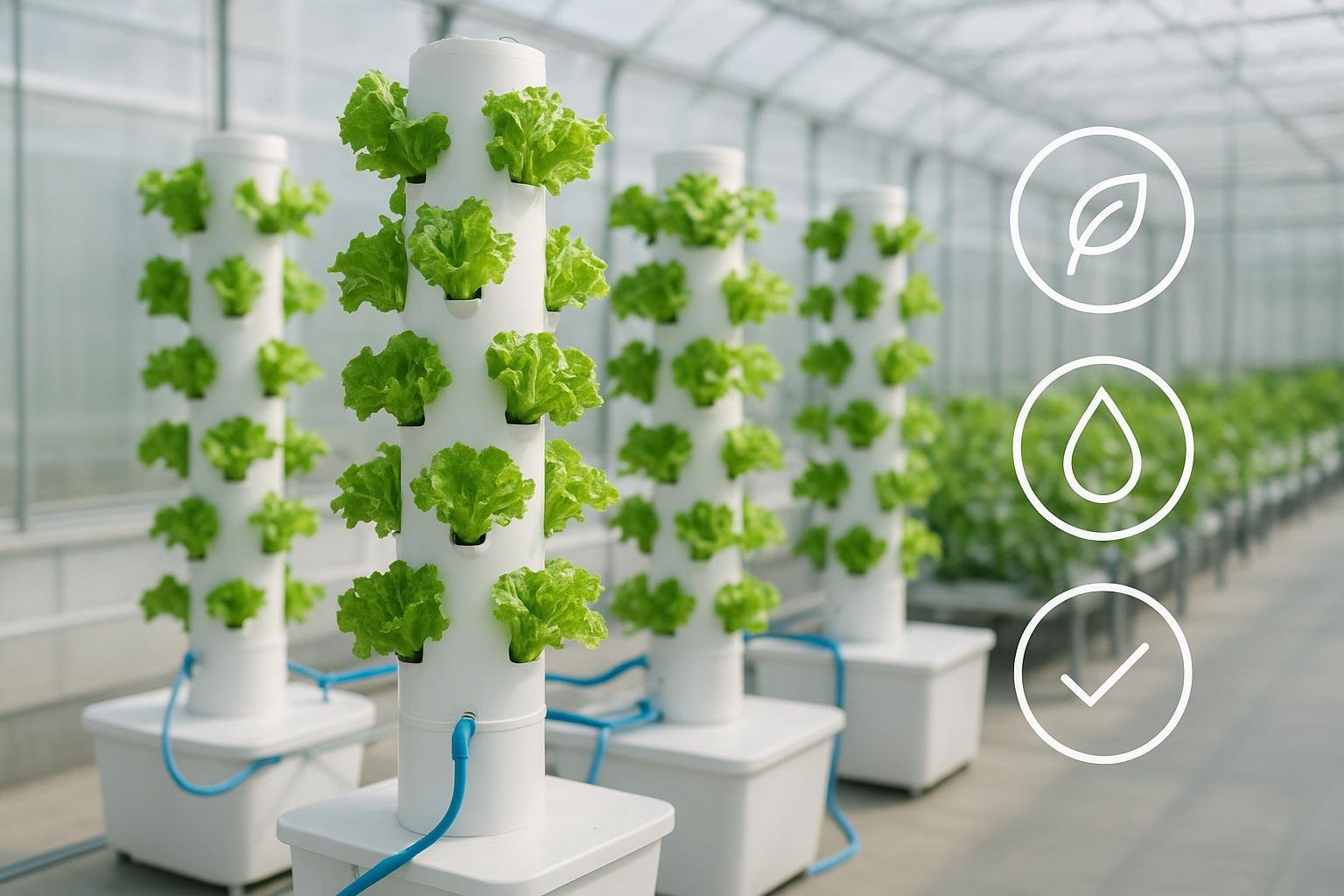
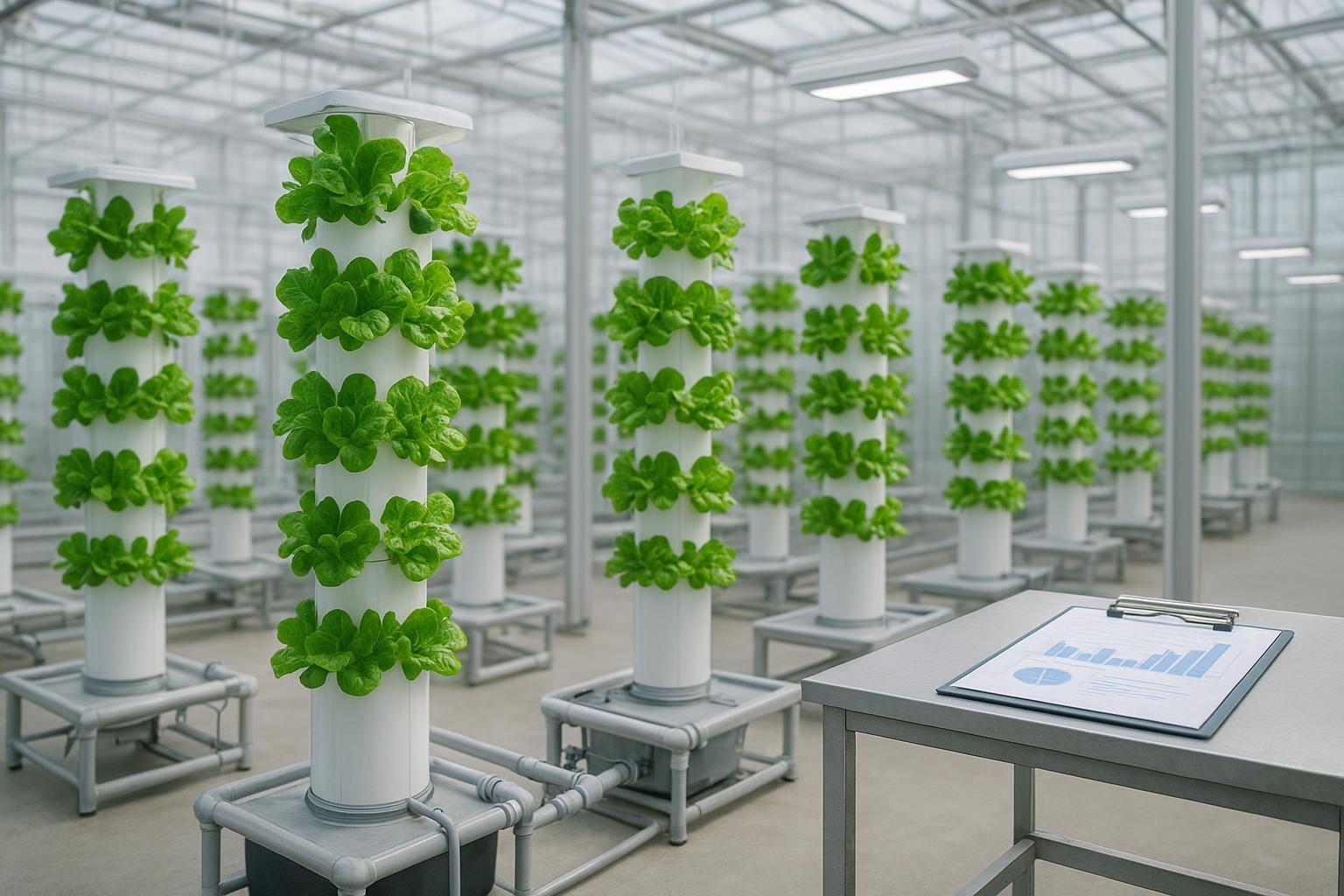
On many commercial tower farms, a modular, recirculating tower array is used to move nutrient solution from a base reservoir to the top of each column and back. In practice, teams that pursue organic‑aligned operation pair such towers with pre‑vetted inputs, tight pH/EC control, prevention‑first IPM, and a documented cleaning cadence. This configuration can support consistent leafy greens and herbs while keeping records inspection‑ready. For an overview of tower‑based systems as a category, see SPRINGS FAITH’s site: https://tower-farms.com/.
Advanced notes: biological inputs and sustainability metrics
Biological nutrient strategies: Some operators trial microbial inoculants and enzymatic products intended to improve nutrient availability or reduce organic residue accumulation in lines. Acceptance varies; clear all such inputs with your certifier and validate effects with side‑by‑side trials.
Sustainability accounting: If buyers request metrics, collect primary data (water in/out, kWh by subsystem, yields) and use recognized frameworks. Life‑cycle assessments (LCAs) for vertical leafy greens show wide ranges in energy intensity and emissions; results hinge on lighting efficacy, HVAC COP, climate, and grid mix. Avoid universal claims; report your measured numbers.
Next steps and authoritative resources
Read the USDA NOP’s memo affirming the eligibility of container/hydroponic systems for certification (2019) and review AMS’s more recent communication acknowledging ongoing enforcement/consistency work.
If you’re in the EU, review the Commission’s organic rules FAQ that states hydroponics cannot be certified organic under Regulation (EU) 2018/848.
Build your Organic System Plan using the USDA AMS overview, including input lists, monitoring protocols, sanitation SOPs, and traceability.
For pH/EC guardrails on leafy greens, consult UF/IFAS and Cornell CEA guidance and then tune to your varieties and environment.
For sanitizer use under organic rules, study NOP 5026 and match label directions, concentrations, and rinsing requirements.
Key sources to start with:
USDA AMS — Certification of Organic Crop Container Production (2019): https://www.ams.usda.gov/sites/default/files/media/2019-Certifiers-Container-Crops.pdf
USDA AMS NOP — Response to the NOSB (Fall 2024): https://www.ams.usda.gov/sites/default/files/media/NOPResponsetoNOSB__Fall2024.pdf
European Commission — Frequently asked questions on organic rules (2023): https://agriculture.ec.europa.eu/system/files/2023-11/organic-rules-faqs_en.pdf
USDA AMS — Organic System Plan overview: https://www.ams.usda.gov/services/organic-certification/organic-system-plan
NOP 5026 — The Use of Chlorine Materials in Organic Production and Handling: https://www.ams.usda.gov/sites/default/files/media/5026.pdf
UF/IFAS — Growing Lettuce in Small Hydroponic Systems (HS1422): https://edis.ifas.ufl.edu/publication/HS1422
Cornell CEA/CALS — Guide to Home Hydroponics for Leafy Greens: https://cea.cals.cornell.edu/files/2020/05/Guide-To-Home-Hydroponics-For-Leafy-Greens.pdf
Short FAQ
Q: Can I market hydroponic greens as organic in the US? A: Potentially, yes—if an accredited certifier approves your operation under USDA NOP rules. You must meet all requirements (inputs, OSP, inspections, records). The allowance for container/hydroponic systems is reflected in the NOP’s 2019 memo; work closely with your certifier.
Q: What about the EU? A: In the EU, hydroponic (soilless) production cannot be certified organic under Regulation (EU) 2018/848, as stated in the Commission’s FAQ.
Q: If I don’t pursue certification, is “organic hydroponics” still meaningful? A: As a certified claim, no. As a practice descriptor, yes—if you mean organic‑aligned inputs and SOPs. Be precise in marketing language and avoid implying certification where it doesn’t exist.
A final note: Policies can evolve and certifier interpretations differ. Before committing to labels or packaging, verify with your accredited certifier and document your decisions in your OSP.
Related Posts
 Hydroponic vs Aeroponic Towers (2026): Which System Is Better for Your Plants?
 What Can You Grow in a Hydroponic Tower? 15 Best Plants for Vertical Growth
 Hydroponic Tower Cost Analysis: Is It Worth the Investment? (Plus DIY Options)