

With a hydroponic tower garden, you can effortlessly grow organic lettuce, vegetables, herbs, and fruits at home. This hydroponic system requires no soil, avoiding any mess — it’s just pure clean water and lights. The setup is simple and maintenance is minimal thanks to automated watering and lighting. Taking up only three square feet of space, this vertical garden offers a long-lasting, sustainable source of fresh food for your family.
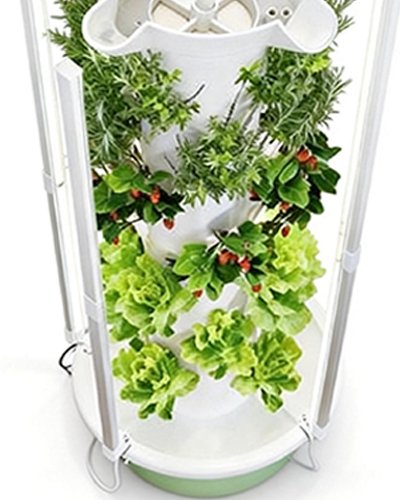
SPRINGS FAITH Hydroponic Tower can be used indoors or outdoors, flexibly adapting to seasonal changes. Since the SF Hydroponic Tower is portable, you can place it outside during mild seasons and bring it indoors when temperatures become too high or too low. You can also move the hydroponic tower outdoors based on different plant needs. For instance, plants requiring pollination—like cucumbers and tomatoes—may thrive better outside. Bees will fly among tomato blossoms to aid pollination, and gentle outdoor breezes also facilitate pollination. As seen in our photos, the GX Hydroponic Tower grows exceptionally well outdoors!
When placing the SF hydroponic tower outdoors, no LED grow lights are needed—sunlight provides the full spectrum required by plants. If moving the tower from indoors to outdoors, you can store the LED grow lights temporarily. When you bring the hydroponic tower back indoors, you can use them again. Thanks to its industry-leading 2mm thick walls, the SPRINGS FAITH hydroponic tower boasts a sturdy, durable structure that easily withstands outdoor conditions. Even with prolonged exposure to summer sunlight, it won’t fade or discolor. The ability to use SF both indoors and outdoors truly highlights the versatility of this hydroponic growing system.
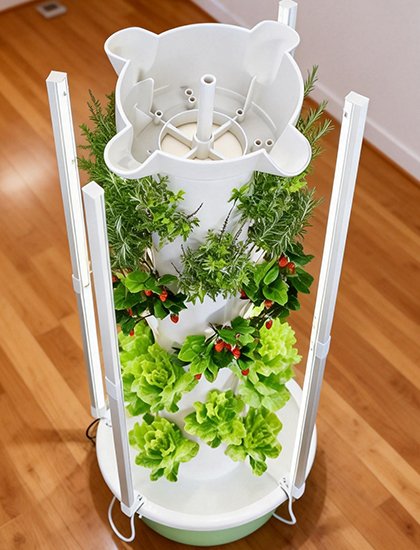
Vertical gardens excel at saving space—even outdoors! As our photos demonstrate, this compact footprint supports remarkable growth. Planting the same number of plants in traditional soil would require 50 to 60 square feet of space. Compared to traditional gardening, the SF Hydroponic Tower Garden is unmatched in space efficiency. Moreover, it achieves remarkable water savings—up to 95%! In soil-based planting, most water seeps away underground, whereas the SF Hydroponic Tower continuously recycles water through its closed-loop system.
This growing system is based on hydroponic technology, a soil-free method that delivers water, oxygen, and nutrients directly to plant roots. Instead of growing in soil, plants are supported in a vertical structure while nutrient-rich water is circulated through the system at regular intervals to promote healthy root development.
In a hydroponic tower, plant roots are not constantly submerged in water. The system allows roots to receive both moisture and access to air, which is essential for efficient oxygen absorption. This balanced environment supports stronger roots, improved nutrient uptake, and faster, more consistent plant growth compared to traditional soil gardening.
Hydroponic tower systems use controlled watering cycles to ensure plants receive exactly what they need, when they need it. By recirculating water throughout the tower, hydroponics dramatically reduces water waste while maintaining optimal growing conditions. This efficient and sustainable approach makes hydroponic technology ideal for home gardening, indoor growing, and space-saving vertical gardens.
One of the standout advantages of a hydroponic tower is its ability to operate with a water pump connected to an automated timer. This allows you to customize watering cycles based on each stage of plant growth, whether your vegetables and herbs require shorter or longer daily run times. Once the schedule is set, the system works automatically—eliminating the need for manual watering and making plant care simple and consistent.
Another major benefit of hydroponic towers is their exceptional water efficiency. In traditional soil-based agriculture, the majority of water never reaches plant roots, with less than 5% actually absorbed. Most of it is lost into the ground and cannot be recovered. In contrast, hydroponic tower systems continuously reuse water, which is why they can operate using up to 95% less water than conventional farming methods.
Water in a tower garden is delivered directly to the root zone, ensuring targeted hydration. Any excess water flows back into the reservoir at the base of the system, where it is pumped upward again and reused throughout the tower. This closed-loop circulation significantly reduces water waste while lowering overall growing costs. Because of this efficiency, hydroponic towers are especially well suited for regions with limited water resources, including dry climates, desert environments, and areas such as the Middle East, where water conservation is essential.
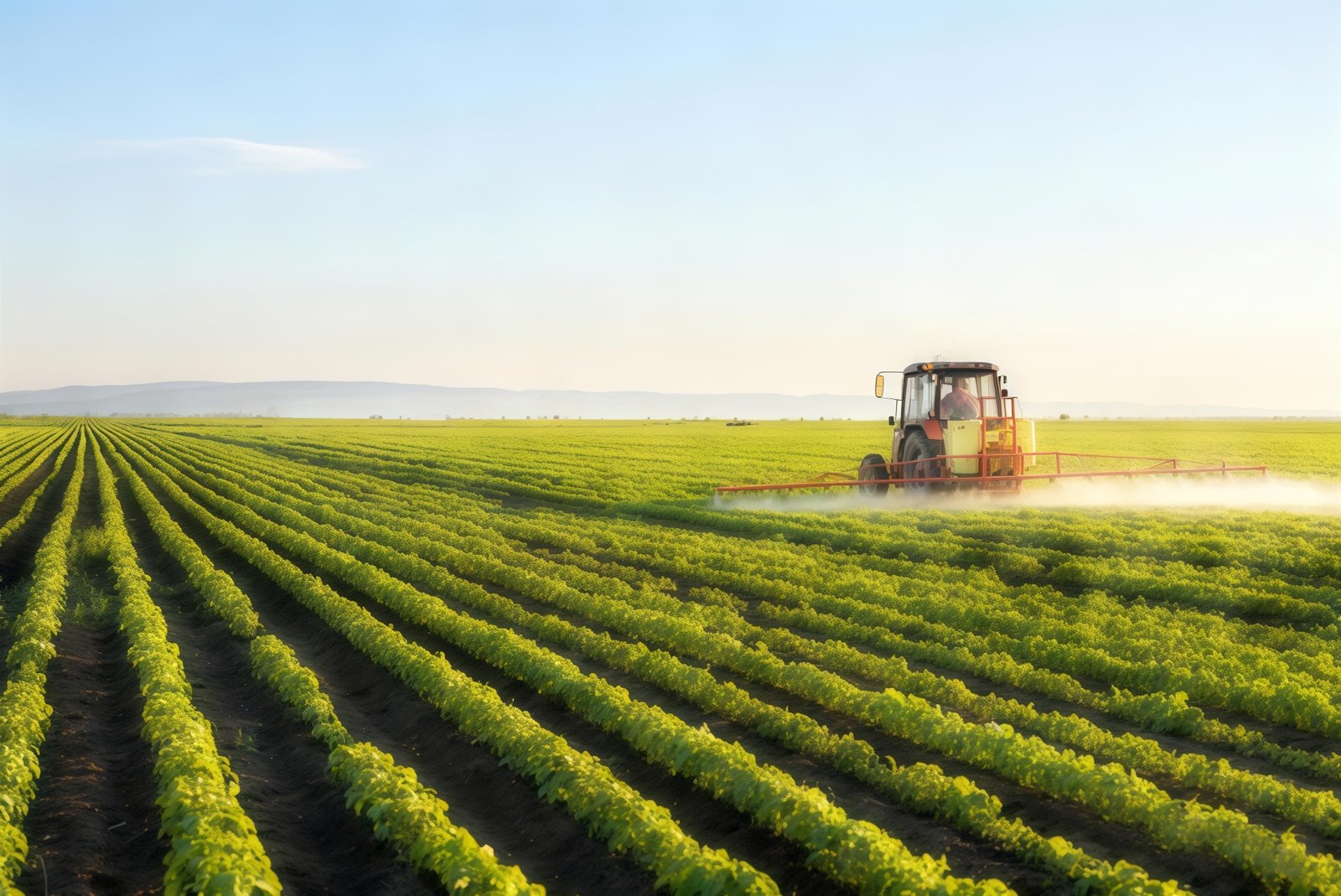
Traditional agriculture often relies on expansive farmland, where crops are spread across wide, open areas. In these setups, a single lettuce plant can occupy an entire square foot of ground. This horizontal growing approach demands enormous stretches of land and quickly adds up to large-scale land use when producing food in volume.
Tower gardens are designed to grow upward rather than outward. Within an area of less than three square feet, it’s possible to cultivate 24 heads of lettuce or even more. This vertical approach delivers up to eight times the yield per square foot, meaning tower gardens not only conserve water but also dramatically reduce the amount of land required for growing food.
Vertical gardening is especially attractive for those without traditional yard space. In densely populated cities, many people live in apartments, condominiums, or townhomes where outdoor space is extremely limited. Even balconies, when available, must serve multiple purposes—leaving room for furniture, cooking equipment, or seating. As a result, every bit of usable space matters.
Living in a condo or apartment doesn’t mean giving up on growing fresh food. A hydroponic tower can be placed on a balcony and produce a generous supply of vegetables and herbs while using roughly the same footprint as a single chair. If the system includes grow lights, it can also be moved indoors, allowing year-round growing regardless of outdoor conditions.
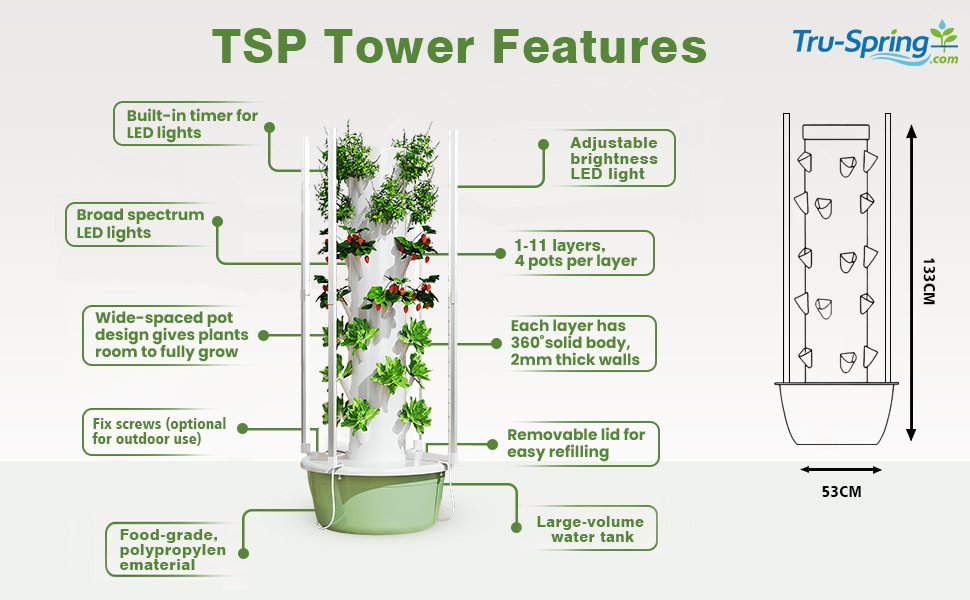
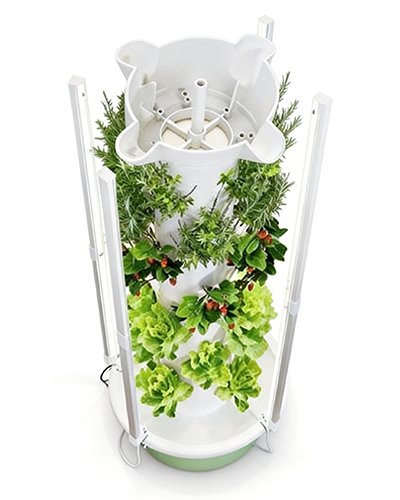
From a young age, we learn that plants need two critical elements to thrive: water and sunlight. Sunlight is essential because it drives photosynthesis, the process by which plants convert light into energy. Without sufficient light, plants cannot grow properly. When growing outdoors, sunlight is abundant and freely available, but indoor gardening presents unique challenges. Many indoor spaces do not receive enough natural light for plants to flourish. This is where grow lights become invaluable, providing the spectrum of light necessary for healthy plant growth regardless of outdoor conditions.
Before the 2000s, indoor grow lights were often expensive and inefficient. High-pressure sodium bulbs, for example, could cost upwards of $50 each and consumed a large amount of electricity. Breaking one meant a costly replacement, and running these lights for hours a day could significantly increase energy bills. The combination of high upfront costs, frequent replacements, and energy consumption made indoor gardening a challenge for many enthusiasts.
Around 2008, the introduction and widespread adoption of LED lighting technology revolutionized indoor gardening. LEDs are much cheaper to manufacture, consume a fraction of the electricity compared to traditional bulbs, and have exceptionally long lifespans—often tens of thousands of hours, with some models lasting up to 100,000 hours. Their efficiency and durability make them ideal for hydroponic tower gardens, allowing gardeners to maintain consistent lighting for their crops without worrying about frequent replacements or high energy costs. By the 2020s, LEDs have become the standard not only in gardening but also in homes, offices, vehicles, and commercial spaces, largely replacing incandescent and high-energy bulbs.
Most modern hydroponic towers offer models with optional LED grow lights. If you have a location outdoors with plenty of sunlight, your tower can thrive naturally in that environment. Indoors, the best locations are bright spots, such as near south-facing windows in the northern hemisphere. However, for indoor areas with limited natural light, a tower equipped with grow lights ensures your plants receive the consistent, adequate light they need for optimal growth. These lights can provide a full spectrum similar to sunlight, supporting everything from leafy greens to fruiting crops.
To maximize growth efficiency, it’s highly recommended to use a timer to automate the lighting schedule. For instance, you might set the lights to turn on at 7 a.m. and off at 9 p.m., giving your plants a consistent daily cycle. For indoor setups, a general rule is 12–16 hours of light followed by 8–12 hours of darkness. Maintaining a consistent daily routine helps plants develop predictable growth patterns, as they respond to light cues. Darkness periods are essential for plant metabolism and health, allowing energy to be properly utilized. It’s also important to note that not all plants have the same lighting requirements. Fruiting crops such as tomatoes, peppers, and strawberries require more light than leafy greens like lettuce, spinach, or herbs. Adjusting the light intensity or duration according to the crop type can significantly improve yield and overall plant health.
With this combination of hydroponic towers, LED grow lights, and automated timers, indoor gardeners can enjoy a reliable, low-maintenance growing system. Plants receive exactly the right amount of light and water without daily manual intervention, leading to healthier roots, faster growth, and more abundant harvests. This technology makes it possible to grow fresh, organic vegetables, herbs, and fruits year-round, regardless of outdoor sunlight availability, making hydroponic tower gardening accessible and convenient for both urban and indoor settings.
Light Coverage – Ensure that your grow lights provide sufficient illumination for all areas of the tower where plants are growing. Proper coverage should reach both the top and bottom levels, as well as all sides, so that every plant receives adequate light.
Light Adjustability – Check whether the lights can rotate or pivot around the tower, ideally 360 degrees. This allows you to fine-tune the direction of the light for different plant locations. Additionally, adjustable height is important: you can move the lights closer to young seedlings and gradually increase the distance as plants mature to optimize growth.
Lighting Spectrum – Sunlight may appear white to our eyes, but in reality it contains all the visible colors of the spectrum simultaneously. Plants naturally grow under this broad-spectrum light, which is essential for healthy photosynthesis. When gardening indoors, it’s important that your grow lights mimic this full-spectrum quality, providing a balance of all colors to support proper plant development. Broad-spectrum lighting ensures that your indoor plants receive energy similar to natural sunlight, promoting stronger, healthier growth throughout the tower.
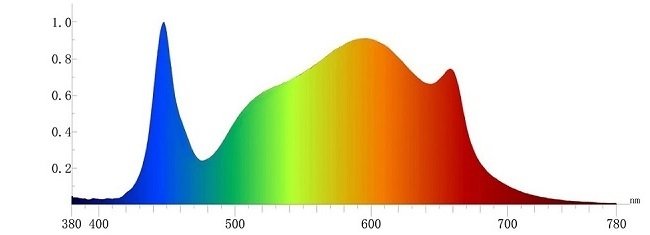
Are White LED Lights Broad Spectrum?
Yes, white LED lights do provide a broad spectrum, covering a wide range of wavelengths needed for plant growth. That said, different colors within the spectrum can be more effective at specific stages. For instance, blue light supports early vegetative growth, while red light is especially beneficial during flowering and fruiting. Professional growers often adjust their lighting setups to increase blue or red light depending on the stage of plant development.
White LEDs are versatile and can serve as an all-purpose solution because they emit nearly the entire spectrum of light. However, at certain growth phases, they might not be as efficient as targeted lighting. To optimize results, growers sometimes supplement white LEDs with additional colors, most commonly red, to enhance flowering and fruit production. Thanks to LED technology, even home gardeners can now easily provide consistent, high-quality light for their indoor hydroponic gardens.
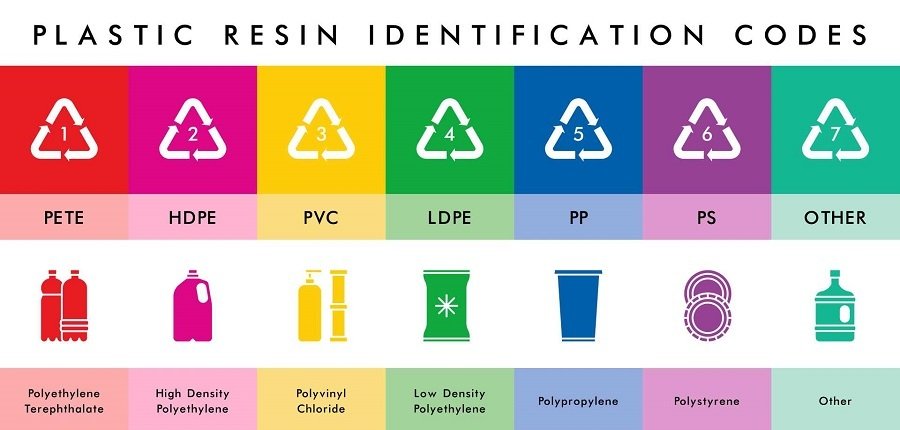
At first glance, a hydroponic tower might appear to be just a simple plastic structure. However, not all plastics are suitable for growing edible plants. Certain types are classified as food-safe and are approved by the FDA for contact with consumables. These plastics include:
#1 Polyethylene Terephthalate (PETE)
#2 High-Density Polyethylene (HDPE)
#4 Low-Density Polyethylene (LDPE)
#5 Polypropylene (PP)
When selecting a hydroponic tower, it’s important to verify the material and ensure it is made from one of these BPA-free, food-safe plastics.
About BPA: Bisphenol A (BPA) is a chemical found in some plastic products. Studies have shown that BPA can migrate into food and may have harmful effects on human health, including interference with cell growth and repair, impacts on fetal development, and links to inflammation, heart disease, and type 2 diabetes.
By choosing a hydroponic tower made from PETE, HDPE, LDPE, or PP, you can be confident that your system is safe for growing vegetables, herbs, and fruits, without exposure to BPA.
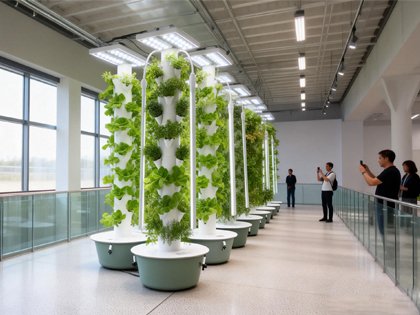
Considering all the advantages of hydroponic gardens, it’s natural to wonder whether this method represents the future of farming. The answer depends on perspective. For home micro farms, hydroponics is already a practical reality, and some might argue it has effectively arrived.
Hydroponic systems offer many benefits: automated watering and lighting, faster growth cycles, and soil-free cultivation. This allows you to harvest small batches of fresh, pesticide-free, non-GMO produce in weeks. A backyard isn’t required—you can set up a tower indoors or on a balcony, making it ideal for apartments, condos, and other urban spaces.
However, scaling hydroponics to industrial-level farming presents unique challenges. Traditional soil-based agriculture has been established for thousands of years, whereas hydroponics is still relatively young in comparison. Even with significant savings in water and land use, managing hundreds or thousands of towers efficiently is far more complex than running a single home system. While a few towers can be automated easily with timers, large-scale operations require careful planning, technical expertise, and infrastructure to maintain consistent growth across all units.
Setting up a hydroponic farm on an industrial scale requires a significant initial investment. Farmers need to purchase towers and shelving units, install an efficient water circulation system, and train staff to operate and maintain the equipment. Every component must be monitored more closely than in conventional outdoor farming, and additional electrical infrastructure is often necessary to manage water flow. For existing farms converting to hydroponics, substantial investment in traditional farming machinery may be rendered obsolete, adding to the overall cost.
As hydroponic technology continues to advance, it will be fascinating to observe its evolution and broader adoption. In arid and desert regions, industrial hydroponics has already proven successful, where water scarcity makes efficient systems economically worthwhile. Smaller farms around the world are increasingly exploring hydroponic techniques to improve yields and resource efficiency. In residential settings, hydroponic towers are especially appealing because they occupy minimal space while delivering rapid harvests. Over time, it will be interesting to see how hydroponics continues to expand across both commercial and home-based agriculture.
A hydroponic tower garden can grow a wide variety of plants, including leafy greens, herbs, strawberries, tomatoes, peppers, cucumbers, and other compact vegetables. It is ideal for plants with shallow root systems and works well both indoors and outdoors.
A hydroponic tower garden is designed to take up minimal space. Thanks to its vertical structure, it can support multiple plants while occupying less than one square meter, making it suitable for small indoor or outdoor areas.