
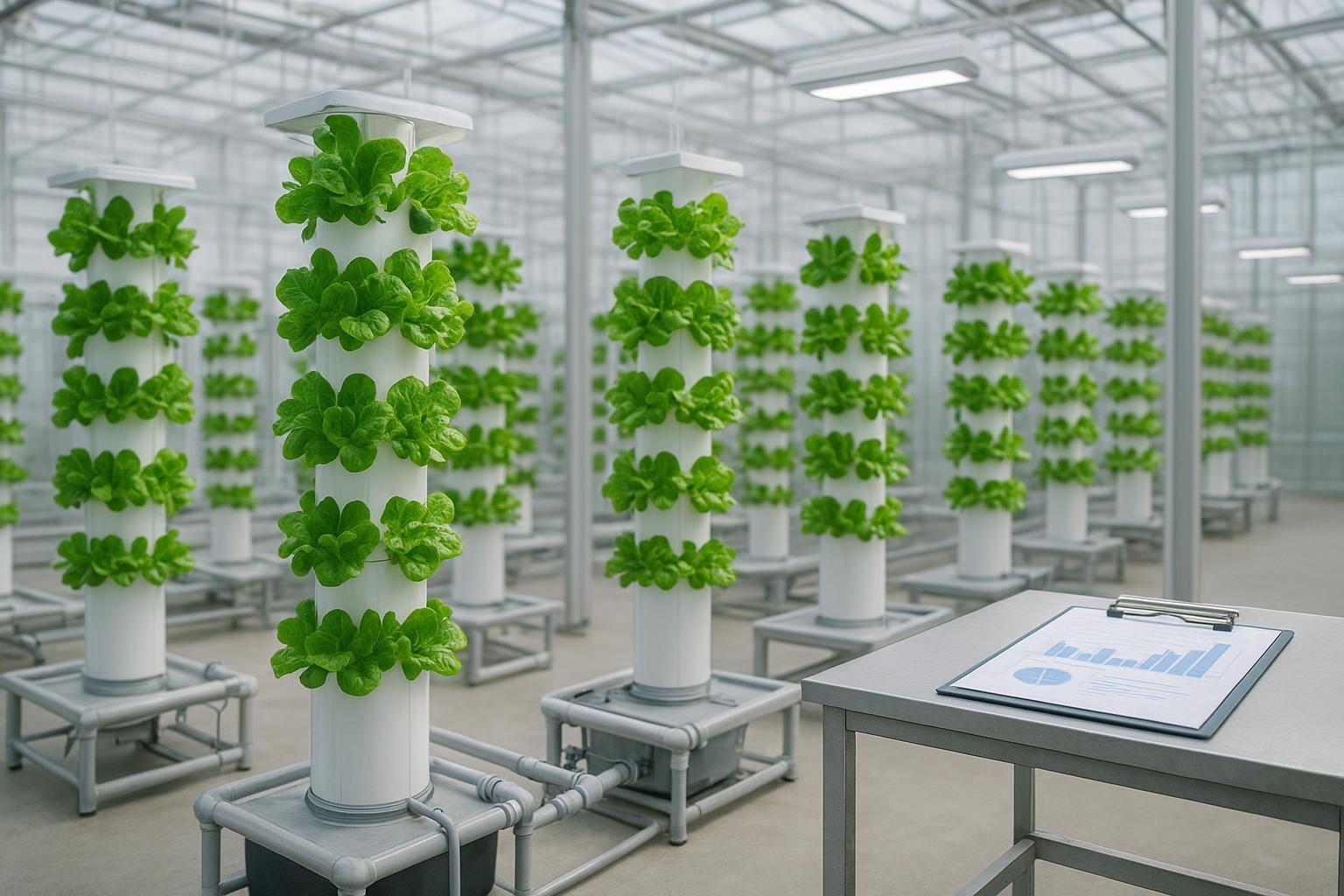
Understanding how hydroponic towers work is essential for anyone interested in modern, space-efficient growing. Although a hydroponic tower may look advanced, the underlying process is simple, logical, and highly efficient.
Hydroponic towers use vertical design, water circulation, and controlled nutrients to grow plants without soil. This article explains how hydroponic towers work step by step, how each component functions, and why this system is effective for both beginners and experienced growers.
What Is the Basic Principle Behind How Hydroponic Towers Work?
At the core of how hydroponic towers work is one simple idea:
plants do not need soil — they need water, nutrients, oxygen, and light.
In a hydroponic tower:
- Soil is replaced by a nutrient-rich water solution
- Roots are supported in small planting sites
- Water continuously circulates through the system
This approach allows plants to focus energy on growth rather than searching for nutrients.
How Water Circulation Works in a Hydroponic Tower
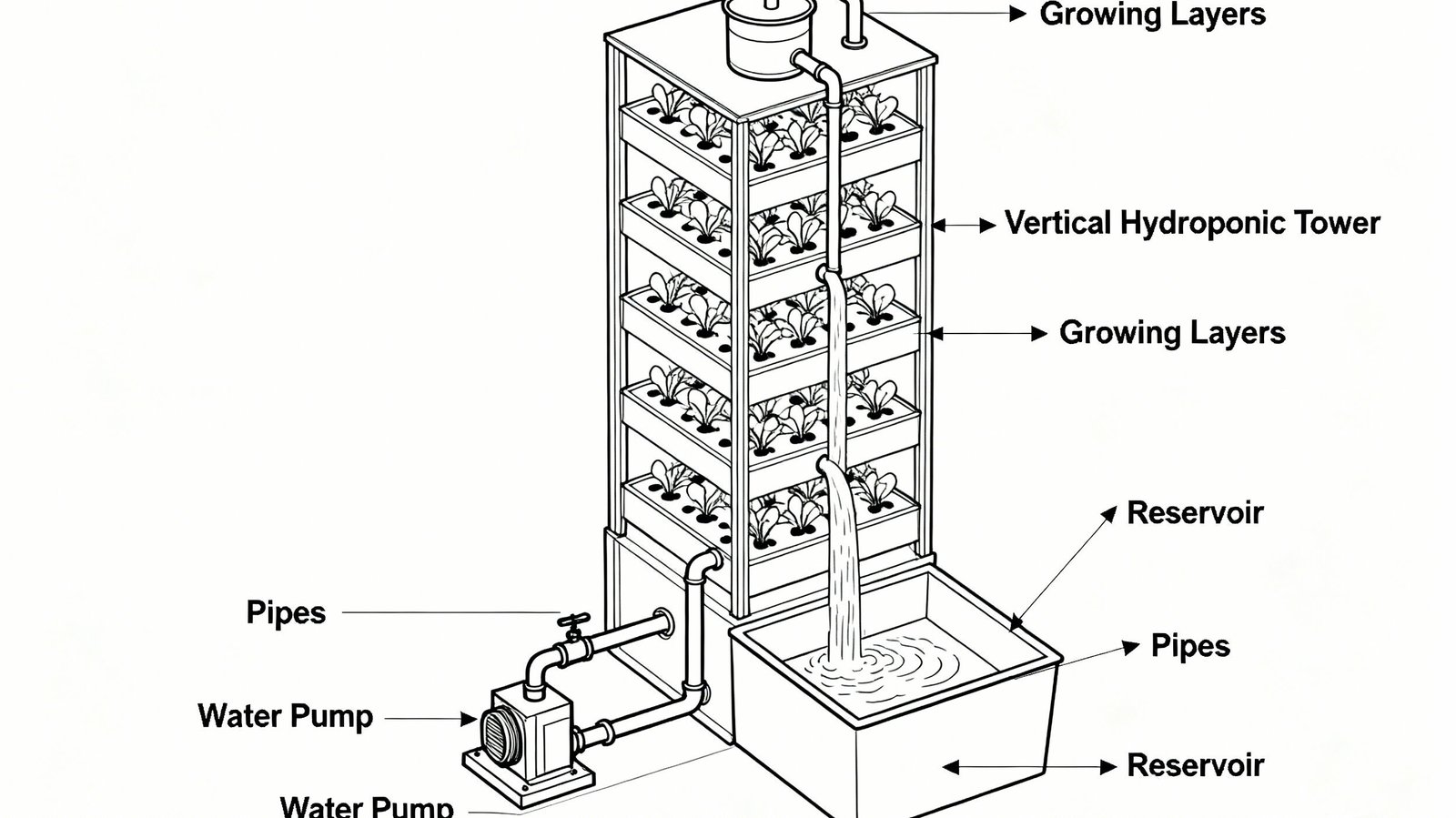
Water circulation is the foundation of how hydroponic towers work.
A typical system includes:
- A reservoir at the base of the tower
- A pump that moves water upward
- A vertical column that distributes water downward
The pump sends nutrient solution to the top of the tower. From there, gravity allows the water to flow down through each planting site, reaching plant roots before returning to the reservoir.
This continuous loop ensures plants receive consistent hydration and nutrition.
How Nutrients Are Delivered to Plants
Another key element of how hydroponic towers work is nutrient delivery.
Instead of nutrients being stored in soil, they are dissolved directly into the water. This allows:
- Precise nutrient control
- Faster absorption by plant roots
- Easier adjustment if deficiencies appear
Because nutrients are evenly mixed, each plant receives a balanced supply rather than competing with neighboring roots.
How Oxygen Reaches the Roots in a Hydroponic Tower
Oxygen plays a critical role in root health, and this is where hydroponic towers excel.
As water flows down the tower:
- Roots are briefly exposed to air
- Oxygen mixes naturally with moisture
- Roots receive constant aeration
This oxygen-rich environment encourages stronger root systems and reduces the risk of root rot, a common issue in overwatered soil gardens.
How Light Supports Plant Growth in Hydroponic Towers
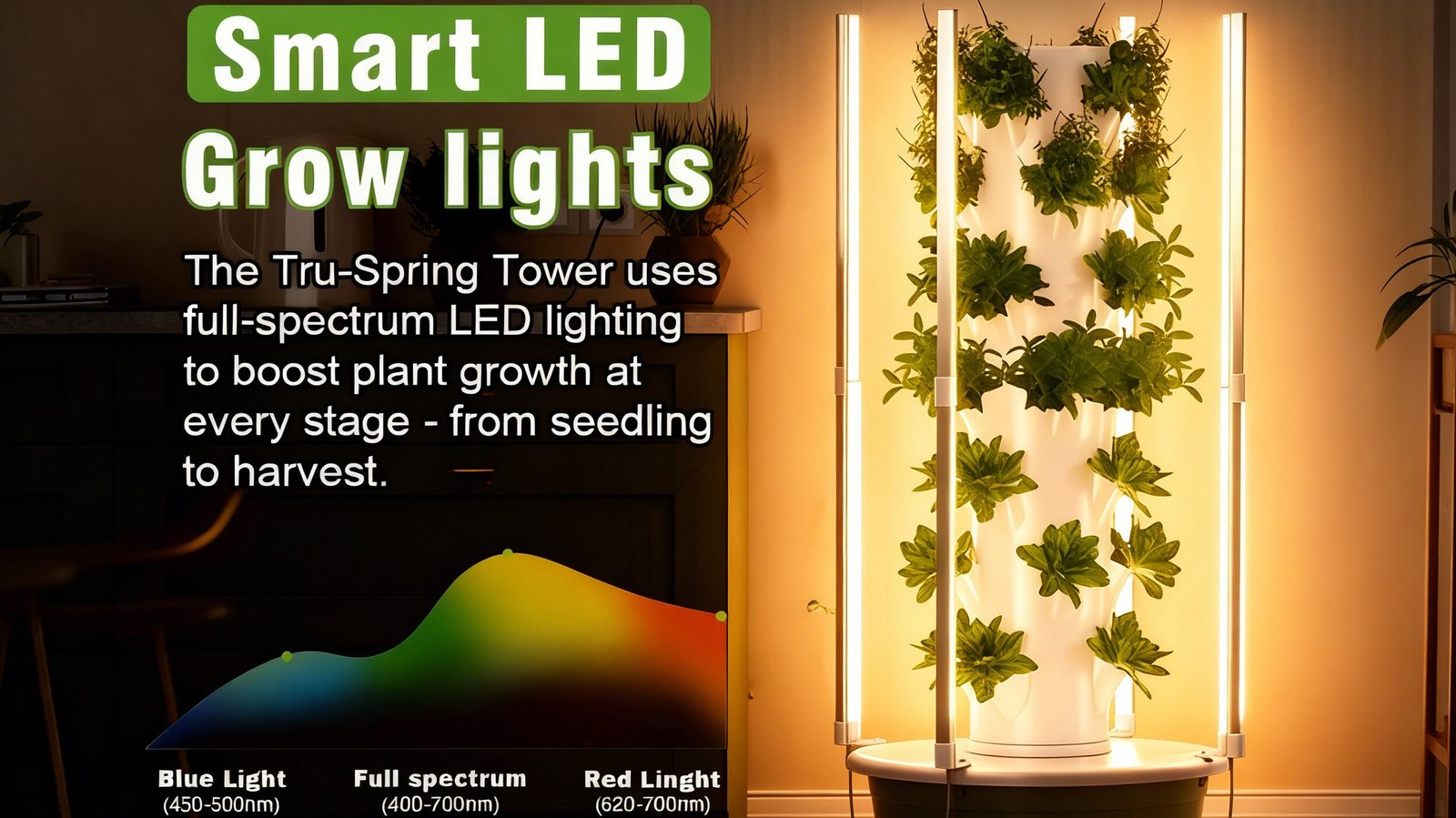
Light is another essential component of how hydroponic towers work.
Because plants are arranged vertically, each level must receive adequate light. Towers can be used:
- Outdoors with natural sunlight
- Indoors with artificial grow lights
Vertical spacing helps reduce shading, allowing light to reach more plants efficiently than traditional flat garden beds.
Why Hydroponic Towers Use Less Water Than Soil Gardening
One of the most important advantages of understanding how hydroponic towers work is recognizing their water efficiency.
Traditional soil gardening loses water through:
- Evaporation
- Runoff
- Deep soil absorption
In contrast, hydroponic towers reuse water through recirculation. Any unused solution flows back into the reservoir instead of being wasted.
This makes hydroponic towers especially suitable for regions with limited water resources.
How Maintenance Fits Into How Hydroponic Towers Work
Hydroponic towers are designed to be low-maintenance systems.
Routine tasks usually include:
- Checking water levels
- Monitoring nutrient concentration
- Cleaning the system periodically
Because the growing environment is controlled, there are fewer weeds and soil-borne pests compared to traditional gardening.
How Hydroponic Towers Work Compared to Soil-Based Systems
Understanding how hydroponic towers work becomes clearer when compared to traditional gardening.
Key differences include:
- No soil dependency
- Faster plant growth cycles
- Cleaner and more controlled environments
- Better space utilization
While soil gardening relies heavily on climate and soil quality, hydroponic towers provide consistency regardless of location.
Final Thoughts on How Hydroponic Towers Work
So, how do hydroponic towers work in practice?
They combine vertical design, water circulation, oxygen-rich roots, and precise nutrient delivery into a single efficient growing system.
By eliminating soil and optimizing plant conditions, hydroponic towers allow growers to produce fresh food in small spaces with less water and greater control.
Related Posts
 Hydroponic vs Aeroponic Towers (2026): Which System Is Better for Your Plants?
 What Can You Grow in a Hydroponic Tower? 15 Best Plants for Vertical Growth
 Hydroponic Tower Cost Analysis: Is It Worth the Investment? (Plus DIY Options)