
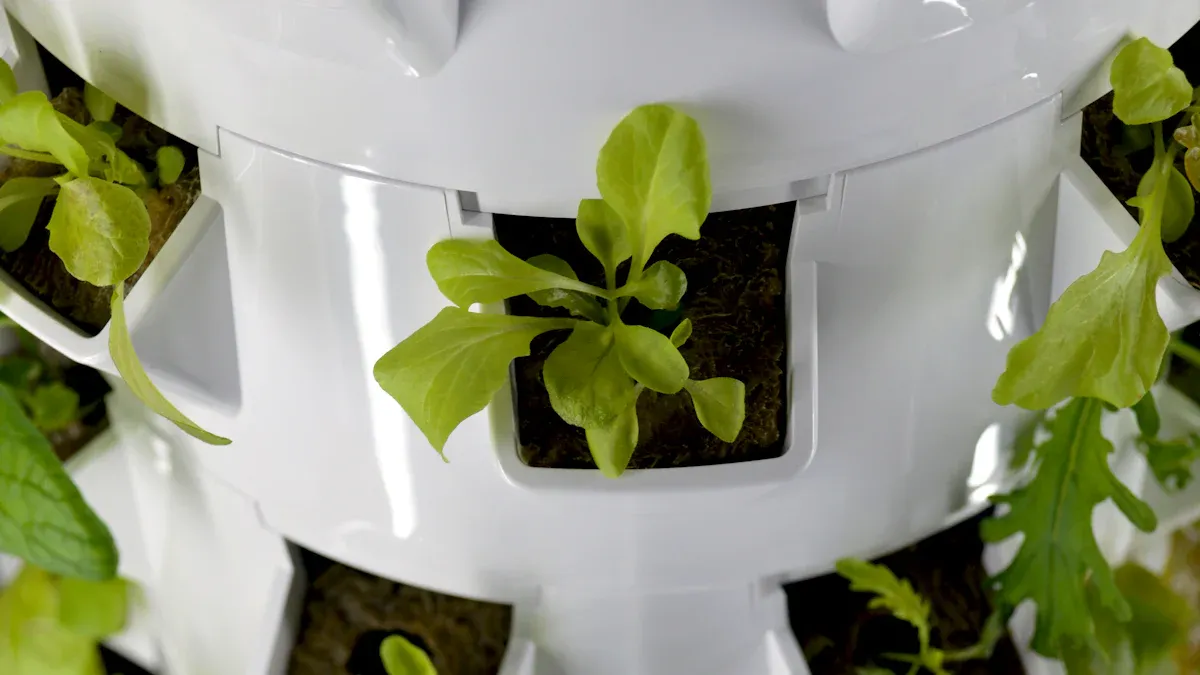
A hydroponic tower grows plants without using soil. The plants are stacked on top of each other. Water with nutrients is sent to the plants. You can use a Commercial Hydroponic Tower to grow up to 52 plants in a small area. This is a smart idea for cities and businesses. These towers have modular designs. You can add more units if you need them. Many farmers pick this system because it saves water. It also gives high yields all year long. Hydroponic towers now make up about 45% of the vertical farming market. You can see the yield difference in the table below:
Farming Method | Yield (kg FW·m−2) | Number of Plants per m² | Total Crop (kg) |
|---|---|---|---|
Vertical Farming System (VFS) | 13.8 | 20-fold higher | 3.8 |
Horizontal Hydroponic System (HHS) | 1.7 | Standard | 5.5 |
You might wonder how these systems work. You may want to know what benefits they give. You might ask how to set them up. You could also face some challenges. This guide will help you find clear answers for every step.
Key Takeaways
Hydroponic towers let you grow up to 52 plants. You only need a small space for this. This is great for farming in cities. These systems save water by recycling it. They use up to 90% less water than regular farms. You can grow crops all year. You control the temperature and light. This helps plants stay healthy in any season. Pick your crops carefully. Leafy greens and herbs do well in hydroponic towers. Root vegetables may not grow as well. Clean and check your system often. This stops clogs and diseases. It helps you get more crops. Buy good equipment and plan your budget. This helps you avoid money problems when farming. Automation tools help you run your system better. They save time and lower mistakes. Learn about local rules and food safety. This keeps your business safe and legal.
Commercial Hydroponic Tower Overview
What Is a Commercial Hydroponic Tower
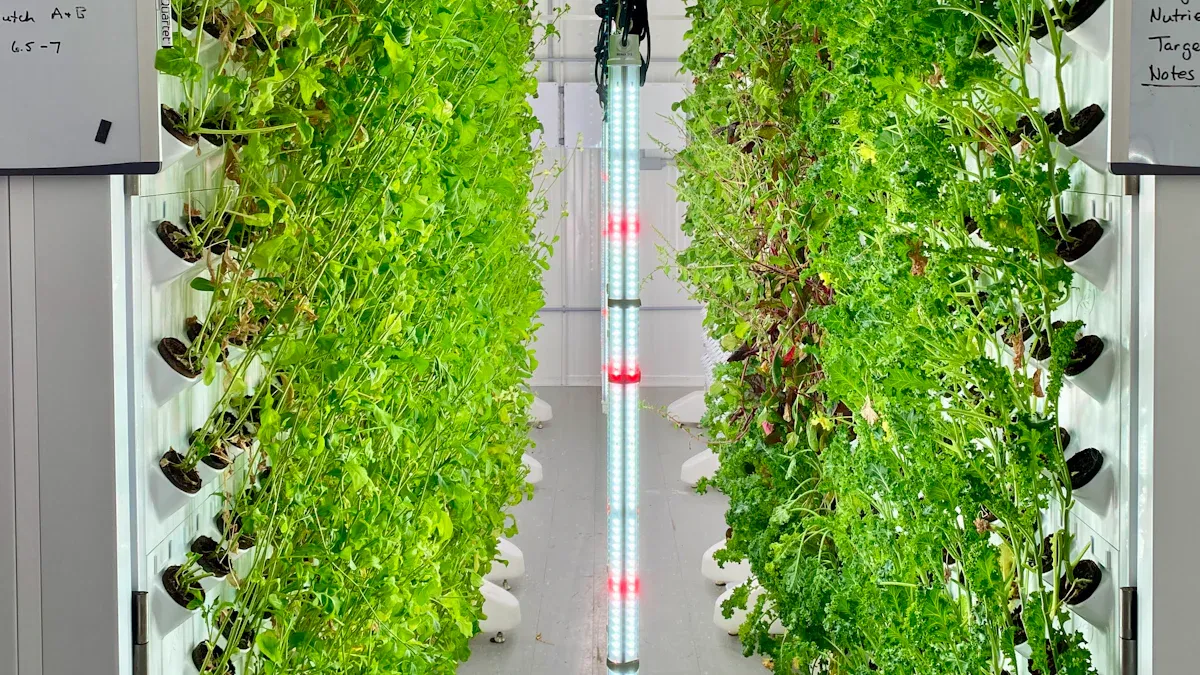
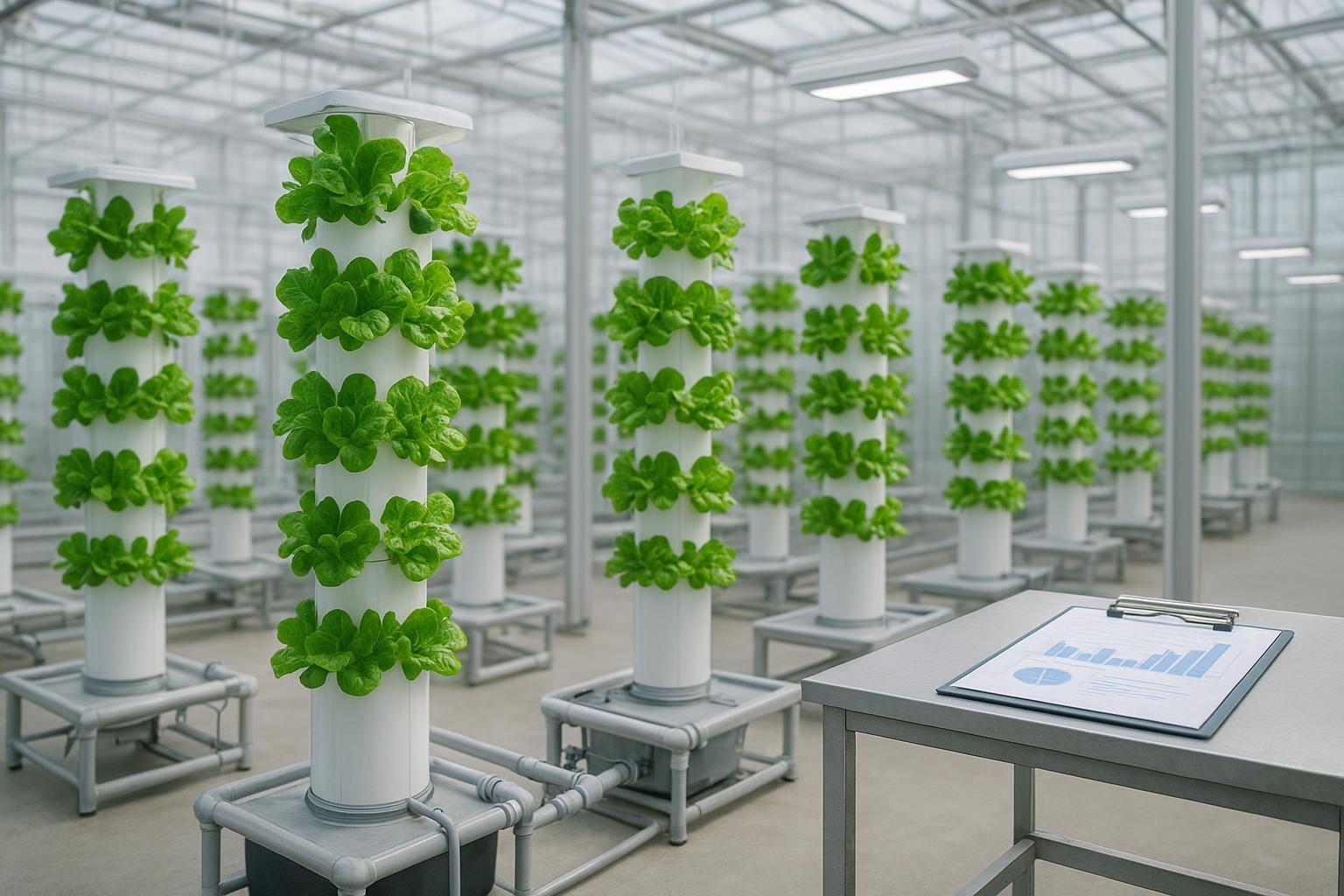
A Commercial Hydroponic Tower is a vertical system that lets you grow many plants in a small space. You stack plants in layers, so you use less floor area. Each tower can hold between 12 and over 50 plant sites, depending on the design and how much space you want between plants. You can grow leafy greens, herbs, or even small fruits. This system works well for businesses that want to produce fresh crops all year.
How It Works
You place seedlings into slots on the tower. Water mixed with nutrients flows through the system. The roots absorb what they need to grow. Pumps move the water up and down the tower. You control the timing and amount of water. The tower keeps the plants upright and gives each one enough light. You can use artificial lights indoors or sunlight outdoors. The system keeps the roots moist and healthy.
Modular Design & Plant Capacity
You can expand your Commercial Hydroponic Tower setup by adding more towers. This modular design makes it easy to grow your business. You start with one tower and add more as you need. You can also change the layout to fit your space. Modularity helps you scale up, maintain, and operate your farm with less effort.
You can choose towers with different plant capacities, from 12 to over 50 plants per unit.
You can expand your system step by step, which helps you manage costs.
You can customize the setup for your crops and your space.
You can replace or upgrade parts without changing the whole system.
Indoor vs Outdoor Use
You can use Commercial Hydroponic Towers both indoors and outdoors. Indoors, you control the temperature, humidity, and light. You use grow lights to give plants what they need. Outdoors, you use natural sunlight and fresh air. You may need to protect the towers from wind or rain. Both options let you grow crops in places where soil farming is hard.
Location | Light Source | Climate Control | Common Crops |
|---|---|---|---|
Indoor | LED grow lights | Full control | Leafy greens, herbs |
Outdoor | Sunlight | Limited control | Lettuce, strawberries |
Micro-Climate Creation
You create a micro-climate around your plants with a Commercial Hydroponic Tower. You control the air, water, and nutrients. You set the temperature and humidity to help plants grow faster. You can keep pests away and reduce disease. This control helps you get better yields and healthier crops.
Tip: You can use sensors to track temperature and humidity. This helps you adjust your system for the best results.
System Types & Key Components
Vertical Tower Systems
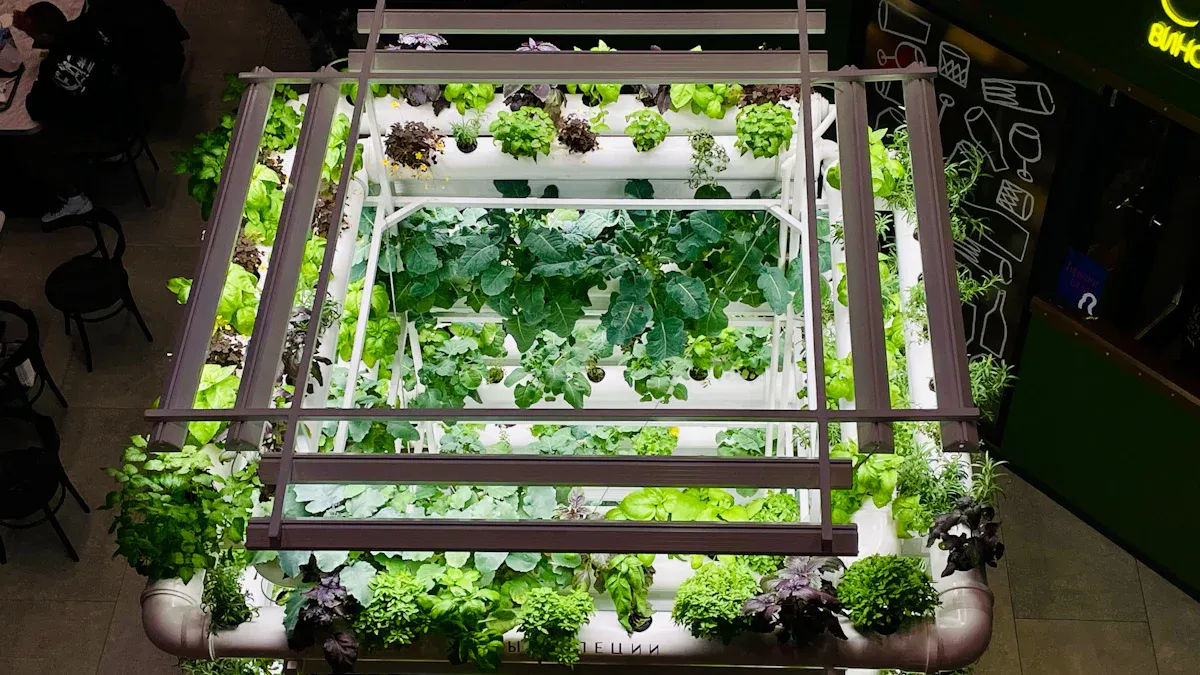
You can choose from several types of vertical tower systems for your farm. Each system stacks plants upward to save space. Some towers use round columns with slots for plants. Others use square or hexagonal shapes. You can find systems that work well for small spaces or large commercial farms. Most towers let you adjust the number of plant sites. This helps you match your growing goals. You can use these systems indoors or outdoors. Many growers pick vertical towers because they use less land and give higher yields.
Nutrient Delivery Methods
You must pick a nutrient delivery method that fits your crops and setup. The way you deliver water and nutrients affects plant growth and system maintenance. Here are three common methods:
NFT
NFT stands for Nutrient Film Technique. In this method, a thin film of water with nutrients flows over the roots. The roots get oxygen from the air and nutrients from the water. NFT works well for leafy greens and herbs. You can set up NFT systems in towers for easy harvesting and cleaning.
Aeroponic
Aeroponic systems spray a fine mist of nutrient-rich water onto the roots. The roots hang in the air inside the tower. This method gives plants lots of oxygen. Aeroponics can help plants grow faster and use less water. You may need to check the misting system often to keep it working well.
Drip
Drip systems send water and nutrients to each plant through small tubes. The solution drips onto the base of each plant. Drip systems work for many crops, including fruits and larger plants. You can control how much water each plant gets. This method is easy to manage and fix.
Essential Equipment
You need the right equipment to set up a Commercial Hydroponic Tower. Each part helps your system run smoothly and keeps your plants healthy. Here is a list of essential items:
Choose a hydroponic system type, such as NFT, aeroponics, or deep water culture.
Pick a good location for your towers. You can use indoor spaces with grow lights or outdoor areas with sunlight.
Set up strong containers and trays to hold water and nutrients.
Build support structures to keep your towers stable.
Install pumps to move water and nutrients through the system.
Use timers to control watering cycles.
Add sensors to track temperature, humidity, and nutrient levels.
Set up lighting if you grow indoors.
Use net pots or plant holders for seedlings.
Keep cleaning tools ready for regular maintenance.
Tip: Start with quality equipment. This helps you avoid problems and keeps your plants growing strong.
You can expand your system as your farm grows. Good planning and the right tools make your hydroponic tower system efficient and productive.
Advantages
High Yield & Space Efficiency
You can grow more plants in less space with hydroponic towers. These systems let you stack plants vertically, so you use every inch of your growing area. You do not need wide fields or large greenhouses. You can fit up to 50 plants in just one square foot. This is much higher than soil-based vertical farming, which has lower plant density.
Hydroponic Towers | Soil-Based Vertical Farming |
|---|---|
Up to 50 plants per sq. ft. | Lower plant density |
Hydroponic towers let you place plants closer together. You do not worry about roots fighting for space. You control the environment, so plants grow faster and healthier. You can harvest more crops from the same area. This means you get higher yields and better use of your resources.
You can plant more crops in a small space.
You can use less land for the same amount of food.
You can grow crops in places where soil is poor or not available.
Tip: If you want to increase your output, try adjusting the spacing and lighting for your towers. This helps you get the most from your system.
Water Conservation
You save a lot of water with hydroponic towers. Traditional gardening uses much more water. In fact, it can use up to 20 times more water than hydroponic systems. Hydroponic towers recycle water. The system sends unused water back to the plants. This means you waste very little.
Hydroponic systems can cut water use by over 90% compared to regular farming.
You help the environment by using less water.
You can grow food even in dry areas where water is scarce.
You do not need to worry about overwatering or runoff. The system gives each plant just what it needs. This makes hydroponic towers a smart choice for water conservation.
Year-Round Production
You can grow crops all year with hydroponic towers. You do not depend on the weather or seasons. You control the temperature, light, and humidity. This is called Controlled Environment Agriculture (CEA). It helps you keep your plants healthy every month of the year.
You can harvest fresh crops in winter, spring, summer, and fall.
You do not lose crops to frost, heat, or storms.
You can plan your harvests and meet market demand any time.
Most commercial hydroponic tower farms use these methods to keep production steady. You get a reliable supply of fresh food, no matter where you live.
Note: Year-round growing helps you earn more money and serve your customers better.
Sustainability
When you use hydroponic towers, you help the planet. These systems let you grow food in ways that protect nature. You also help your community. Hydroponic towers use smart ideas and technology. They fix problems that happen in regular farming.
Hydroponic towers let you grow more food in small spaces. You stack plants on top of each other. This uses all the space you have. This is great for cities. Land costs a lot and is hard to find there. You can put towers on rooftops or balconies. You can even use them inside buildings. You do not need big fields or open land.
Water is very important. Hydroponic towers help you save water. They recycle water through the system. You use much less water than soil farming. This is good for places with little water. You do not waste water by runoff or evaporation.
You give plants the nutrients they need. The system sends nutrients right to the roots. This helps crops grow faster and stronger. You do not worry about diseases from soil. Your plants stay healthy. You get more crops from each tower.
You can grow food all year long. You control temperature, light, and humidity. You can pick fresh crops in every season. This helps you give food to local people. It also means food does not travel far from farm to table.
You help the environment in other ways too. You use fewer pesticides because you control the space. This means less pollution. Your food is healthier for people. You also protect the soil because you do not use it. This stops soil erosion. It keeps land safe for the future.
Tip: If you grow food near people, you use less transport. This lowers carbon emissions. It helps fight climate change.
Here are some ways hydroponic towers help the planet:
Stack plants to use space better
Save water by recycling and using less
Give plants the right nutrients for better growth
Use fewer pesticides and help nature
Grow food faster for more harvests
Stop soil damage and keep resources safe
Grow crops all year to meet local needs
Cut down on transport and pollution
Hydroponic towers help you grow food in smart ways. You can feed more people and use fewer resources. You help make cities greener. By picking this system, you help farming and nature work together.
Challenges
Initial Investment
You need a big budget to start this farm. The money pays for building and buying systems. You also need to set up everything else. Most commercial farms cost millions before you grow anything. You must plan for building and running costs until you earn money.
The first investment for a commercial hydroponic tower is about $37 million.
You need a total budget between $37.2 million and $37.4 million for building and early costs.
Make a careful money plan before you begin. This helps you avoid problems and keeps your project safe. Many new farmers guess wrong and have trouble later. Good planning gives you a better chance to succeed.
Technical Complexity
Running this system needs skill and knowledge. You must manage many parts to keep plants healthy. You need to control the environment and automate some jobs. All systems must work together.
Challenge Type | Description |
|---|---|
You must watch and change temperature, humidity, light, and CO₂. | |
Automation Limits | Most systems need people to check them. Full automation costs a lot and is hard to grow bigger. |
Integration Issues | Different farm systems may not work together. This can waste resources and lower how well things work. |
Water quality can be a problem. Bad water can hurt your crops. Automation still needs people to check things often. Problems with connecting systems can slow down your work.
You need special machines and software for your farm.
Many systems still need people to fix problems.
No standard rules can make it hard to connect systems.
Tip: Start with simple systems and add new tech as you learn. This helps you avoid mistakes and keeps your farm working well.
Disease & Pest Management
You must keep your crops safe from pests and diseases. Hydroponic towers can get bugs and mold if you do not manage them. Common pests are spider mites, aphids, whiteflies, thrips, and fungus gnats. These bugs can hurt your plants and lower your harvest.
You can use different ways to protect your crops:
Prevention: Watch plants closely and set up strong defenses.
Biological Control: Use good bugs like ladybugs and predatory mites to eat pests.
Chemical Control: Use neem oil or insect soap if you see bugs.
Sanitation Practices: Clean your system often and keep new plants away until checked.
Keep temperature, humidity, and airflow at the right levels. Good airflow keeps leaves dry and stops mold. Change your lights so they do not attract bugs.
Note: Clean often and watch your plants carefully. This helps you find problems early. It keeps your crops healthy and your harvests high.
Crop Selection Limits
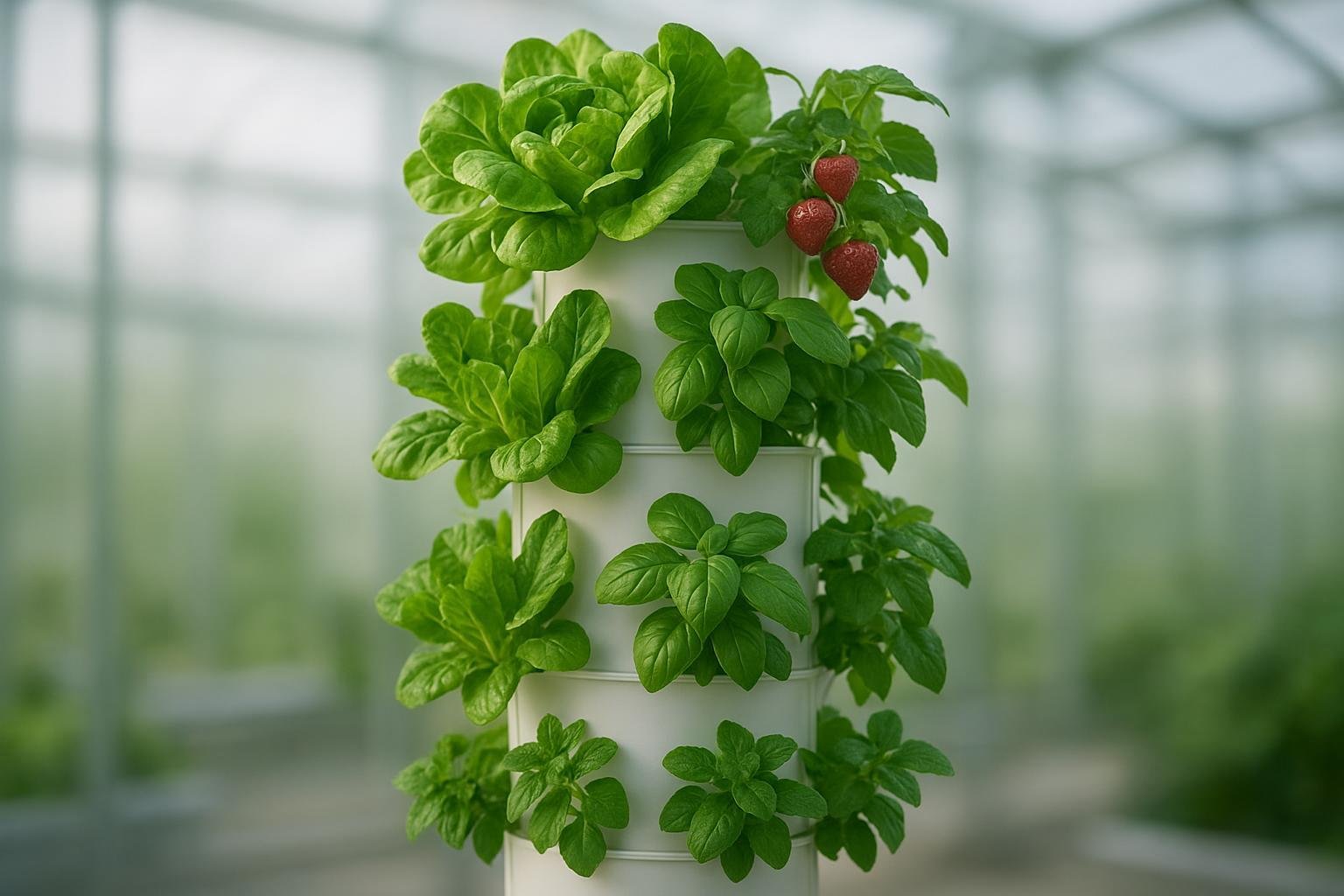
When you plan your hydroponic tower farm, you need to think about which crops will grow best. Not every plant fits well in these systems. Hydroponic towers work great for leafy greens, herbs, and some small fruits. You can grow lettuce, basil, spinach, and strawberries with ease. These plants have shallow roots and do not need much space to thrive.
However, you will face limits with certain crops. Plants with deep root systems, such as potatoes or carrots, do not grow well in towers. The structure of the tower does not give enough room for their roots to spread. Tall, vining plants like tomatoes or cucumbers also present challenges. These crops need strong support and more space to climb. The vertical design of the tower cannot always provide this support.
Note: If you try to grow crops with large root balls or heavy fruit, you may see poor growth or even damage to your system.
You should focus on crops that match the tower’s design. Here is a quick list of what works best:
Leafy greens (lettuce, kale, arugula)
Herbs (basil, mint, cilantro)
Small fruits (strawberries)
You can experiment with other crops, but always check the plant’s root size and growth habit first. If you want to try larger or vining crops, you may need to add extra support or use a different hydroponic system.
Some growers want to grow a wide range of crops for more profit. You might think about adding root vegetables or tall plants. In most cases, you will find that these crops do not perform well in towers. The main reason is the limited space for roots and the lack of support for heavy or climbing plants.
You can still achieve variety by rotating different leafy greens and herbs. This keeps your system productive and helps prevent disease. If you want to expand your crop selection, consider combining tower systems with other hydroponic setups, such as deep water culture or horizontal NFT channels. This way, you can match each crop to the best system.
Tip: Always research the growth needs of each crop before planting. This helps you avoid wasted time and resources.
Hydroponic towers give you high yields and efficient use of space, but you must choose your crops wisely. By focusing on plants that fit the system, you set yourself up for success and steady harvests.
Setting Up a Commercial Hydroponic Tower
Setting up a Commercial Hydroponic Tower takes careful planning and step-by-step work. You need to think about your goals, your space, and how you will keep your plants healthy. This section will guide you through the planning, installation, and environmental controls you need for a successful system.
Planning & Design
You should start with a clear plan. Good planning helps you avoid mistakes and saves money. Think about your space, your budget, and the crops you want to grow. You also need to plan for water, power, and future growth.
Here is a table to help you understand the main things to plan for:
Key Consideration | Description |
|---|---|
Water Management Planning | Check your water needs and plan for clean water and drainage. |
Schematic Design Steps | Draw a layout that uses your space well and fits your crop goals. |
System Design Development | Choose materials and design the water system for your tower. |
Construction Documents | Make clear drawings and lists of equipment for building. |
Construction Bidding | Get quotes from builders and pick the best one for your project. |
Construction Administration | Watch the building process and check that everything works right. |
Operations and Maintenance | Write down how to run and clean your system. Train your team to follow these steps. |
Long-term Planning | Plan for adding more towers or changing your layout in the future. |
Water Quality Prioritization | Use filters and pH controls to keep water safe for plants. |
Environmental Design | Build your tower to handle your local weather and climate. |
Staff Training | Teach your team how to use and fix the system. |
Expert Partnership | Work with hydroponic experts to get the best results. |
Tip: Always design your system with room to grow. This makes it easier to expand your farm later.
Installation Steps
You can set up your hydroponic tower by following these steps. Each step helps you build a strong and healthy system.
Structure Assembly
Site Assessment: Walk around your space. Pick a spot with good light, easy access to water, and enough room for your towers.
Marking and Drilling: Mark where you want to put holes for plants. Drill holes at a 15-degree angle. This helps water flow and keeps plants upright.
Reservoir Modification: Cut holes in the lid of your water tank. One hole is for the main tower. Another is for water to flow back.
Flow Distribution System: Build a small pipe system at the top of the tower. This spreads water to all the plants.
Leak Prevention: Use food-safe silicone around all pipe fittings. Let it dry before you add water.
Final Assembly: Connect the pump and tubes. Make sure everything fits tight.
Note: Always test your tower with water before adding plants. This helps you find leaks or problems early.
Pump Sizing & Irrigation
You need the right pump to move water through your tower. A pump that is too small will not reach the top. A pump that is too big can waste energy.
Measure the height of your tower. Pick a pump that can push water higher than your tallest point.
Use timers to control when the pump runs. This saves power and gives plants the right amount of water.
Set up drip lines or spray nozzles for even water flow.
Test the system. Make sure every plant gets water and nutrients.
Tip: Clean your pump and tubes often. This keeps water flowing and stops clogs.
Environmental Controls
You must control the environment to help your plants grow strong. Plants need the right temperature, humidity, airflow, and water flow.
Environmental Control | Description |
|---|---|
Temperature | Keep the air between 65°F and 75°F for most crops. |
Humidity | Keep humidity below 65%. This stops mold and keeps plants healthy. |
Airflow | Use fans to move air. This stops stale air and helps plants breathe. |
Water Flow | Make sure water moves all the time. This gives roots food and keeps them wet. |
Use heaters or coolers to keep the right temperature.
Use dehumidifiers if the air gets too wet.
Place fans near your towers for good airflow.
Check water flow every day. Make sure pumps and tubes work well.
Tip: Place sensors in your system. These tools help you track temperature, humidity, and water flow. You can fix problems before they hurt your plants.
You can set up a Commercial Hydroponic Tower with careful planning and the right steps. Good design, strong assembly, and smart controls help you grow healthy crops all year.
Crop Selection
Choosing the right crops for your hydroponic tower makes a big difference in your success. You want plants that grow fast, sell well, and fit your system. Some crops give you higher profits and are easier to manage in towers.
Best Crops for Towers
Leafy Greens
Leafy greens are the top choice for hydroponic towers. You can grow lettuce, spinach, kale, arugula, and mesclun mix. These plants grow quickly and do not need much space. Lettuce can be ready in just 30 days. Spinach and kale also mature fast. You can harvest these greens many times each year. This means you get more crops and more income. Leafy greens have strong market demand, so you can sell them easily.
Herbs
Herbs work very well in hydroponic towers. You can grow basil, dill, mint, cilantro, lemon balm, and tarragon. Basil grows quickly and is popular in many dishes. Dill and specialty herbs like lemon balm and tarragon have high value. Herbs do not need much room, so you can plant them close together. You can harvest herbs often, which helps you keep a steady supply for your customers.
Fruits
Some fruits also do well in hydroponic towers. Strawberries are a favorite because they have high demand and bring good prices. You can also try cherry tomatoes. These fruits need a bit more care, but they can give you steady sales. Edible flowers like nasturtiums and pansies add color and value to your crop mix. Microgreens are another option. They grow in just a few weeks and sell for a high price.
Tip: Start with leafy greens and herbs if you are new. Add fruits like strawberries or cherry tomatoes as you gain experience.
Crop Rotation
Crop rotation helps you keep your system healthy and productive. You can switch between different types of leafy greens and herbs. This practice prevents disease and keeps your plants strong. Try to plant crops with fast growth cycles, such as lettuce and spinach. You can harvest these every 30 to 45 days. Dense planting of herbs and greens uses your space well. Choose crops that need little pesticide and are easy to care for. This lowers your costs and saves time.
Rotate crops to avoid disease.
Use fast-growing plants for quick harvests.
Plant densely for better space use.
Factors Affecting Choice
Many things affect which crops you should pick for your tower. You need to think about your system type, market demand, and plant needs. The table below shows how different crops fit with hydroponic systems:
Crop Type | Hydroponic System Type | Key Requirements |
|---|---|---|
Leafy Greens | NFT | Shallow roots, quick growth |
Fruiting Plants | Drip Systems | Precise water and nutrient control |
You should also look at what sells best in your area. Start with crops that people want to buy. Make sure your system can support the plant’s needs. Pick crops that grow well together and match your market goals.
Note: Always research your local market before planting. This helps you choose crops that will sell and keep your business strong.
Operation & Maintenance
Daily Monitoring
You should check your hydroponic tower every day. This helps you find problems early. It keeps your plants healthy. You need to follow a routine in the morning and evening. The table below shows a simple daily schedule:
Time of Day | Task Description |
|---|---|
Morning | Visual inspection of plants and roots |
Morning | pH and EC measurement and adjustment |
Morning | Pump operation verification |
Morning | Temperature check (air and water) |
Evening | Visual inspection for pests or abnormalities |
Evening | Reservoir level check |
Evening | System noise assessment |
Start your day by looking at your plants and their roots. Healthy roots are white and firm. Check the pH and EC of your water. This tells you if your plants get enough nutrients. Make sure your pump works and water moves well. Check the air and water temperature. In the evening, look for pests or anything strange. Check the water level in your reservoir. Listen for odd noises from the system. Weird sounds can mean pump problems.
Tip: Write down your checks in a notebook or app. This helps you see changes over time.
Cleaning & Upkeep
Clean equipment helps your system work well. You should follow these steps for best results:
Turn off all hydroponic equipment safely.
Drain old nutrient solution properly.
Clean removable parts to prevent clogging.
Disinfect system components thoroughly.
Rinse everything before reassembly.
Reassemble and refill with fresh nutrients.
You should also:
Check and clean pumps and air stones often.
Wipe lights and reflectors to keep them bright.
Always wear gloves and eye protection when cleaning. Cleaning solutions can bother your skin and eyes. Scrub the inside of your reservoir with cleaner. Rinse well to remove leftover cleaner. Let the reservoir dry before adding new nutrients.
Note: Clean your system every two weeks or after each crop cycle. This stops algae and bacteria from growing.
Data Tracking
Tracking data helps you make your farm better. You can use sensors and smart tools to collect information. Many growers use IoT sensors to track water levels, pH, nutrient EC, light, and temperature. Automated dosing systems add nutrients when plants need them. This saves you time and lowers mistakes.
Feature | Description |
|---|---|
IoT Sensors | Track water levels, pH, nutrient EC, light, and temperature. |
Automated Dosing | Replenishes nutrients as plants absorb them, reducing manual labor. |
You can use machine learning to study plant growth, nutrient use, and the environment. The system can predict problems and suggest changes. For example, it can warn you about pests or nutrient imbalances before they hurt your plants. AI-driven analytics can help you find the best nutrient mix for each crop. This gives you more crops and less waste.
Machine learning finds patterns in your data.
The system predicts future problems and warns you.
You get advice on how to change your system for better results.
Tip: Look at your data every week. Use it to make small changes and get better harvests.
Troubleshooting
You will face problems in your hydroponic tower system from time to time. Quick action helps you keep your plants healthy and your system running well. Here are some common issues you might see and how you can fix them:
Problem | Description | Solution |
|---|---|---|
Plants look weak and grow slowly. Leaves may turn pale. | Add artificial lights. Use the right color and keep them on for 12–16 hours each day. | |
Pump Failure | Water and nutrients stop reaching the plants. Plants wilt or dry out. | Check your pump every day. Clean it often. Replace broken pumps right away. |
Plant Diseases and Insect Pests | You see spots, mold, or bugs on leaves. Plants may stop growing. | Remove sick plants. Use sticky traps or safe sprays. Keep your system clean. |
Wrong Nutrient Solution Ratio | Leaves turn yellow or brown. Growth slows down. | Test your water for pH and nutrients. Adjust the mix to match your crop’s needs. |
Tip: Keep a notebook of problems and solutions. This helps you spot patterns and fix issues faster next time.
You may notice your plants look weak or pale. This often means they do not get enough light. You can solve this by adding more grow lights or moving your towers closer to windows. Make sure your lights give the right color for plant growth.
If your plants wilt or the roots look dry, check your pump. Pumps can clog or break. Clean your pump and tubes every week. Always keep a spare pump on hand. This way, you can swap it out if one fails.
Bugs and diseases can spread fast in a tower system. Look for sticky leaves, webbing, or spots. Remove sick plants right away. Use sticky traps to catch flying bugs. Spray safe pest control if you see many insects. Clean your system after each crop cycle.
Nutrient problems show up as yellow or brown leaves. Test your water with a pH and EC meter. Most leafy greens like a pH between 5.5 and 6.5. Adjust your nutrients if you see problems. Always mix your solution fresh and follow the instructions for your crop.
Note: Regular checks and quick fixes keep your system healthy. Do not wait for small problems to get big.
You can solve most problems with daily checks and good records. If you see something strange, act fast. Healthy plants grow best in a well-maintained system.
Cost & Profitability
Initial & Ongoing Costs
Before you start a Commercial Hydroponic Tower farm, you need to know the costs. There are costs at the beginning and costs that keep coming. The money you spend first depends on how big your farm is. It also depends on what technology you pick. Small farms can cost about $5,000. Big farms can cost millions of dollars. Building a large facility might need $37 million to start. Each month, you pay for things like worker wages and bills. These can be about $66,717 every month.
Here is a table that shows the main costs:
Cost Category | Initial Cost Range | Ongoing Cost (Annual/Monthly) |
|---|---|---|
Equipment and Infrastructure | $500 to over $100,000 | N/A |
Control Systems | Up to $10,000 | N/A |
Growing Media | Up to $200 | N/A |
Nutrients | N/A | Up to $1,000/year |
Energy | N/A | Up to $5,000/year |
Labor | N/A | Varies |
Maintenance | N/A | Thousands per year |
Facility Construction | $15 million | N/A |
Specialized Systems | $10 million | N/A |
Fixed Monthly Expenses | N/A | $66,717/month |
You also pay for water, seeds, and cleaning supplies. You keep paying for energy, nutrients, workers, and fixing things. For big farms, the cost per square foot each year can be $15 to $50 or more.
Tip: Make a budget before you start. Write down what you spend so you do not get surprised.
Revenue Streams
You can make money in different ways with a hydroponic tower farm. Here are some ways to earn:
Grow many kinds of crops to get more buyers.
Sell special crops for higher prices to fancy stores.
Work with local stores and restaurants for steady sales.
Growing different crops helps you find more customers. Good crops from hydroponic towers can sell for more money. Working with local places gives you regular buyers and helps your business grow.
ROI Calculation
You should learn how to figure out your return on investment (ROI). This shows how quickly you can get your money back. ROI depends on how much you spend, your monthly costs, and what you sell.
Here is an example:
Cost Category | Estimated Amount |
|---|---|
Setup Cost | $10,000 for a small system |
Monthly Running Cost | $500 |
Revenue per Month | $1,200 |
Monthly Profit | $700 |
Payback Period | ~$10,000 ÷ $700 ≈ 14 months |
To find your payback time, divide your total cost by your monthly profit. In this example, you get your money back in about 14 months.
Add up all your starting and early costs.
Take away your monthly costs from your monthly sales to get profit.
Divide your total cost by your profit to see how long it takes to pay back.
Hydroponic farming can help you earn your money back faster than regular farming. You can grow crops quicker and use your space better. This is great for cities where land costs a lot.
Note: Check your profits and costs every month. This helps you make good choices and helps your business grow.
Common Pitfalls
You want your hydroponic tower farm to succeed. Many new growers make mistakes that cost time and money. You can avoid these common pitfalls by learning from others.
1. Underestimating Startup Costs
Many people think they can start a commercial hydroponic tower farm with little money. You need to plan for all costs. These include equipment, building, labor, and ongoing bills. If you do not budget for everything, you may run out of money before your first harvest.
Tip: Make a list of every cost before you start. Add extra money for surprises.
2. Overestimating Yield and Revenue
You may expect high yields right away. In reality, crops take time to grow. You may face problems with pests, disease, or equipment. These issues can lower your harvest and income. Do not count on perfect results in your first year.
3. Poor Market Research
You need to know who will buy your crops. Some growers plant crops that do not sell well in their area. This leads to wasted time and unsold produce. Always check what local stores, restaurants, and markets want before you plant.
Mistake | Result |
|---|---|
No market research | Unsold crops, lost money |
Wrong crop selection | Low demand, wasted resources |
4. Ignoring Maintenance
Hydroponic towers need regular cleaning and checks. If you skip maintenance, you risk pump failures, clogs, or disease. These problems can destroy your crops and cost you money.
Note: Set a cleaning schedule and follow it. Keep spare parts ready.
5. Not Tracking Data
You need to track your costs, yields, and sales. Without records, you cannot see what works or what needs fixing. Many farms lose money because they do not watch their numbers.
6. Scaling Too Fast
You may want to grow your farm quickly. If you expand before you master the basics, you can face big losses. Start small. Learn how your system works. Grow bigger when you have steady profits.
7. Neglecting Training
You and your team need to know how to run the system. Lack of training leads to mistakes and wasted resources. Invest time in learning and teaching others.
Tip: Take classes or work with experts before you start.
You can avoid these pitfalls with good planning and careful work. Learn from others and keep improving your system. This helps you build a strong and profitable hydroponic tower farm.
Scaling Strategies
Expanding Tower Systems
You can grow your hydroponic farm by adding more towers. Start with a few towers and increase the number as your business grows. This step-by-step approach helps you manage costs and avoid mistakes. You should check your available space before you add new towers. Make sure your water and power systems can handle the extra load.
You can use a modular design to make expansion easier. Modular towers let you connect new units quickly. You do not need to rebuild your whole system. You can also rearrange towers to fit your space better. If you plan to expand outdoors, check the weather and protect your towers from wind and rain.
Tip: Draw a map of your farm before you expand. This helps you see where new towers will fit best.
Here is a simple checklist for expanding your tower system:
Check space and layout
Test water and power capacity
Buy modular towers
Plan for future growth
Train your team on new equipment
Automation
You can use automation to make your farm run better. Automated systems help you save time and reduce mistakes. You can install timers to control watering and lighting. Sensors can track temperature, humidity, and nutrient levels. Automated dosing systems add nutrients when plants need them.
You can connect your system to a computer or smartphone. This lets you watch your farm from anywhere. If you see a problem, you can fix it fast. Automation helps you grow more crops with less work.
Automation Tool | What It Does | Benefit |
|---|---|---|
Timers | Control watering and lighting | Saves time |
Sensors | Track environment and nutrients | Prevents crop loss |
Automated Dosing | Add nutrients as needed | Reduces manual labor |
Remote Monitoring | Watch system from anywhere | Quick problem solving |
Note: Start with simple automation tools. Add more as your farm grows.
Workforce Management
You need a strong team to run a large hydroponic farm. As you add more towers, you must train your workers. Teach them how to use new equipment and follow safety rules. You should set clear jobs for each person. This helps your team work faster and avoid mistakes.
You can use checklists to guide daily tasks. Hold regular meetings to talk about problems and share ideas. If you use automation, train your team to use the new tools. Good training keeps your farm safe and productive.
Assign clear roles to each worker
Use checklists for daily tasks
Hold team meetings often
Train workers on new systems
Reward good performance
Tip: Keep your team small at first. Grow your workforce as your farm gets bigger.
Compliance
When you scale your hydroponic tower farm, you must follow many rules. These rules help keep your crops safe and your business legal. You need to know about food safety, worker safety, and local laws. If you ignore these rules, you can face fines or even lose your business.
Food Safety Standards
You must keep your crops clean and safe to eat. Food safety rules protect your customers from getting sick. You should follow Good Agricultural Practices (GAP) and Good Manufacturing Practices (GMP). These standards tell you how to handle crops, water, and equipment.
Wash your hands before touching plants.
Clean tools and surfaces often.
Use clean water for your system.
Keep records of cleaning and crop handling.
Tip: You can take a food safety course to learn more about these rules.
Local and National Regulations
Every city and state has different rules for farms. You need to check with your local government before you build or expand your farm. Some places need special permits for water use, waste disposal, or building changes. You may also need to follow zoning laws.
Regulation Type | What You Need to Do |
|---|---|
Zoning | Check if farming is allowed |
Water Use | Get permits for water systems |
Waste Disposal | Follow rules for waste management |
Building Codes | Meet safety standards for structures |
You should visit your city office or website to learn about these rules. Ask questions if you do not understand something.
Worker Safety
You must keep your workers safe. The Occupational Safety and Health Administration (OSHA) has rules for farms. You need to train your team on safe work habits. You should give them gloves, masks, and other safety gear.
Teach workers how to use equipment.
Post safety signs near machines and chemicals.
Keep first aid kits in easy-to-find places.
Note: Safe workers help your farm run better and avoid accidents.
Certifications
You can earn certifications to show your farm meets high standards. Some buyers want crops from certified farms. Common certifications include USDA Organic, GlobalG.A.P., and HACCP. These programs check your farm for safety, quality, and eco-friendly practices.
Research which certifications fit your market.
Follow the steps to apply and pass inspections.
Keep records to prove you follow the rules.
Stay Updated
Laws and rules can change. You should check for updates every year. Join local farm groups or online forums to learn about new rules. Staying compliant helps your farm grow and keeps your business safe.
Tip: Make a checklist of all rules you must follow. Review it often to stay on track.
You can boost your harvests and save resources with commercial hydroponic towers. You face challenges like high startup costs and technical skills. Careful planning and smart system choices help you succeed. Daily checks and good records keep your crops healthy.
Start small and learn as you grow.
Research your market before planting.
Train your team for best results.
Tip: Explore local farm groups or online forums for expert advice and support.
FAQ
What crops grow best in hydroponic towers?
You can grow leafy greens, herbs, and small fruits like strawberries. Lettuce, basil, mint, and kale work very well. These plants have shallow roots and grow quickly in vertical systems.
How much water do hydroponic towers use?
Hydroponic towers use up to 90% less water than soil farming. The system recycles water, so you waste very little. You can grow healthy crops even in dry places.
Do hydroponic towers need sunlight?
You can use sunlight or LED grow lights. Indoors, you need artificial lights for plant growth. Outdoors, natural sunlight works well. Make sure your plants get enough light each day.
How often should you clean a hydroponic tower?
You should clean your system every two weeks or after each crop cycle. Regular cleaning stops algae, bacteria, and clogs. Clean pumps, tubes, and reservoirs for healthy plants.
Is hydroponic tower farming organic?
Hydroponic towers can use organic nutrients, but not all systems qualify as organic by USDA rules. Check local guidelines if you want organic certification.
How much space do you need for a commercial hydroponic tower?
You can fit one tower in just a few square feet. For a commercial setup, plan for walkways, water tanks, and workspace. Modular towers help you use space efficiently.
What are common problems with hydroponic towers?
You may see pump failures, nutrient imbalances, or pests.
Check your system daily. Keep records and fix issues quickly for best results.
Can you make money with hydroponic tower farming?
Yes, you can earn profits with good planning and market research. High yields, fast growth, and year-round harvests help you sell more crops and cover costs.
Related Posts
 Hydroponic vs Aeroponic Towers (2026): Which System Is Better for Your Plants?
 What Can You Grow in a Hydroponic Tower? 15 Best Plants for Vertical Growth
 Hydroponic Tower Cost Analysis: Is It Worth the Investment? (Plus DIY Options)