
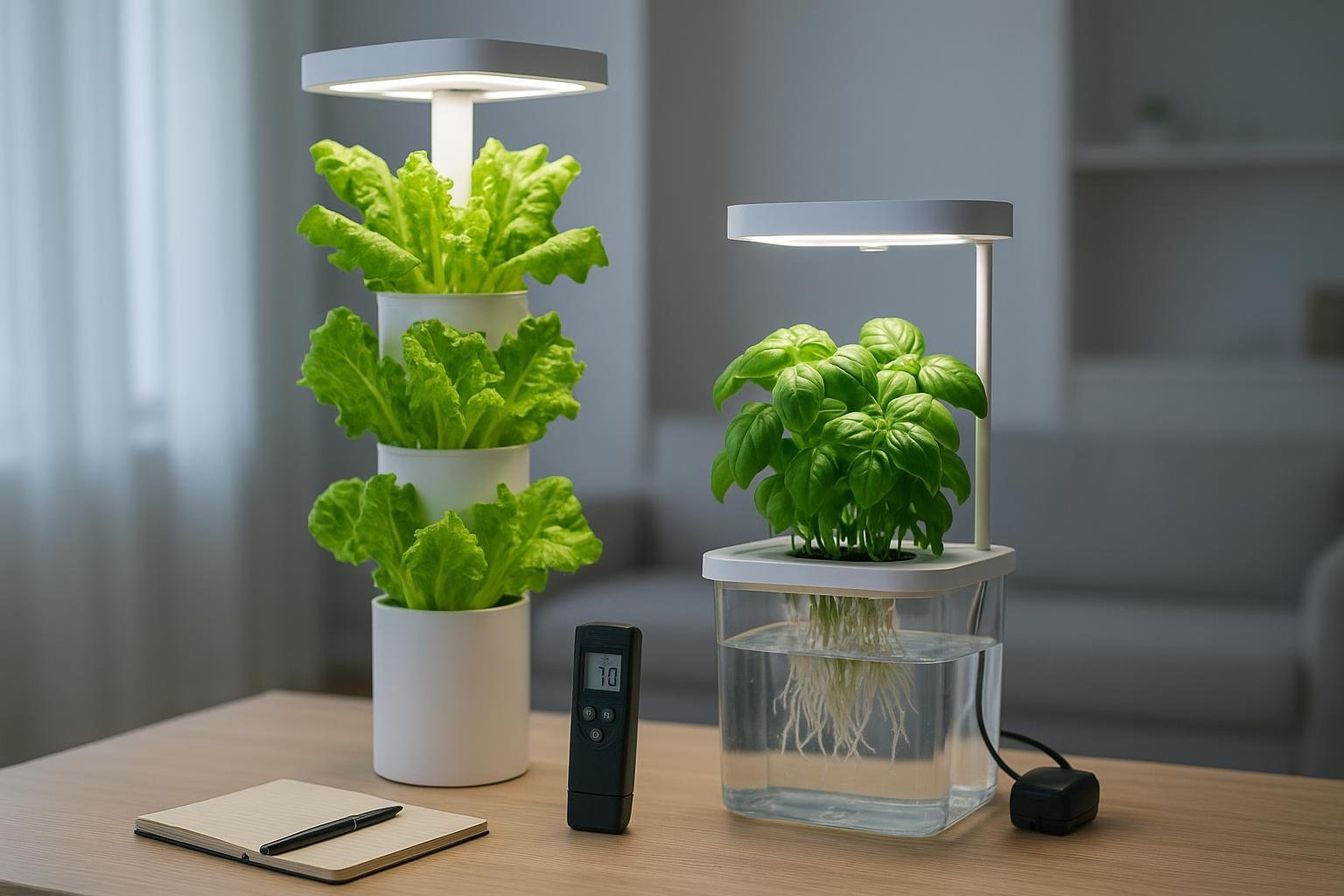
A small hydroponic garden can deliver crisp greens and fragrant herbs year-round—if you give it steady care. The good news: most wins come from simple, repeatable routines. Keep solution pH in the 5.5–6.5 window, dial EC to the crop and stage, hold root temperatures near 68–72°F, run 16–18 hours of light, and refresh your reservoir on a weekly or biweekly cycle. Do those consistently and you’ll prevent most problems before they start.
Whether you’re growing on a countertop at home, running a small restaurant pilot, or teaching with a classroom kit, this guide translates proven practices into daily actions. We’ll cover quick setup, maintenance cadence, pH and EC workflows, right-size lighting, hygiene and disease prevention, a troubleshooting table, and a mini SOP for sensor calibration and data logging.
Key takeaways
Keep pH between 5.5 and 6.5; many leafy greens perform well around 5.8–6.0 according to the University of Florida IFAS “Set It and Forget It” lettuce guide (2025–2026).
Aim EC to crop and stage; start lower for seedlings and raise gradually. The UC ANR Master Gardeners hydroponics page (2025) lists 1.5–2.5 mS/cm as a typical working band for many hydroponic vegetables.
Maintain solution near 68–72°F to support oxygen and discourage root pathogens; University of Kentucky’s e-GRO E706 (2022; updated 2026) highlights this range for disease suppression.
Deliver 16–18 hours of light at modest to moderate PPFD so daily light integral lands roughly in the 12–16 mol·m⁻²·d⁻¹ range for leafy greens, per Michigan State University’s DLI resources.
Top off with pH-balanced water daily and complete a reservoir change weekly to biweekly in small systems based on monitoring and clarity, a cadence supported by UF/IFAS home system notes (2025).
Sanitize between crops, block light from the reservoir, and document your readings; data makes small corrections easy and fast. For sanitation SOPs, see UVM/NECAFS produce-safety guidance (2024–2026).
Quick start for home, pilot, and classroom users
Launch your small hydroponic garden with a lean kit and a one-week plan.
Tools and setup: A reliable pH meter and EC/TDS meter, fresh pH 7.01 and 4.01 buffers, a 1.41 mS/cm EC standard, a clean reservoir, an air pump and airstone for DWC, or a steady pump for NFT, and a full-spectrum LED you can run 16–18 hours. Calibrate meters before first use following manufacturer procedures described by instrumentation providers such as Metrohm’s pH calibration guide (2024) and Hanna Instruments GroLine documentation. For the first fill, mix nutrients exactly per label, then measure and fine-tune pH and EC.
Planting and the first 7 days: Start with vigorous seedlings or germinate under gentle light. Keep pH in range daily, begin EC at the low end for seedlings, maintain steady light and airflow, and top off the reservoir with pH-adjusted water. By day 5–7, check roots for bright, clean color and confirm the pump and timers are running without interruption. Log every reading—you’ll see trends quickly.
The maintenance cadence that prevents 90 percent of problems
Think cadence, not firefighting. Here’s a printable rhythm you can follow for a small indoor hydroponic garden without turning it into a part-time job.
Daily: Confirm reservoir level and top off with pH-adjusted water. Measure and record pH and EC; nudge pH into the 5.5–6.5 zone with appropriate acid or base in tiny increments. Glance at leaves and roots, remove any dead tissue, verify pump, airstone, and light timers, and keep the canopy gently moving with a fan.
Weekly: Inspect for light leaks into the reservoir and block them. Wipe non-food-contact surfaces. Review your logs: if EC drifts hard or the solution looks cloudy or smells off, drain, scrub, sanitize per product labels, rinse thoroughly, and remix fresh nutrient solution. Many small DWC systems benefit from a scheduled weekly change; others settle into a biweekly rhythm if readings stay stable (see UF/IFAS blog guidance, 2025 and UC ANR monitoring principles, 2025).
Monthly: Calibrate pH and EC meters with fresh standards and note the lot numbers. Deep-clean the reservoir, tubing, and fittings between crop cycles. Replace worn tubing or clogged filters and check that your LED height still produces even light. UVM’s produce safety materials emphasize written SOPs and documentation (UVM NECAFS, 2024–2026).
These habits reflect extension principles on monitoring pH and EC, routine solution replacement in small systems, and sanitation between cycles.
pH and EC made practical for a small hydroponic garden
pH determines nutrient availability; EC reflects nutrient concentration. Keep both within target bounds and your plants respond quickly.
Working ranges with evidence: The University of Florida IFAS lettuce guide (EDIS HS1488, 2025–2026) recommends pH 5.5–6.0 and a modest nutrient strength around EC ≈ 1.25 mS/cm for simple home setups. The UC ANR Master Gardeners hydroponics page (2025) lists general hydroponic ranges of pH 5.5–6.5 and EC 1.5–2.5 mS/cm as common working bands. For herbs like basil, practitioner guidance suggests EC 1.0–2.0 mS/cm and pH 5.5–6.5; adjust to plant response and stay within extension-backed pH bounds.
Stepwise workflow: Measure pH first, then EC. If pH is high (e.g., 6.8), add a few drops of pH-down, circulate for a minute, recheck, and repeat until 5.8–6.2. If EC is low relative to your target, add a small amount of nutrient concentrate, mix thoroughly, and remeasure; if EC is high, dilute with clean water adjusted near your target pH.
A mini example: Your 10 L reservoir for lettuce reads EC 0.7 mS/cm; your target is ~1.2. Add a small measured dose of nutrient concentrate (per label), mix, and recheck. If you overshoot to 1.4, dilute with ~1–2 L of pH-adjusted water, mix, and verify.
Calibration cadence: Many meter makers recommend monthly pH calibration at pH 7.01 and 4.01 and EC calibration at 1.41 mS/cm; follow procedures similar to those described by Metrohm (2024) and Hanna GroLine documentation.
Why fuss with numbers? Because small reservoirs swing faster than big ones. A five-minute check saves a week of troubleshooting.
Water and nutrient scheduling in a small reservoir
Small indoor systems concentrate change. Good scheduling keeps things steady.
Top-offs vs full changes: Topping off with pH-balanced water maintains volume and can keep EC in range between changes. Extension guidance for simple home DWC systems supports a full nutrient solution replacement every one to two weeks, with the exact interval depending on stability, crop load, and clarity (see UF/IFAS home hydroponics blog, 2025 and UC ANR hydroponics guidance, 2025). If your readings drift persistently, roots look stressed, or the solution develops an odor, change early.
Mixing safely: Always mix nutrients according to the manufacturer’s label, never combine concentrates directly, and use clean containers. Adjust pH after nutrients are fully mixed because nutrients will shift pH.
Signs you’re ready to refresh: Cloudiness, off smells, sticky biofilms, or EC and pH that refuse to hold. Drain, scrub, sanitize per an EPA-registered product label appropriate for food-contact surfaces, rinse thoroughly, and refill. UVM/NECAFS produce safety materials emphasize clear SOPs, proper sanitizer use, and documentation rather than fixed chemical rates.
Lighting that fits indoors without frying your greens
Light drives growth, but more isn’t always better in a cramped room.
Hours and intensity: A practical starting point for leafy greens is 16–18 hours per day at a canopy PPFD that lands your daily light integral near 12–16 mol·m⁻²·d⁻¹. Michigan State University’s DLI resources show how photoperiod and PPFD combine to reach target DLI, with studies indicating fresh-weight gains as PPFD increases from roughly 120 to 180 µmol·m⁻²·s⁻¹ when other factors are in range. During germination and the earliest seedling stage, Purdue’s CEA lettuce production notes (2024) use lower PPFD and then ramp up.
Placement and uniformity: Hang LEDs so the canopy sees even light; raise fixtures as plants grow to avoid bleaching. Use a quantum sensor if you can; if not, follow the manufacturer’s hanging-height guidelines and watch plant signals—compact leaves and steady color are good signs.
Heat and airflow: LEDs still add heat. Keep air in the 65–75°F range and the solution around 68–72°F to encourage calcium transport and discourage pathogens (UKY e-GRO E706).
Hygiene and disease prevention for long, healthy roots
Root health is your quiet profit center. Protect it with routine sanitation and light discipline.
Root-zone temperature: University of Kentucky’s e-GRO E706 highlights maintaining nutrient solution near 68–72°F as an effective tactic to slow Pythium and other root diseases while preserving dissolved oxygen.
Sanitation mindset: Between crops, fully drain, scrub off biofilms, sanitize per the product label, rinse with potable water, and let parts air-dry before refilling. Keep light out of the reservoir and channels to starve algae. UVM’s produce-safety guidance (2024–2026) stresses written SOPs, approved sanitizers, and documentation.
Quarantine and replacement: Remove any plant with slimy, brown roots. Increase aeration, lower solution temperature into the recommended band, and restart with fresh solution if contamination spreads.
Troubleshooting table for a small hydroponic garden
Symptom | Likely cause | Immediate fix |
|---|---|---|
Pale new growth or interveinal chlorosis | High pH reducing iron/micronutrient availability | Lower pH toward 5.8–6.0, confirm EC is adequate and stable |
Lettuce tip burn | Insufficient calcium transport, excessive EC or heat, poor airflow | Lower EC to the low end, cool air and solution to ~68–72°F, add gentle airflow |
Slimy brown roots | Pythium or other root pathogens, warm solution, low oxygen | Drop solution to 68–72°F, increase aeration, drain and sanitize, restart if severe |
Leggy seedlings | Insufficient DLI or low PPFD | Increase PPFD to ~150–200 µmol·m⁻²·s⁻¹ at 16–18 hours per day |
Algae in reservoir | Light leaks, warm, nutrient-rich water | Opaque lids or covers, clean and sanitize, maintain target temperatures |
Each row aligns with extension or research-backed principles cited throughout this article. For nutrient availability concepts, see Penn State Extension’s hydroponic nutrition primer (2023).
Pro corner: a mini SOP for calibrating meters and logging data
Keep it simple and consistent—calibration and logging turn guesswork into control.
pH meter, two-point calibration: Rinse the probe with distilled water. Calibrate at pH 7.01 first, then at 4.01, allowing readings to stabilize and avoiding contamination of buffer bottles. Procedures similar to those described in Metrohm’s 2024 pH calibration guide will keep drift at bay.
EC meter, single-point calibration: Rinse the probe, then calibrate in a 1.41 mS/cm standard solution. Many hydro-focused meters, like those in Hanna Instruments’ GroLine documentation, explicitly support this standard.
Frequency: Calibrate monthly in active use, or more often when readings seem off. Replace buffers and standards regularly and record their lot numbers.
Storage: Follow the meter maker’s storage fluid guidance, especially for pH probes.
A tiny CSV log is enough to see trends and make smart adjustments.
Micro‑example operating a 20–30 plant indoor tower
Disclosure: SPRINGS FAITH is our product.
For a compact indoor tower holding roughly 20–30 leafy greens and herbs, operate as you would any small hydroponic garden but make a few tower-specific choices. Start seedlings in plugs under gentle light, then transplant into the tower once roots emerge. Mix a fresh reservoir at the low end of your EC target, set pH to about 5.8–6.0, and run the pump continuously or on short, frequent cycles so the root zone stays moist without waterlogging. Deliver 16–18 hours of LED light and keep the reservoir near 68–72°F using ambient room control and airflow. Top off daily with pH-adjusted water, and perform a full change weekly in early growth; if your logs show stable pH and EC and solution clarity remains high, move to a biweekly schedule. Treat the tower like a living schedule: leaves should be compact and brightly colored, roots should be white to cream, and the EC should slowly trend down during the day as plants feed. If you spot drift or stress, adjust early rather than waiting.
Sources used for these best practices
According to the University of Florida’s EDIS HS1488 “Set It and Forget It” lettuce guide (2025–2026), home hydroponic lettuce thrives at pH 5.5–6.0 with modest nutrient strength for simple setups.
The UC ANR Master Gardeners hydroponics page (2025) outlines general working ranges of pH 5.5–6.5 and EC 1.5–2.5 mS/cm and emphasizes monitoring for home systems.
University of Kentucky’s e-GRO E706 emphasizes nutrient solution at 68–72°F, sanitation, and inoculum reduction in recirculating systems.
Michigan State University’s DLI resources show how photoperiod and PPFD combine to reach target DLI and summarize findings on lettuce fresh-weight gains as intensity rises within practical ranges.
Purdue’s hydroponic lettuce production notes (2024) describe lower PPFD during germination and practical ramping strategies.
UVM/NECAFS produce-safety guidance for hydroponic operations (2024–2026) provides cleaning/sanitizing SOP principles and documentation practices.
For nutrient availability principles and pH ranges across crops, see Penn State Extension’s hydroponic nutrition primer (2023).
To make this advice stick day-to-day, think of your small hydroponic garden like a kitchen you keep tidy as you cook: a few minutes of care beats an hour of cleanup. Ready to put the routine to work?
Related Posts
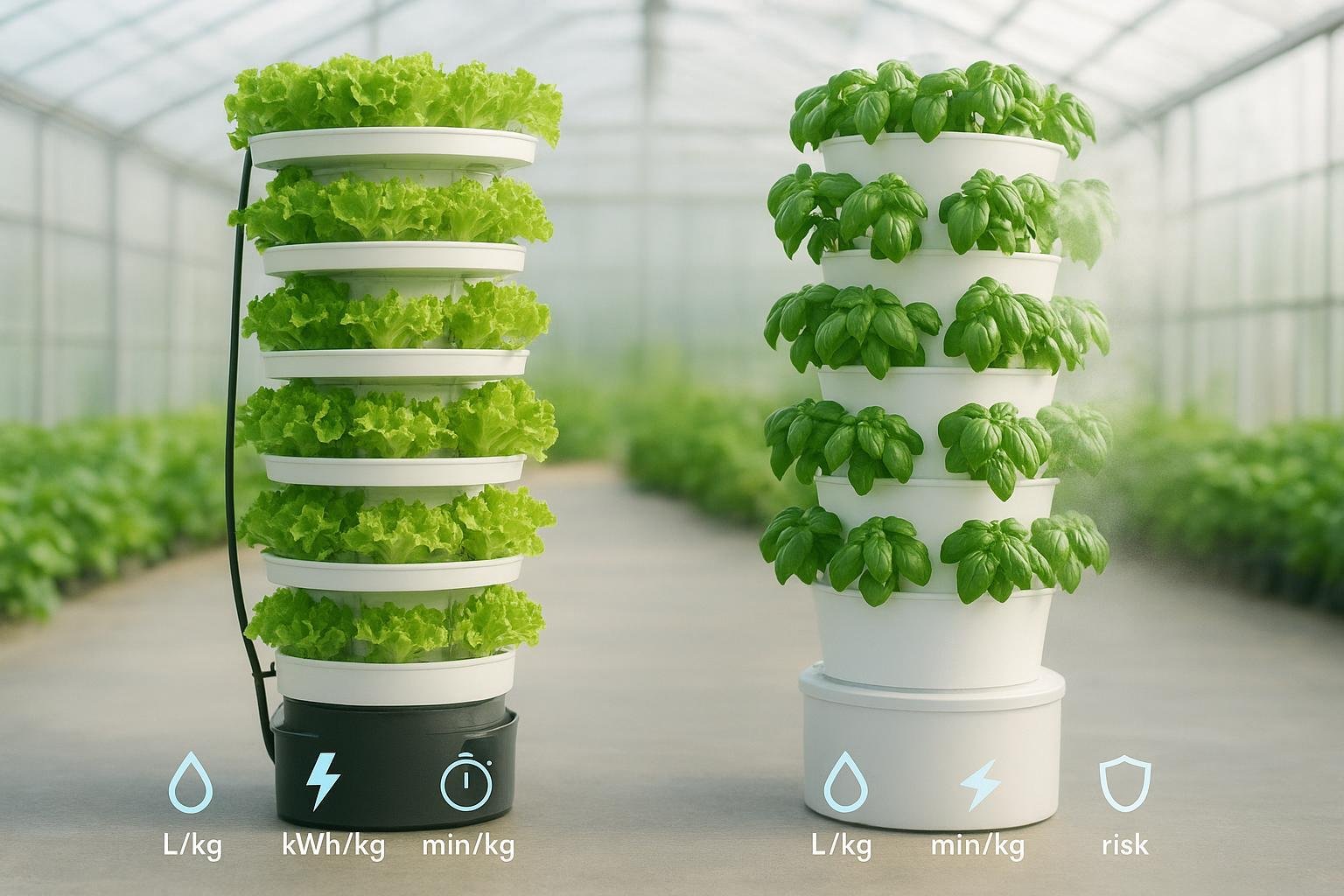 Hydroponic vs Aeroponic Towers (2026): Which System Is Better for Your Plants?
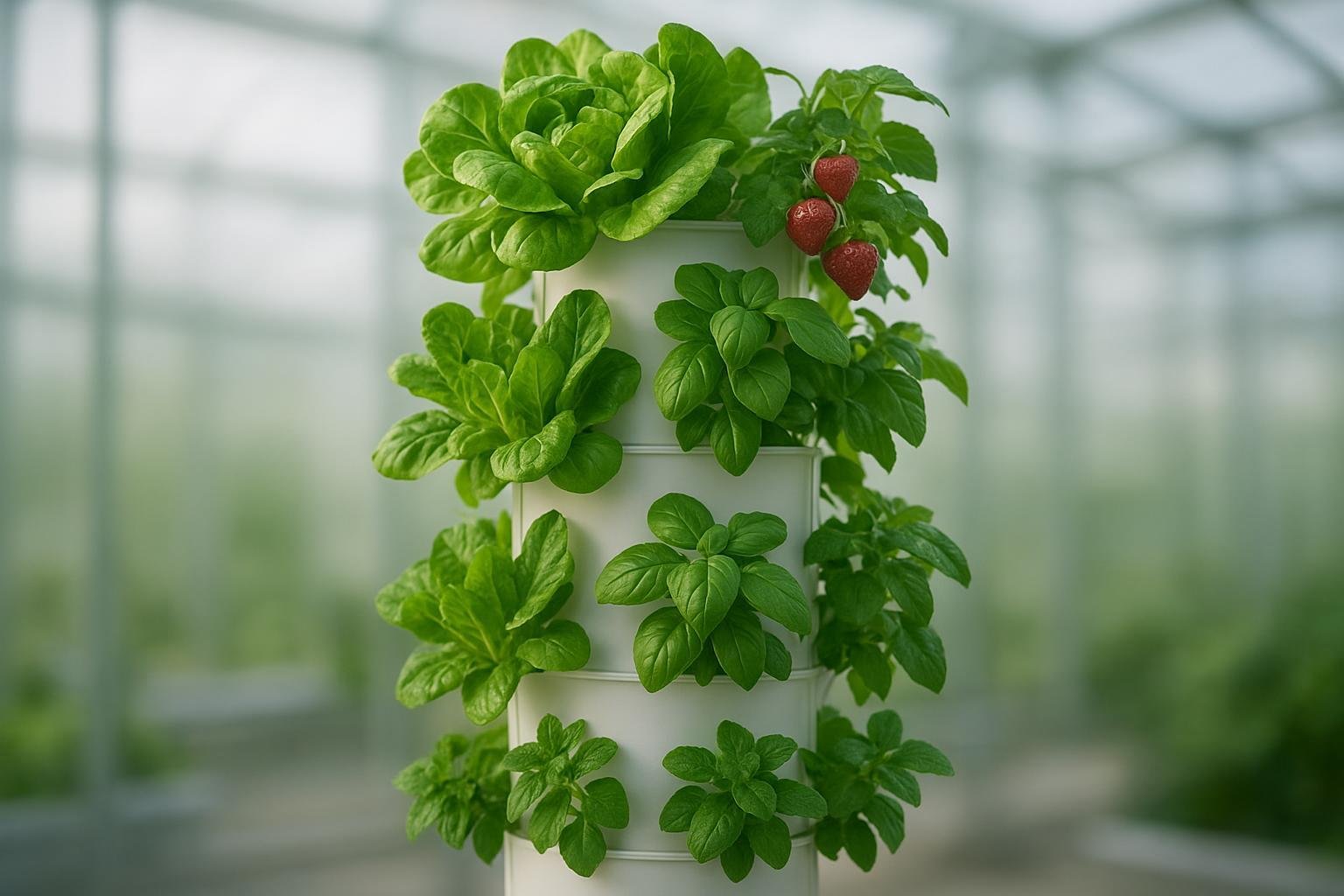 What Can You Grow in a Hydroponic Tower? 15 Best Plants for Vertical Growth
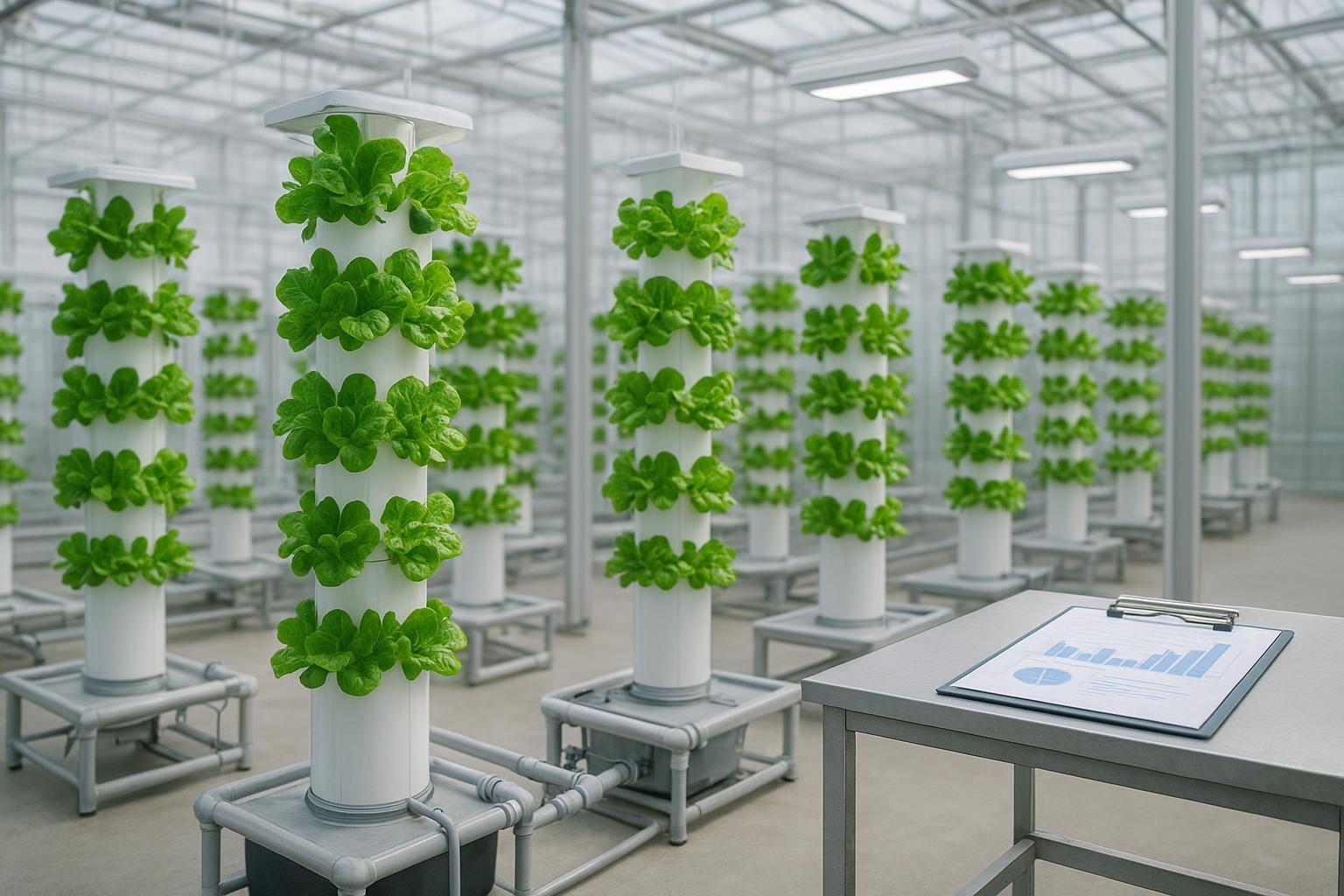 Hydroponic Tower Cost Analysis: Is It Worth the Investment? (Plus DIY Options)