
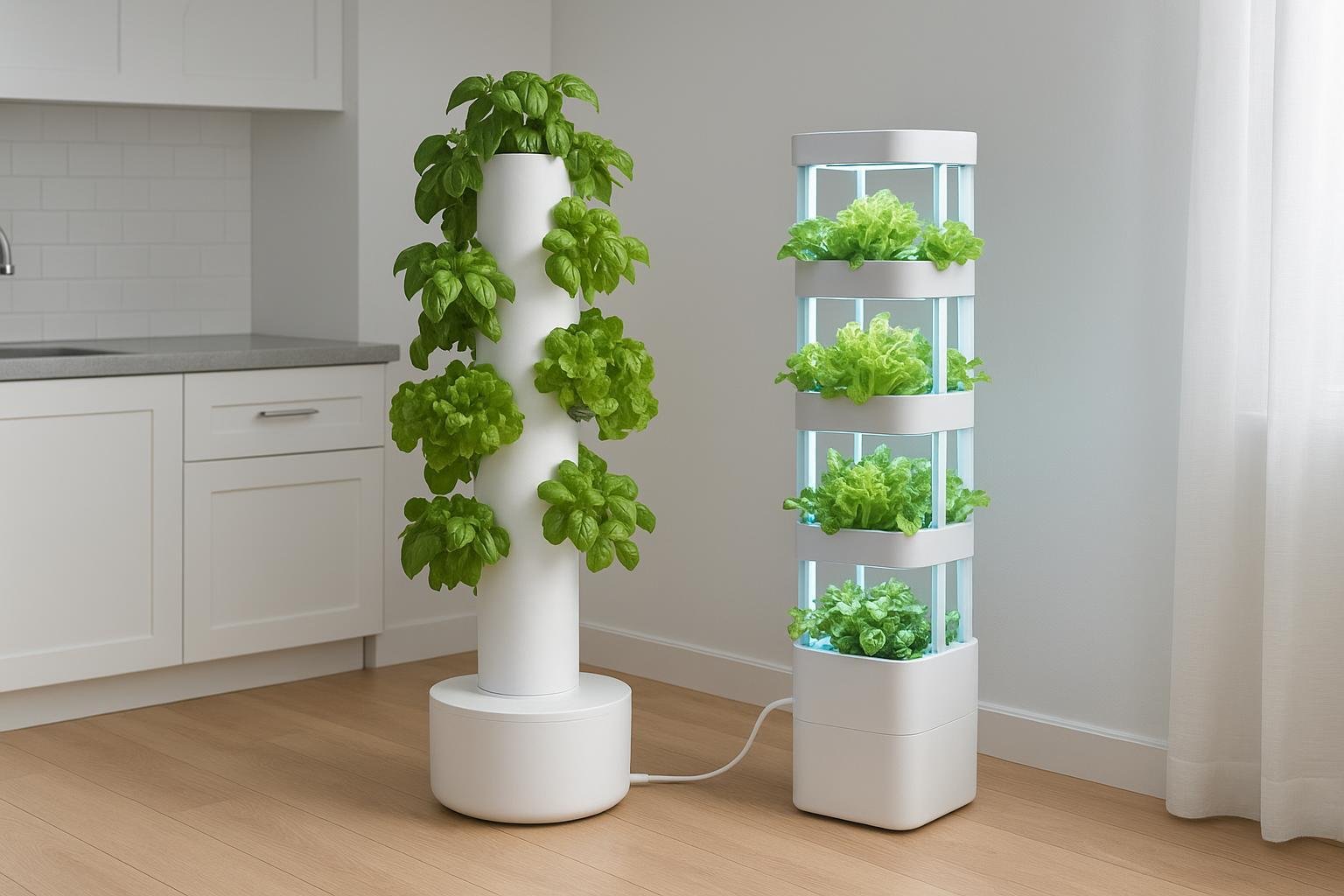
If you’re comparing vertical garden systems for year‑round herbs and greens, you’ve likely noticed the specs don’t line up neatly. Capacity varies by tier kits, lighting is bundled (or not), and maintenance claims range from “set it and forget it” to “weekly tune‑ups.” This guide brings the numbers together so you can quickly shortlist the best hydroponic tower for your space, budget, and tolerance for upkeep.
We focused on home gardening enthusiasts and advanced hobbyists who care about footprint efficiency, noise at 1 meter, cleaning cadence, and two‑year ownership costs. You’ll find a hero comparison table, consistent product cards, and a dedicated section on Tower Garden vs Lettuce Grow—two of the most requested head‑to‑head comparisons.
Soft CTA: If you’re prioritizing reliability and simple modular expansion, you can also review the SPRINGS FAITH home tower option here: SPRINGS FAITH Hydroponic Tower with Grow Light — TSP‑L7 LED.
Key takeaways
Start with footprint and capacity per square foot; it determines how much you can actually harvest in your space.
Two‑year total cost of ownership (TCO) can exceed the sticker price; factor pods/seedlings, nutrients, and electricity.
Integrated lighting simplifies setup but locks you into specific wattages and form factors; third‑party lights offer flexibility.
Maintenance minutes per week (top‑offs, pH/EC checks, quick cleans) matter more than splashy automation claims.
“Best” depends on your priorities: quiet operation, modular capacity, lowest TCO, or premium app features.
How we chose (Methodology)
We scored each product against a published rubric and used official spec pages and at most one reputable third‑party source per item to cross‑check details. For hydroponic basics and best practices, we referenced university extension materials such as UF/IFAS hydroponic production methods (2025).
Weighted criteria (100 total):
Two‑year total cost of ownership (TCO): 22
Capacity per footprint efficiency: 18
System reliability & maintenance burden: 18
Water & energy efficiency: 14
Grow performance & guidance (e.g., recipes, PAR cues): 12
Noise & home usability: 8
Ecosystem & support: 8
TCO framework (transparent formula):
Hardware + lights (one‑time) + recurring consumables (pods/seedlings, nutrients, filters) + estimated electricity over 24 months.
Electricity estimate = ((LED watts + pump watts) × daily photoperiod hours × 30 days ÷ 1000) × local $/kWh.
Assumptions vary by household; always confirm your local electricity rate and the exact bundle wattages at checkout.
Disclosure: Prices and wattages were verified on the sources linked at the time of writing and are subject to change. When a brand does not publish a spec (e.g., some light wattages), we note it and advise verifying with the official store before purchase.
Hero comparison: Best hydroponic towers at a glance
Lettuce Grow Farmstand (Original)
Product: Lettuce Grow Farmstand (Original)
Capacity (sites): 18/24/36
Footprint / Dimensions: 22″ diameter; height 4’6″–6’7″
Lighting (type/wattage): Indoor Glow Rings available; wattage not published on official page
Irrigation type: Recirculating hydroponics
Indicative price (USD): Varies by size/bundle; subject to change
Limitations: Proprietary seedling ecosystem; confirm light specs before purchase
Lettuce Grow Farmstand Nook
Product: Lettuce Grow Farmstand Nook
Capacity (sites): 20
Footprint / Dimensions: ~18.6″ dia × ~55″ H; 9‑gal tank
Lighting (type/wattage): Integrated LEDs; wattage not listed on product page
Irrigation type: Recirculating hydroponics
Indicative price (USD): Promo examples show ~$499.99; subject to change
Limitations: Smaller tank than Original; light wattage not listed
Tower Garden HOME (Indoor)
Product: Tower Garden HOME (Indoor)
Capacity (sites): ~20–30+ (config‑dependent)
Footprint / Dimensions: Compact indoor footprint; height ~5 ft class (verify)
Lighting (type/wattage): LED kit offered; wattage varies by bundle
Irrigation type: Aeroponic misting
Indicative price (USD): Check official store; subject to change
Limitations: Config variability; confirm exact spec sheet
Gardyn Home 4.0
Product: Gardyn Home 4.0
Capacity (sites): 30
Footprint / Dimensions: ~2 sq ft footprint
Lighting (type/wattage): 2 × 40W integrated LEDs
Irrigation type: Automated drip/recirculation
Indicative price (USD): ~849; subject to change
Limitations: Membership/pod ecosystem adds ongoing cost
Aerospring Indoor 27
Product: Aerospring Indoor 27
Capacity (sites): 27
Footprint / Dimensions: ~2–3 sq ft class (kit‑dependent)
Lighting (type/wattage): Integrated/tent kits; wattage bundle‑specific
Irrigation type: Aeroponics
Indicative price (USD): Above entry‑level; confirm with manufacturer
Limitations: Specs vary by kit; limited big‑box retail
Mr. Stacky Smart Farm
Product: Mr. Stacky Smart Farm
Capacity (sites): ~20
Footprint / Dimensions: ~50 × 50 cm base; ~150 cm tall
Lighting (type/wattage): Not integrated; add lights for indoor grows
Irrigation type: Recirculating hydroponics
Indicative price (USD): Entry‑level; region‑dependent; subject to change
Limitations: AU‑centric listings; confirm U.S. spec/price
ExoTower (6‑tier)
Product: ExoTower (6‑tier)
Capacity (sites): 24
Footprint / Dimensions: Compact; dimensions vary by SKU
Lighting (type/wattage): Optional/third‑party lights
Irrigation type: Recirculating hydroponics
Indicative price (USD): Budget‑friendly; subject to change
Limitations: Light/reservoir details vary across SKUs
Prices and availability change frequently; always verify capacity, dimensions, and wattages on the official product pages at checkout. (If you’re viewing this on mobile, the stacked format above is intentionally used to avoid horizontal squeezing.)
Top 7 hydroponic tower reviews (standardized item cards)
Below are concise hydroponic tower reviews using consistent fields so you can compare like‑for‑like. Each “Price” line is indicative only and subject to change.
1) Gardyn Home 4.0 — Best for guided, indoor automation
Key specs: 30 sites; ~2 sq ft footprint; 2 × 40W integrated LED bars; recirculating irrigation with automation.
Maintenance cadence: Top‑offs weekly; nutrient dosing/pH checks per standard hydroponic practice; quick wipe‑downs between harvests; deeper clean between cycles.
Pros:
Compact footprint with integrated lighting.
App guidance and recipes support predictable growth.
Widely available with consistent, published specs.
Cons:
Membership/pod ecosystem increases TCO vs DIY seedlings.
Best suited to leafy greens/herbs; fruiting crops need added care.
Best for: Indoor growers who want an app‑assisted, tidy setup.
Not for: Shoppers optimizing purely for lowest TCO.
Price: ~849 USD; subject to change.
Evidence: Gardyn Home 4.0 product page
2) Lettuce Grow Farmstand (Original) — Best lifestyle pick with modular capacity
Key specs: 18/24/36 sites; 22″ diameter; height 4’6″–6’7″; optional indoor Glow Rings (wattage not listed on official page at time of writing); recirculating.
Maintenance cadence: Weekly top‑offs/nutrients; routine pH checks; periodic deep clean.
Pros:
Modular capacity without changing the footprint.
Established ecosystem with pre‑sprouted seedlings.
Aesthetic fit for patios and bright indoor spots.
Cons:
Proprietary seedlings/pods raise long‑term consumable costs.
Indoor light wattage not published; confirm before purchase.
Best for: Households wanting a polished look and simple capacity upgrades.
Not for: DIY seed starters focused on minimizing TCO.
Price: Varies by size/bundle; subject to change.
Evidence: Lettuce Grow — Original Farmstand
3) Tower Garden HOME (Indoor) — Best aeroponic misting option
Key specs: Common home configurations run roughly low‑20s to low‑30s sites; compact indoor footprint; aeroponic misting; LED kit availability varies by seller.
Maintenance cadence: Nutrient additions and scheduled cleaning; misting systems reward consistent filter/pump care.
Pros:
Aeroponic feeding can deliver strong oxygenation to roots.
Broad brand recognition and active user communities.
Accessory ecosystem for indoor/outdoor setups.
Cons:
Configurations vary; confirm official spec sheet for apples‑to‑apples comparisons.
Precise reservoir/light wattage details vary across retailers.
Best for: Enthusiasts who prefer aeroponics and don’t mind verifying specs before buying.
Not for: Shoppers who want a single, “one‑box” bundle with fixed specs.
Price: Check official store; subject to change.
Evidence: Representative retailer listing for Tower Garden HOME
Soft CTA (toolbox): Comparing footprint efficiency across models? See how a modular, reliability‑first design approaches capacity with the SPRINGS FAITH Hydroponic Tower with Grow Light — TSP‑L7 LED.
4) SPRINGS FAITH Hydroponic Tower with Grow Light — TSP‑L7 LED — Best for reliability & modular expansion
Key specs: 7 tiers, 28 sites; water‑efficient, closed‑loop recirculation; compatible broad‑spectrum LED grow light with timer control; commercial‑leaning components. (Confirm dimensions and wattages on the product page prior to purchase.)
Maintenance cadence: Designed for stable circulation; standard weekly top‑offs, pH/EC checks, and periodic deep cleans per cycle.
Pros:
Excels at minimizing water use through closed‑loop recirculation.
Particularly strong in long‑term reliability with commercial‑grade components.
Supports straightforward expansion through modular add‑on tiers.
Cons:
Independent third‑party validation is still developing.
Some specs (exact footprint, pump/light wattage) should be confirmed on the current spec sheet.
Best for: Owners who value predictable uptime and clean expansion paths.
Not for: Buyers who prioritize app‑first automation ecosystems.
Price: See product page; subject to change.
Evidence: SPRINGS FAITH — TSP‑L7 LED
5) Aerospring Indoor 27 — Best high‑capacity performer for hobbyists
Key specs: 27 sites; kit options with enclosures/lighting; aeroponics; specs and wattage vary by bundle.
Maintenance cadence: Similar to other performance‑oriented towers—routine top‑offs, scheduled cleans, and attention to pump/filter health.
Pros:
Higher capacity per unit than many lifestyle systems.
Performance reputation among advanced users.
Enclosure/tent options for more controlled indoor environments.
Cons:
Manufacturer specs/wattages are bundle‑dependent; confirm prior to purchase.
Limited standardized big‑box listings for easy comparison.
Best for: Advanced hobbyists prioritizing production.
Not for: Shoppers who want one fixed, simplified bundle.
Price: Typically above entry‑level; subject to change.
6) Mr. Stacky Smart Farm — Best budget‑friendly recirculating pick
Key specs: ~20 sites; approx. 50 × 50 cm base; ~150 cm tall; large reservoir options in some kits; add third‑party lights for indoor use.
Maintenance cadence: Straightforward weekly routines; basic components are easy to service or replace.
Pros:
Accessible price point relative to premium towers.
Larger reservoir options reduce refill frequency.
Simple, repairable components.
Cons:
Indoor growers must source compatible lighting and set photoperiods.
Specs/prices vary across regions; verify U.S. kit contents.
Best for: Cost‑conscious growers who prefer DIY lighting.
Not for: Buyers wanting integrated, app‑driven lighting.
Price: Entry‑level; subject to region and bundle.
Evidence: Retailer listing with dimensions/reservoir context
7) ExoTower (6‑tier/24‑plant) — Best modular value
Key specs: 24 sites in 6 tiers; compact footprint; indoor/outdoor friendly; lighting typically added separately.
Maintenance cadence: Weekly top‑offs and standard nutrient care; straightforward tear‑down for periodic deep cleans.
Pros:
Budget‑friendly entry into vertical hydroponics.
Modular tiers let you size capacity to space and budget.
Mobile and simple to position.
Cons:
Official light/reservoir specs vary across SKUs and retailers.
Less guidance than premium, app‑driven systems.
Best for: Starters who want modular flexibility with minimal upfront cost.
Not for: Shoppers who want full‑stack automation and guided recipes.
Price: Budget‑oriented; subject to change.
Tower Garden vs Lettuce Grow: TCO, capacity/footprint, maintenance
Short answer: If you value modular capacity with a consistent footprint and a polished lifestyle design, Lettuce Grow’s Farmstand line (Original/Nook) is compelling. If you prefer aeroponic misting and a broad accessory ecosystem, Tower Garden HOME is attractive—just verify the exact configuration and specs at purchase time.
Capacity & footprint efficiency:
Lettuce Grow Original keeps a ~22″ diameter while scaling tiers (18/24/36 sites), making planning for space straightforward.
The Nook variant offers 20 sites and a compact indoor stance with a 9‑gallon tank.
Tower Garden HOME configurations vary by retailer; confirm plant sites, footprint, and reservoir gallons on the official U.S. store for an apples‑to‑apples sites‑per‑sq‑ft calculation.
Two‑year TCO (framework):
Seedlings/pods: Lettuce Grow’s proprietary seedlings are convenient but add a recurring cost line. DIY starts can lower TCO across systems if you’re willing to manage germination.
Nutrients: Both systems require regular dosing. Price per liter/quart and dose rate drive monthly cost; verify current pricing on official stores.
Electricity: TCO depends on light and pump wattages. When wattages aren’t published, contact support or check retailer manuals to estimate (then multiply by your $/kWh using the formula in Methodology).
Maintenance & user experience:
Lettuce Grow emphasizes straightforward weekly routines (top‑offs, pH checks) with periodic deep cleans; the Nook’s 9‑gal reservoir implies more frequent refills than the Original’s larger tank.
Tower Garden’s aeroponics reward consistent filter/pump care; many enthusiasts consider it a reliable “workhorse” when maintained on schedule.
Evidence cited above: Lettuce Grow pages for the Original Farmstand and Nook; representative Tower Garden retailer listing for configuration context.
FAQs
Is a hydroponic tower noisy?
Most home pumps are modest; many users report a gentle hum and water trickle. Actual dB varies by brand and placement (tile amplifies sound more than rugs). If noise sensitivity is critical, place the reservoir on a vibration‑damping mat and consider systems advertised for quiet operation.
How much does electricity cost per month?
Use the formula in Methodology. As a rough example: with 80W of LEDs + 5W pump running 12 hours/day at $0.14/kWh, monthly electricity ≈ ((85 × 12 × 30) ÷ 1000) × $0.14 ≈ $4.28. Your wattages and electricity rate may differ.
Can these towers grow fruiting crops?
Yes, but yields and training requirements vary. Most towers shine with leafy greens and herbs. For tomatoes/peppers/strawberries, plan for stronger lighting, pruning/trellising, and longer cycles.
How often should I clean or change nutrients?
Many home growers top off weekly and do a nutrient solution refresh every 2–4 weeks, with a deeper clean between crop cycles. Follow your manufacturer’s guidance and monitor EC/pH.
Indoor vs outdoor use—do I need extra lights?
Outdoor towers with 6–8+ hours of sun may not need artificial lights. Indoors, plan for full‑spectrum LEDs sized to your canopy and height. Integrated light bundles simplify setup; DIY lights offer flexibility but require dialing in PAR and photoperiod.
Next steps
Decide what you value first: lowest two‑year TCO, smallest footprint, quietest operation, or app‑guided simplicity. Use the comparison table to shortlist 2–3 models, then verify current wattages, reservoir sizes, and warranties on official pages before you buy.
Soft CTA: If predictable uptime, water‑efficient recirculation, and modular growth are high on your list, take a closer look at the SPRINGS FAITH Hydroponic Tower with Grow Light — TSP‑L7 LED. It’s a solid fit for reliability‑minded home growers, with specs and pricing confirmed on the product page (subject to change).
Related Posts
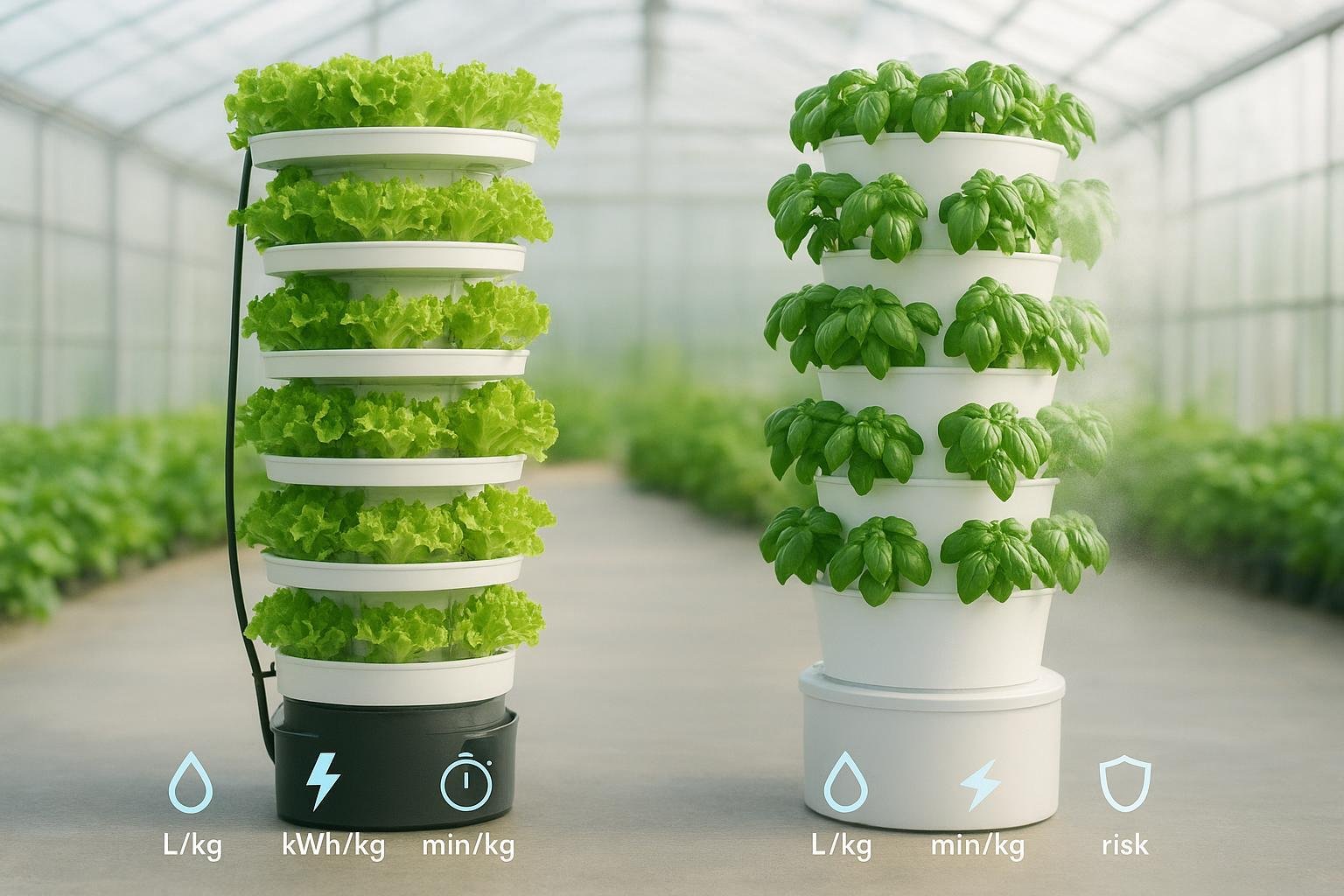 Hydroponic vs Aeroponic Towers (2026): Which System Is Better for Your Plants?
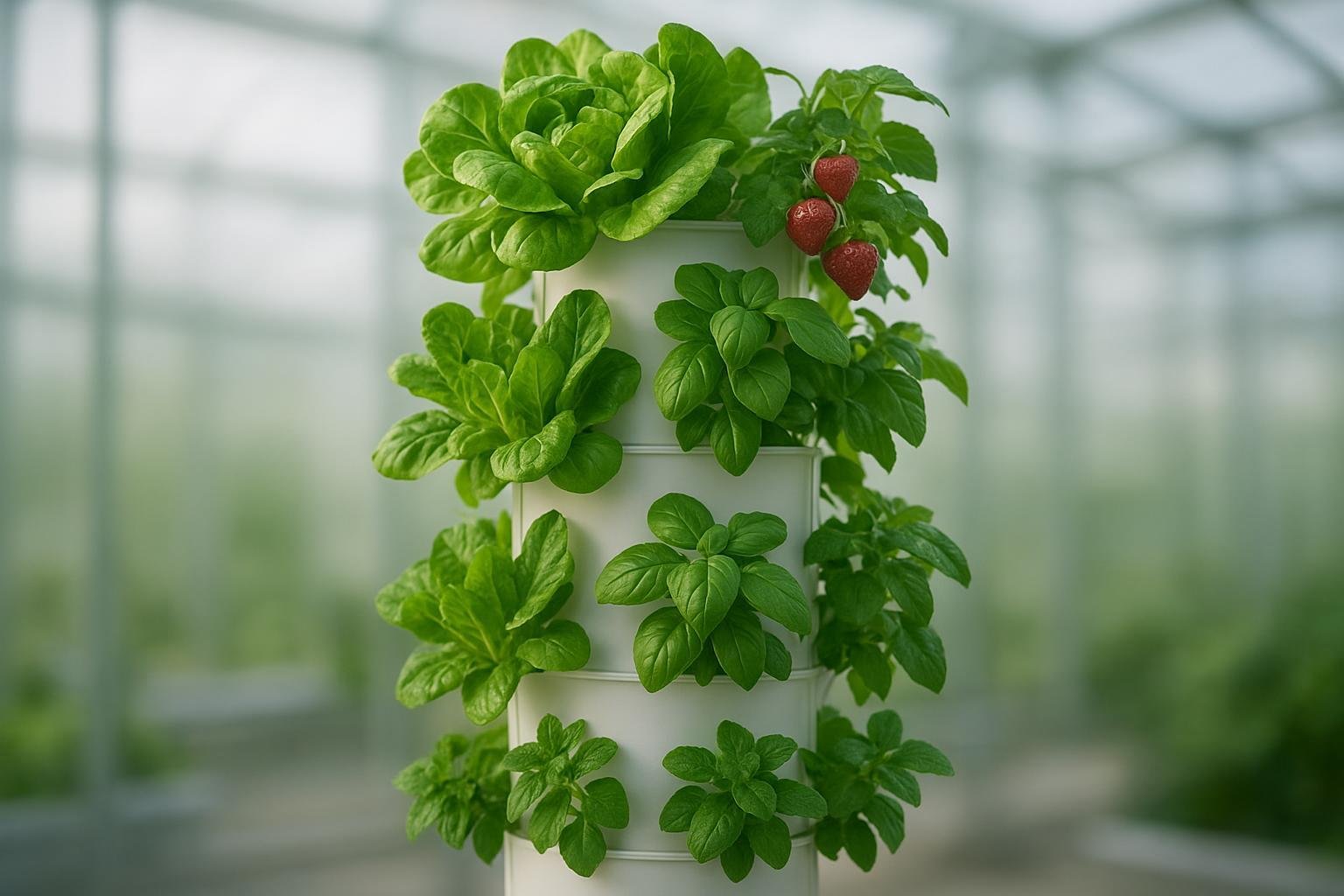 What Can You Grow in a Hydroponic Tower? 15 Best Plants for Vertical Growth
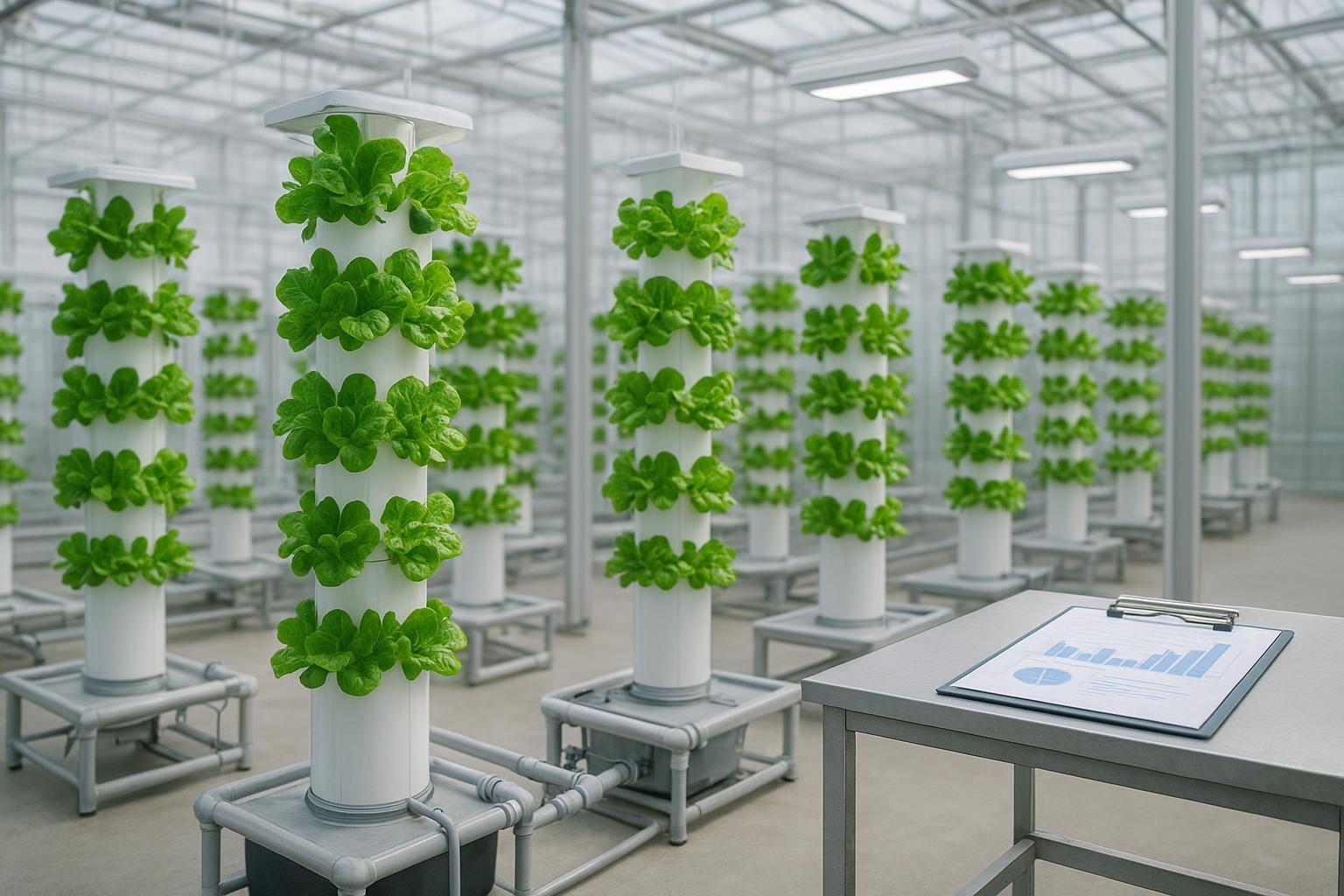 Hydroponic Tower Cost Analysis: Is It Worth the Investment? (Plus DIY Options)