

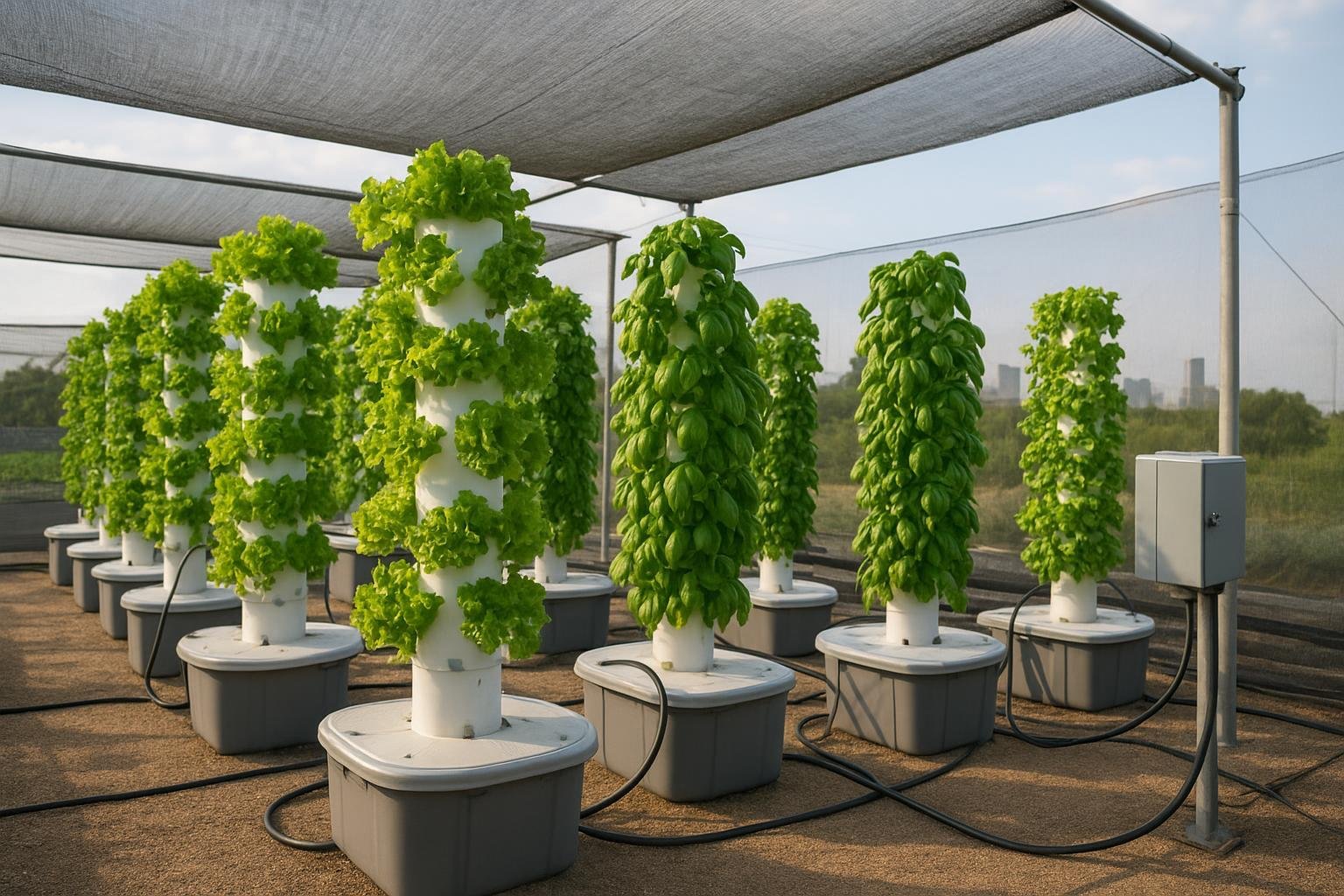
Weather is getting wilder, materials are getting tougher, and sensors are getting smarter. If you run outdoor hydroponic systems, 2026 is the year to lock in multi‑season productivity by pairing climate buffering with disciplined nutrient control and tight operating SOPs. This guide focuses on what actually moves yield per square foot while keeping water use and downtime in check.
Key takeaways
Stabilize the microclimate first using low or high tunnels, shade, and wind controls; this reduces stress, disease pressure, and crop time.
Run clear EC, pH, and reservoir temperature targets by crop and season; make small, scheduled adjustments rather than reactive swings.
Weatherproof with UV‑stable materials, IP‑rated electrical enclosures, and proper anchoring to safeguard uptime.
Adopt a simple daily/weekly/monthly SOP cadence to prevent drift in sensors, dosing, and sanitation.
Validate performance locally and track water, energy, and yield so you can tune for your site instead of guessing.
Start with the site — a 7‑point outdoor checklist
Wind exposure and anchors: map prevailing winds; plan anchors, bracing, or windbreaks.
Sun path and shade: mark summer and winter sun; design for seasonal shade cloth changes.
Frost pockets and cold air drainage: avoid low spots; prefer gentle slopes with good air movement.
Drainage and splash control: slope pads and pathways; keep reservoirs and electrics above splash.
Water source and power: verify water quality; use GFCI on all circuits and weatherproof connections.
Access and service lanes: leave room to sanitize, swap parts, and move carts in any weather.
Pest exclusion plan: specify netting, seals, and sanitation zones before pests arrive.
Microclimate is compound interest for plants. Reduce temperature swings, wet leaf surfaces, and wind stress, and your nutrient regime works the way it was designed—consistently.
Seasonal tuning for outdoor hydroponic systems that actually moves yield
Outdoor yield comes from minimizing physiological stress. Think of it this way: stable roots plus steady photosynthesis beat heroics after a heatwave or frost.
Targets that hold up in the field
The following starting points synthesize university and peer‑reviewed guidance for leafy greens and basil. Tune to your water chemistry and cultivars, and document your adjustments.
Season | Crop | Stage | EC (mS/cm) | pH | Reservoir Temp |
|---|---|---|---|---|---|
Spring | Lettuce | Seedling | 0.8–1.2 | 5.5–6.5 | 65–71°F (18–22°C) |
Spring | Lettuce | Production | 1.2–1.8 | 5.4–6.0 | 65–71°F (18–22°C) |
Spring | Basil | Vegetative | 1.6–2.2 | ~5.5 (≈5.6–6.2) | 65–71°F (18–22°C) |
Summer | Lettuce | Production | 1.2–1.6 | 5.4–6.0 | 65–68°F (18–20°C) |
Summer | Basil | Vegetative | 1.6–2.2 | ~5.5 (≈5.6–6.2) | 65–68°F (18–20°C) |
Fall | Lettuce | Production | 1.2–1.8 | 5.4–6.0 | 65–71°F (18–22°C) |
Fall | Basil | Vegetative | 1.6–2.2 | ~5.5 (≈5.6–6.2) | 65–71°F (18–22°C) |
Winter | Lettuce | Production | 1.4–1.8 | 5.4–6.0 | 65–71°F (18–22°C) |
Why these ranges: University sources show lettuce performs well at lower EC than many growers expect, with strong results between ~1.2 and 1.8 mS/cm when pH is controlled, and basil is typically managed a bit higher. For lettuce EC efficiency and pH ranges, see UF/IFAS guidance in the 2025 note on NFT lettuce and an Ohio State‑linked summary of practical EC/pH bands for hydroponic production in Greenhouse Grower. Basil ranges align with peer‑reviewed studies and herb production reviews from university‑linked sources. For quick references, consult the UF/IFAS LTEC optimization note in AE610 and the OSU‑summarized pH and EC practices in Greenhouse Grower: UF/IFAS discusses efficient EC targeting in the hydroponic lettuce context in the 2025 update in the article titled EC efficiency for NFT lettuce, while Greenhouse Grower outlines research‑backed pH 5.4–6.0 and EC 1.4–1.8 mS/cm bands for NFT lettuce management.
Reservoir temperature and dissolved oxygen: as water warms, oxygen solubility drops just when roots need more. Aim for 65–71°F most of the year and nearer 65–68°F during heat spells; increase aeration to hold at least 6–8 mg/L dissolved oxygen. Practical overviews of solution temperature impacts and DO considerations are available in a horticulture trade brief on maintaining hydroponic solution temperature and in a root‑zone environment explainer for controlled environments.
Supporting references with descriptive anchors:
UF/IFAS note on efficient EC management for NFT lettuce in 2025 provides EC targets that prevent over‑dosing while maintaining yield, see the guidance in the publication EC efficiency for NFT lettuce (2025) from UF/IFAS. [https://edis.ifas.ufl.edu/publication/AE610]
An Ohio State‑linked summary in Greenhouse Grower details pH 5.4–6.0 and EC 1.4–1.8 mS/cm for lettuce in NFT with yield impacts when pH is controlled. [https://www.greenhousegrower.com/crops/varieties/manage-ph-and-soluble-salts-in-hydroponics/]
Peer‑reviewed and university‑linked herb research indicates basil performs well near pH ~5.5 with EC in the ~1.6–2.2 mS/cm range for vegetative growth. See Walters et al. 2022 and a CEA herb pH review from Produce Grower. [https://pmc.ncbi.nlm.nih.gov/articles/PMC9409542/] [https://www.producegrower.com/article/hydroponic-herb-production-optimal-ph-controlled-environment-agriculture-cea/]
For reservoir temperature and dissolved oxygen practice, see a root‑zone environment explainer in UrbanAgNews. [https://urbanagnews.com/blog/exclusives/how-important-is-the-root-zone-environment-in-controlled-environment-hydroponic-production/]
Cold and heat strategies that extend your calendar
Use low or high tunnels to buffer wind, reduce leaf wetness, and capture passive heat on sunny days. University guidance highlights that excluding rainfall in high tunnels shortens leaf wetness duration and can reduce foliar disease pressure while stabilizing day–night temperatures, all of which sustain quality and supply continuity. For frost nights, add floating row covers or double layers and ventilate when daytime highs push tunnel temps above the mid‑50s °F to avoid condensation and disease. WVU Extension offers practical operating guidance, including typical frost protection windows and ventilation cues. When heat arrives, deploy 30–50% shade cloth for leafy greens, insulate reservoirs, shade plumbing, and consider a compact heat‑exchange coil or chiller during multi‑day heat waves; increase aeration to sustain oxygen levels and ventilate tunnels early to prevent humidity spikes that drive disease.
References:
UF/IFAS explains how high tunnels enhance vegetable production by reducing rainfall leaf wetness and evening out temperatures. [https://edis.ifas.ufl.edu/publication/HS1466]
WVU Extension’s guide to low tunnels outlines frost protection and ventilation best practices. [https://extension.wvu.edu/lawn-gardening-pests/gardening/gardening-101/low-tunnels-for-beginners]
Weatherproof your outdoor hydroponic systems for uptime
Materials: choose UV‑stabilized plastics and document service life. Greenhouse films typically last several seasons when UV‑stabilized; rigid polycarbonate or acrylic with proper UV protection are long‑lasting. For outdoor plastics used near electrical or control interfaces, look for UL 746C F1 suitability where relevant.
Electrical protection: house controllers, timers, and connections in IP65–IP66 enclosures, route cables with drip loops and glands, use conduit, and protect all circuits with outdoor‑rated GFCI. IP65 is dust‑tight and protects against low‑pressure water jets; IP66 ups protection against higher‑pressure spray—useful for washdowns and pesticide applications. For a concise comparison of NEMA and IP ratings that aligns with agricultural washdown realities, see a practical explainer from Essentra Components. [https://www.essentracomponents.com/en-us/news/industries/indoor-outdoor-enclosures/what-are-nema-and-ip-ratings]
Anchoring and structure: follow manufacturer wind ratings for tunnels and shields; on permanent pads, mind embedment depth, edge distances, and torque specs. In higher‑wind regions, consult a local engineer. A well‑anchored system is the difference between a productive week and an emergency rebuild after a storm.
Nutrient management and monitoring discipline
EC and pH: operate within the seasonal table above. Adjust in scheduled, small increments after measuring plant response for a few days rather than chasing daily variance.
Partial refresh and filtration: replace 20–33% of the solution weekly for herbs like basil to control ion accumulation; keep inline filters clean to protect flow and emitters.
Sensor calibration: log and calibrate EC/pH sensors weekly; cross‑check with handheld meters to avoid drift.
Reservoir temperature and DO: log daily; target the tighter summer range near 65–68°F and add aeration as ambient temperatures climb.
Why the discipline matters: small, consistent corrections protect root health and nutrient uptake. It’s faster to keep a system in the groove than to recover from a crash.
SOP cadence most farms skip
Daily: Record reservoir temperature, EC, and pH at set times; scout plants for tip burn, chlorosis, or pests; confirm enclosures are sealed and anchors secure before forecast winds. Ventilate tunnels proactively on sunny mornings to minimize condensation.
Weekly: Partially refresh nutrient solution, clean filters and emitters, and calibrate sensors. Sanitize tools and wipe algae from surfaces; verify GFCI function and inspect cords and glands.
Monthly and seasonal: Full reservoir flush and sanitation with an oxidizer compatible with your materials; inspect UV films for wear; rotate shade cloth as seasons change; add or remove inner row covers before freezes; test emergency power if applicable.
Practical example — closed‑loop summer reservoir strategy in towers
Disclosure: SPRINGS FAITH is our product.
In peak summer, the goal is to keep roots cool and oxygenated while leaves keep photosynthesis humming. On a commercial‑grade tower setup designed for outdoor use, I configure a closed‑loop reservoir with these steps:
Place the reservoir in shade on an insulated pad, wrap the tank with reflective insulation, and shade all supply/return lines. Keep the lid sealed to reduce heat gain and contamination. Set the controller to target 65–68°F water; add a modest heat‑exchange coil or compact chiller only when a heat wave persists beyond two to three days. Increase aeration during the hottest hours, check DO, and confirm it holds at 6–8 mg/L or better. Run lettuce on the lower EC band from the table and tighten pH control; for basil, keep EC steady and watch for rapid uptake cues that might warrant a slightly higher refresh rate. Verify that electrical components sit inside IP‑rated enclosures with drip loops and that anchors are tensioned ahead of forecast winds.
This configuration doesn’t rely on big capex changes—it’s the combination of insulation, targeted cooling, and routine logs that prevents root stress and keeps cycles on schedule.
ROI reality check in 60 seconds
Independent work comparing hydroponic lettuce to field production shows much higher yield per area and far lower water use per kilogram of produce, although energy demand is higher. One widely cited benchmark in Arizona found hydroponic lettuce produced roughly an order of magnitude more per square meter per year while using an order of magnitude less water per kilogram than conventional field lettuce. For details and context, see the 2015 PLOS One study by Barbosa and colleagues. [https://pmc.ncbi.nlm.nih.gov/articles/PMC4483736/]
Translate that to your site with a quick sensitivity view: track CAPEX, pump and chiller kWh, labor hours, average yield per square foot by crop, and your local price. Then ask: what happens to margin if yield per square foot drops 10% in heat, or power rates spike 15%? Outdoor hydroponic systems pay off when you stabilize the microclimate and keep roots in their sweet spot.
Sources and further reading
Season extension: The University of Florida’s IFAS explains how high tunnels reduce rainfall leaf wetness and moderate temperatures to support quality and continuity, in Using High Tunnels to Enhance Organic Vegetable Production. [https://edis.ifas.ufl.edu/publication/HS1466] For hands‑on low tunnel operation, including frost protection and ventilation, see the West Virginia University Extension guide Low Tunnels for Beginners. [https://extension.wvu.edu/lawn-gardening-pests/gardening/gardening-101/low-tunnels-for-beginners]
Nutrient targets: UF/IFAS’s 2025 note EC efficiency for NFT lettuce summarizes lower EC setpoints that maintain yield. [https://edis.ifas.ufl.edu/publication/AE610] Greenhouse Grower, summarizing Ohio State research, details pH 5.4–6.0 and EC 1.4–1.8 mS/cm practical ranges for lettuce. [https://www.greenhousegrower.com/crops/varieties/manage-ph-and-soluble-salts-in-hydroponics/] Basil ranges draw on Walters et al. 2022 and a CEA herb pH explainer. [https://pmc.ncbi.nlm.nih.gov/articles/PMC9409542/] [https://www.producegrower.com/article/hydroponic-herb-production-optimal-ph-controlled-environment-agriculture-cea/]
Root‑zone environment: For dissolved oxygen and root‑zone practice, review a concise explainer on the importance of the root‑zone environment in controlled environment hydroponic production. [https://urbanagnews.com/blog/exclusives/how-important-is-the-root-zone-environment-in-controlled-environment-hydroponic-production/]
Weatherproofing: For a clear primer on IP vs. NEMA protection in outdoor settings, see What Are NEMA and IP Ratings from Essentra Components. [https://www.essentracomponents.com/en-us/news/industries/indoor-outdoor-enclosures/what-are-nema-and-ip-ratings]
Water use and yield context: Barbosa et al. 2015 in PLOS One compares hydroponic lettuce with field systems on yield and water metrics. [https://pmc.ncbi.nlm.nih.gov/articles/PMC4483736/]
Related Posts
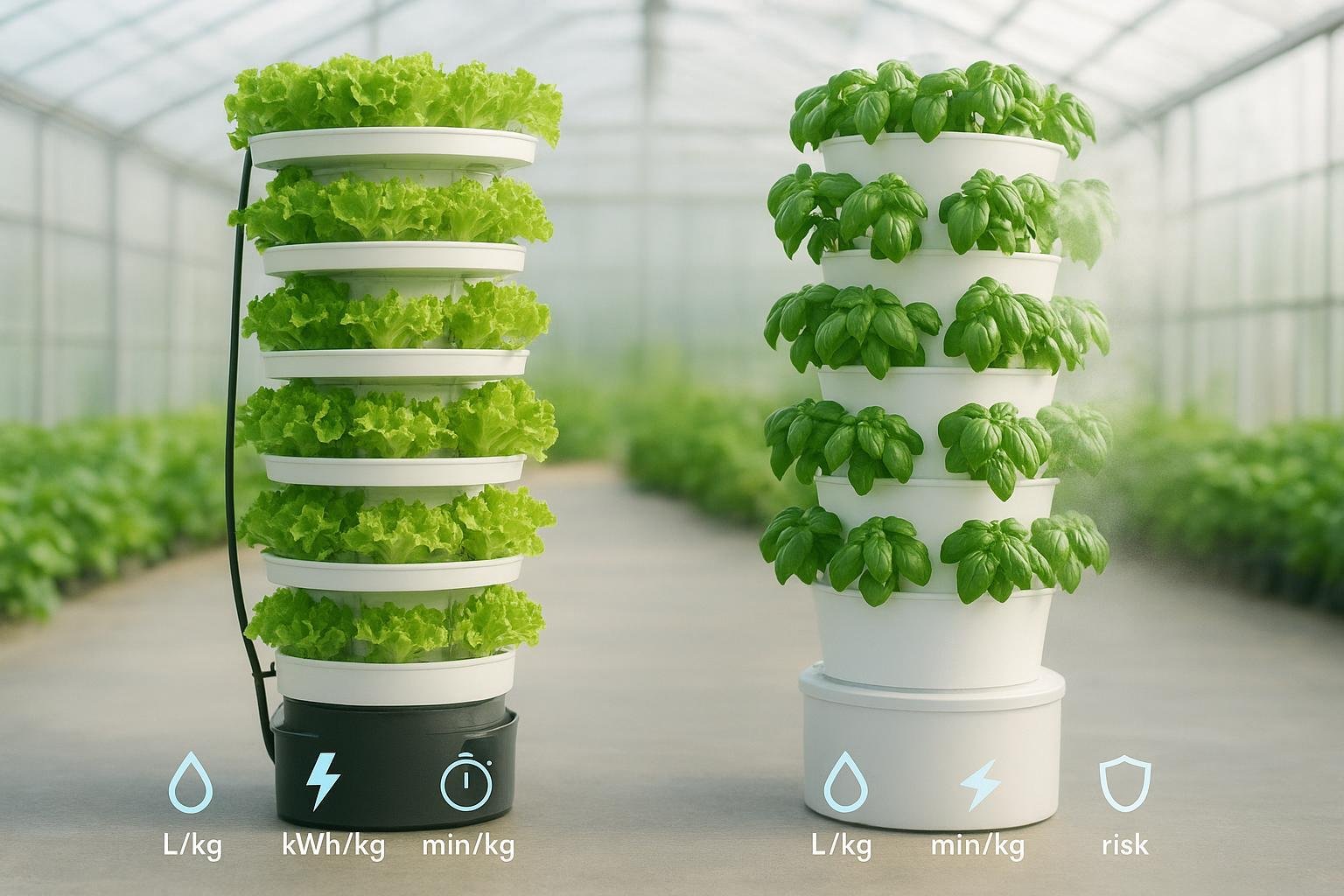 Hydroponic vs Aeroponic Towers (2026): Which System Is Better for Your Plants?
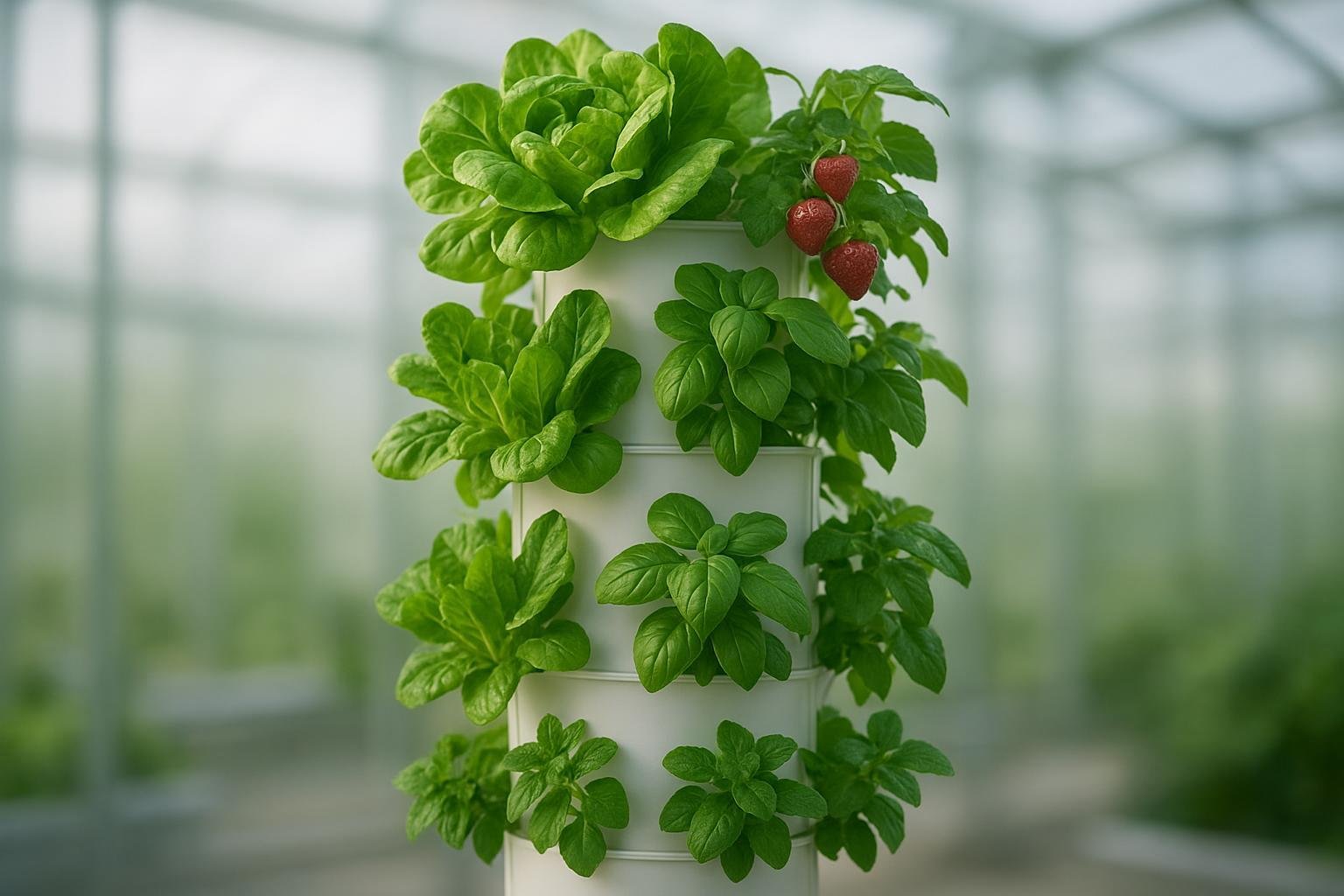 What Can You Grow in a Hydroponic Tower? 15 Best Plants for Vertical Growth
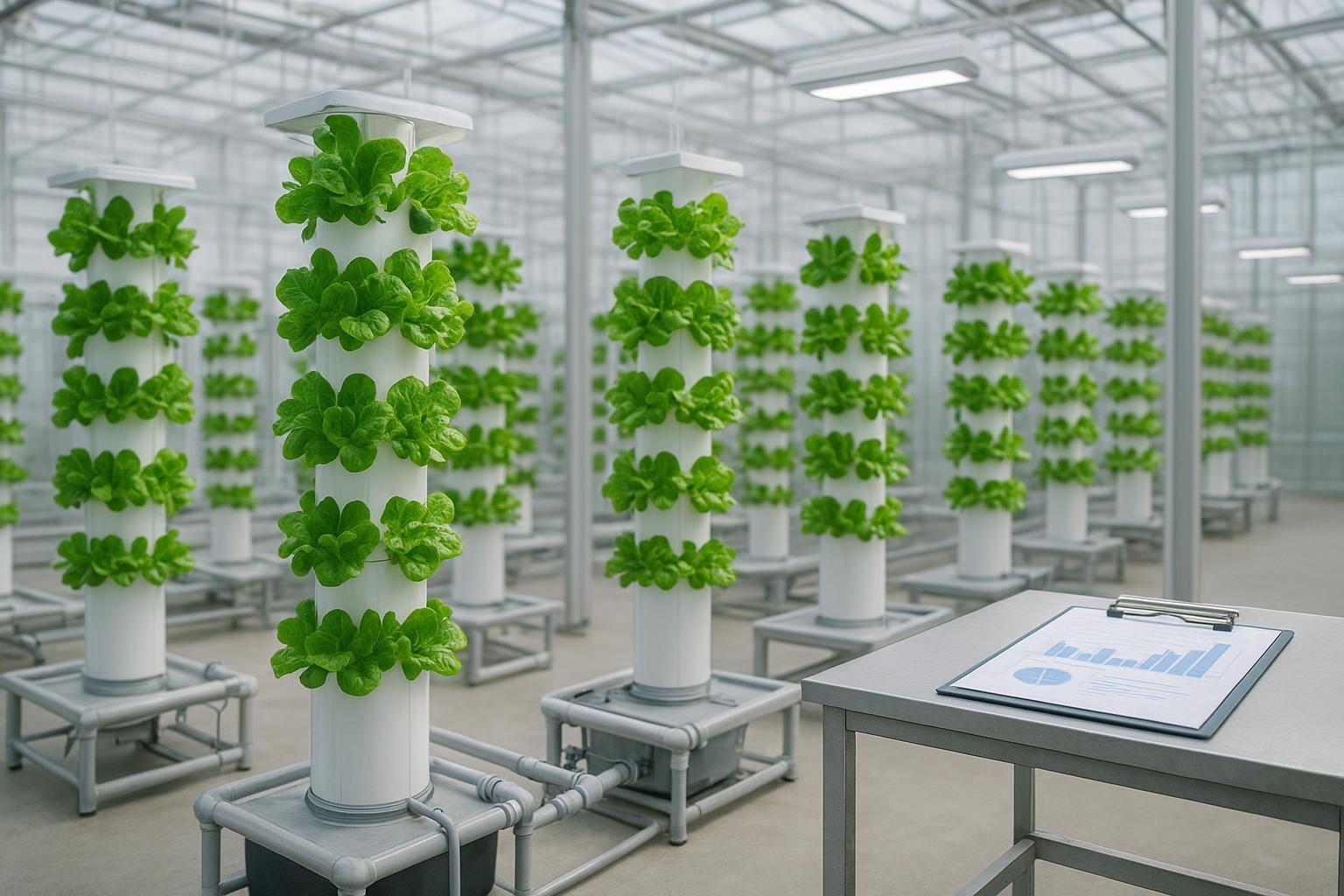 Hydroponic Tower Cost Analysis: Is It Worth the Investment? (Plus DIY Options)