
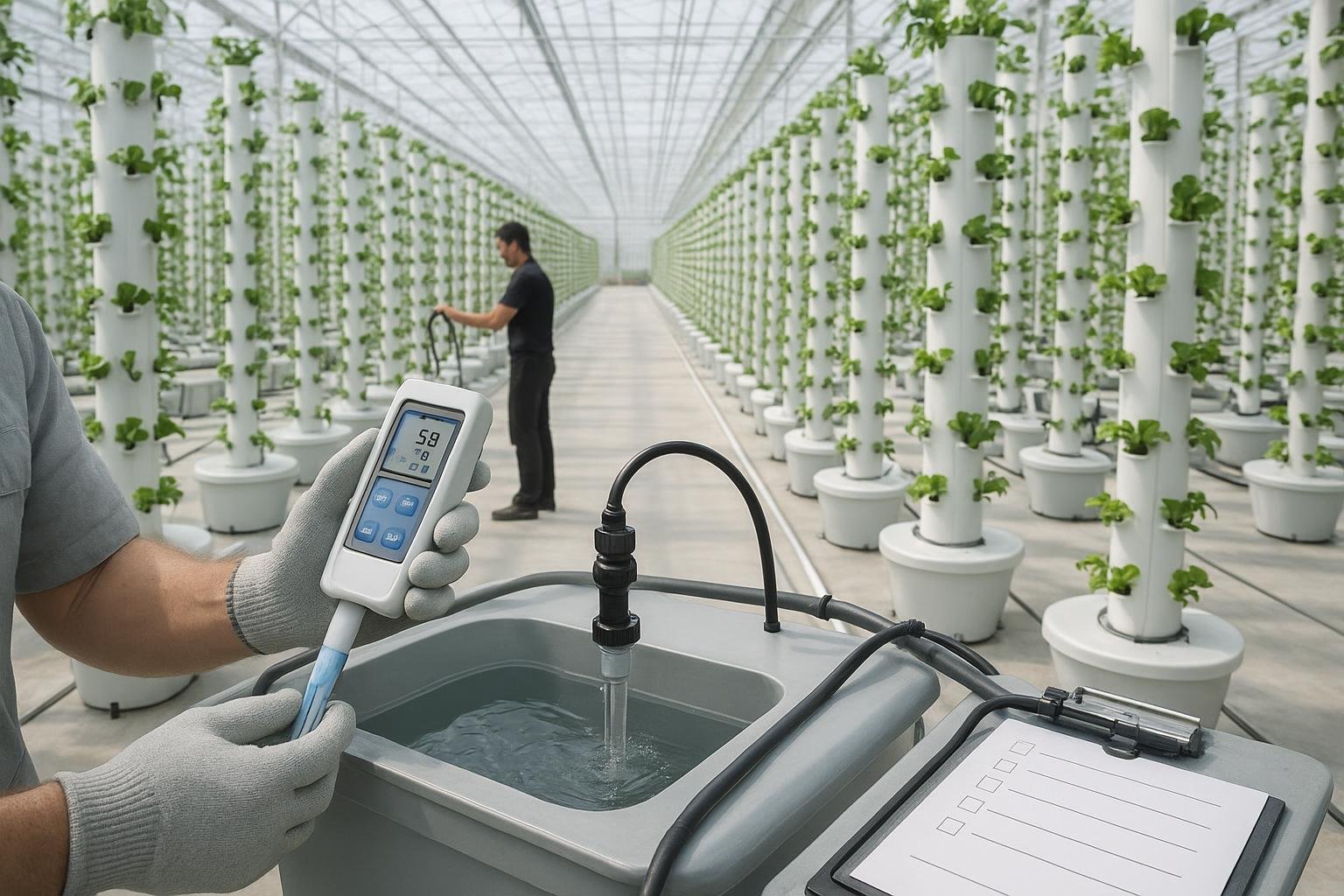
You run a commercial greenhouse or urban farm, and uptime matters. This checklist distills proven, ops‑level routines for top‑feed/drip towers so crews can keep nutrient chemistry stable, flow paths clean, and yields consistent—all without guesswork. You’ll get cadenced SOPs (daily/weekly/monthly/between cycles), clear pass/fail criteria, and a troubleshooting matrix you can train against.
This guide focuses on recirculating, timer‑driven top delivery with gravity return—the common “self watering” tower architecture used for leafy greens and culinary herbs in 2026.
Key takeaways
Hold the nutrient solution near 18–22°C to support oxygen and root health; warm (>25°C) solution raises disease risk according to recent CEA literature.
Keep pH in a conservative 5.5–6.5 window and EC in a moderate band appropriate for leafy greens/herbs; confirm instruments are calibrated before adjusting.
Flush laterals and clean filters on a set cadence; slight clogs are silent yield killers—don’t wait for visible symptoms.
Sanitation is a workflow (wash → rinse → sanitize → rinse/air‑dry). Document product, ppm, contact time, and rinsing before recommissioning.
Use audit‑ready logs: daily solution readings, weekly hydraulics checks, monthly calibration/sanitation records, and corrective‑action notes.
Quick orientation: operating targets for your self watering tower garden
Temperature: In recirculating systems, target roughly 18–22°C. Higher temperatures reduce oxygen solubility and correlate with pathogen pressure; a 2024 review summarizes why growers cap practical temps around 25°C in recirculating contexts, despite plant uptake considerations—see the analysis in the Frontiers Plant Science cooling techniques review (2024). Dissolved oxygen (DO) falls as temperature rises; at 20°C, freshwater DO saturation is about 9 mg/L. Use standard tables for precise values by temperature and elevation per the USGS dissolved oxygen technical methods A6.2.
pH & EC: Land‑grant hydroponics guidance places most crops within pH 5.5–6.5, with crop‑specific tuning; use moderate EC suitable for leafy greens and herbs. For fundamentals and nutrient management context, see Penn State Extension’s hydroponics nutrition overview (2023).
Source water & alkalinity: Test and understand alkalinity (CaCO3), hardness, and contaminants; consider acidification or RO to stabilize pH management. See UF/IFAS guidance on water testing for horticulture (EDIS CV216).
Daily checklist for your self watering tower garden
Reservoir level, lid, and light exclusion: Confirm lid is seated and opaque (no light leaks). Top up with conditioned water if below your minimum mark.
Solution temperature (target ≈18–22°C): Log value; if >24°C repeatedly, plan mitigation (shade, insulation, heat isolation from pumps/chillers).
pH and EC: Measure and log. Only adjust after verifying meter status (see calibration SOP). Make small, gradual changes (±0.1–0.2 pH; modest nutrient or dilution corrections). If EC drifts >0.5 mS/cm from your setpoint, flag for a partial refresh during the weekly window.
Visual flow check: While the pump is on, scan emitters and manifolds for weak or erratic streams. Listen for new pump noises or vibration.
Canopy health pass: Note wilt at midday that recovers at night, edge burn, or uneven growth—these are early indicators of flow or chemistry issues. Record and assign follow‑up.
Acceptance criteria: All emitters visibly flowing; reservoir temp within band; pH/EC within your weekly target window; no leaks; anomalies logged with an owner and due date.
Weekly checklist: hydraulics, hygiene, and drift control
Filters and strainers: Remove and clean inline strainers/filters. If iron or biofilm is a known risk, increase frequency. Microirrigation BMPs recommend routine inspection/cleaning and periodic flushing to prevent clogging; principles transfer directly to tower manifolds—see NRCS microirrigation practice guidance (2023–2024).
Flush laterals/manifolds: Open flush points until flow runs clear. Re‑seal and re‑check emitter uniformity.
Partial refresh logic: If EC drifted >0.5 mS/cm from the weekly setpoint or solution appears tea‑colored despite filtration, perform a partial drain‑and‑refill (e.g., 25–40%) and re‑balance nutrients slowly.
Surface hygiene: Wipe wettable surfaces (deck plates, tower bases) to deter biofilm and algae. Track any light leaks and remediate.
Instrument spot‑check: Verify pH/EC readings against a standard. If >0.1 pH or >0.1–0.2 mS/cm off, schedule full calibration.
Acceptance criteria: Clean filters; clear flush; EC/pH back in range within the day; uniform emitter flow (no “weak corners”); instruments within tolerance.
Monthly checklist: sanitation, calibration, and mechanicals
Full cleaning and sanitizing (CIP workflow): Pre‑rinse → detergent wash → rinse → apply sanitizer at label rate/contact time → final rinse/air‑dry as required. Food safety resources emphasize label compliance and documentation; see Cornell Institute for Food Safety: cleaning and sanitizing resources.
Pump inspection: Open and inspect the impeller, seals, and intake. Remove debris and scale; confirm elastomer compatibility with your sanitizer history.
Manifold re‑balance: After any emitter replacements, re‑balance flows across the manifold. Replace any emitters with chronic low flow.
Full meter calibration: pH (2‑point at 7.01 and 4.01 or 10.01) and EC (e.g., 1.41 mS/cm at 25°C). For model‑specific steps, consult Hanna Instruments calibration procedures for hydroponics meters.
Acceptance criteria: Pass/fail log for each stage; sanitizer documented (product, lot, dilution, ppm, contact time); meters within spec; pump reinstalled with no leaks; uniform test run.
Between cycles/seasonal reset (deep clean and recommission)
Deep sanitation: Disassemble as needed; wash and rinse; apply sanitizer per label; flush all lines thoroughly; verify sanitizer residuals are acceptable before recommissioning.
Dry run: Refill with water only; run the system to check for leaks, balanced flows, and clean discharge at flush points.
Baseline: Charge fresh nutrients; set targets (pH/EC/temp); log “Day 0” readings and capture photos of clean state for audit/comparison.
Acceptance criteria: No leaks, balanced emitter flow, baseline chemistry stable within 24 hours, sanitation and recommission logs complete.
Troubleshooting matrix: symptom → likely cause → first action
Symptom | Likely cause | First action |
|---|---|---|
Several emitters weak on one branch | Partial clog in lateral or branch imbalance | Open branch flush point; clean strainer; re‑balance manifold |
EC steadily rises week to week | Over‑concentrated top‑ups or excess evaporation | Partial drain‑and‑refill 25–40%; top up with conditioned water; review top‑up SOP |
pH drifts upward daily | High source‑water alkalinity or buffer depletion | Re‑test alkalinity; consider RO or acidification plan per UF/IFAS water testing guidance; confirm meter calibration |
Midday wilt that recovers overnight | Warm solution, low DO, or intermittent flow | Check temperature band; increase aeration; inspect pump and emitters; consult USGS DO tables to understand DO loss with heat |
Brown, sloughing roots; stunting | Biofilm/pathogen (e.g., Pythium) in warm, low‑oxygen solution | Initiate sanitation protocol; drop solution temp into target band; remove affected plants; increase aeration |
Record‑keeping and audit readiness
Use a single, shared log to reduce training load and improve traceability:
Daily: pH, EC, temperature, reservoir level, pump runtime anomalies.
Weekly: filter/strainer cleaning, flush events, partial refresh, instrument spot‑checks.
Monthly: full sanitation (product/ppm/time/rinse), pump inspection, full calibration, emitter replacements.
Corrective actions: incident description, suspected cause, actions taken, verification date.
Calibration records: standards used (values/lot/expiry) and pass/fail.
For templates aligned with produce safety recordkeeping, see the Produce Safety Alliance template pack (FSMA PSR).
Why these targets work (evidence highlights)
Temperature and oxygen: Practical upper caps near 25°C for recirculating systems are summarized in the Frontiers Plant Science 2024 review; DO declines with heat are quantified in USGS technical methods A6.2.
pH/EC fundamentals: For a broad agronomic frame for 5.5–6.5 pH practice and balanced nutrition, see Penn State Extension’s hydroponics nutrition overview.
Water testing and alkalinity control: Source‑water testing and alkalinity management are outlined by UF/IFAS (EDIS CV216).
Hydraulics maintenance: Routine filter cleaning and flushing principles are documented in NRCS microirrigation guidance.
Instrument calibration: Model‑specific steps and frequency guidance are covered in Hanna Instruments’ hydroponics calibration resources.
Soft next steps
If you’d like a printable version of this checklist and log fields, adapt these sections into a one‑page daily/weekly sheet and a monthly sanitation/calibration log. For complex manifolds or multi‑zone scheduling, consider a short consult with a solutions engineer to align SOPs with your specific crop mix and facility constraints.
Related Posts
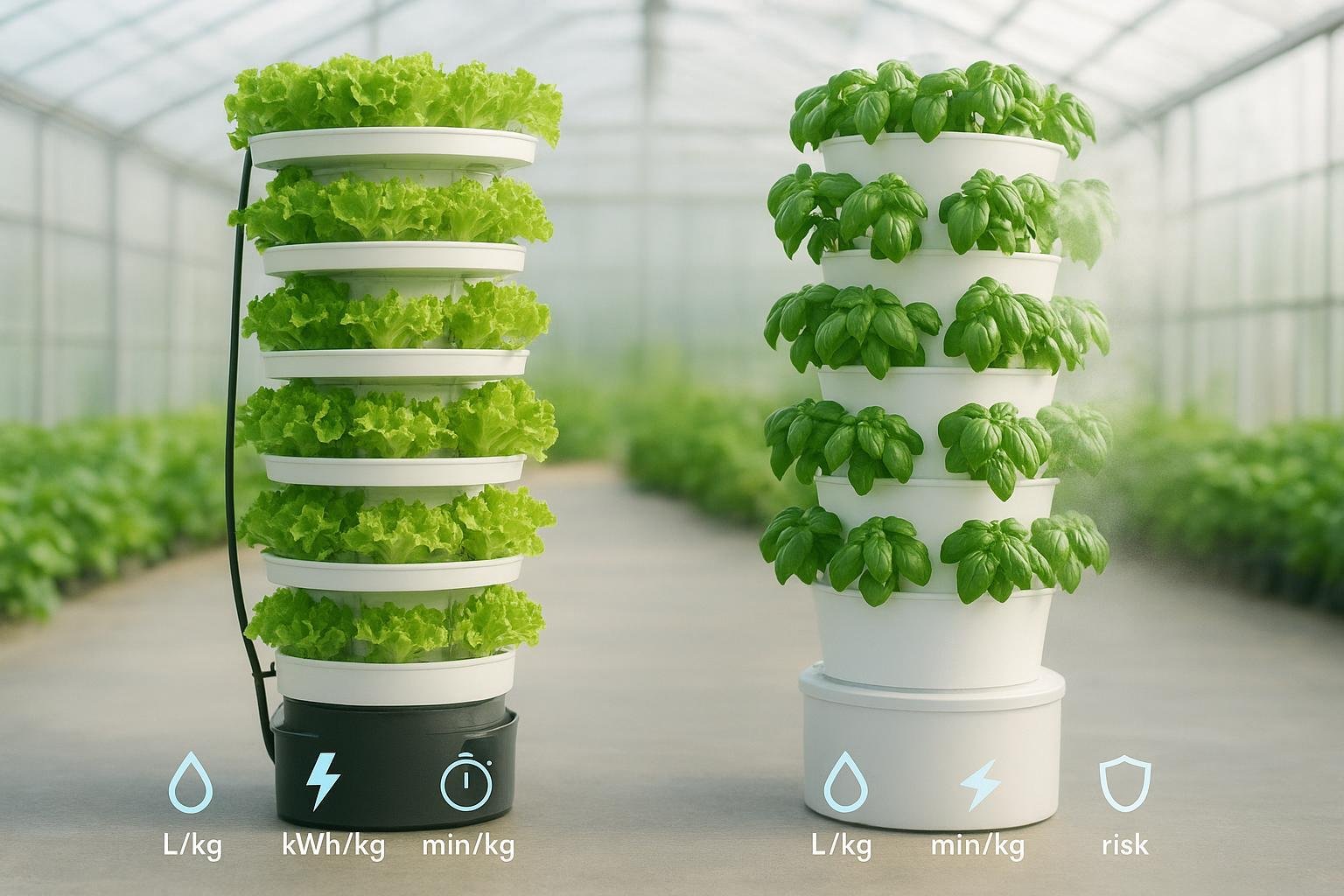 Hydroponic vs Aeroponic Towers (2026): Which System Is Better for Your Plants?
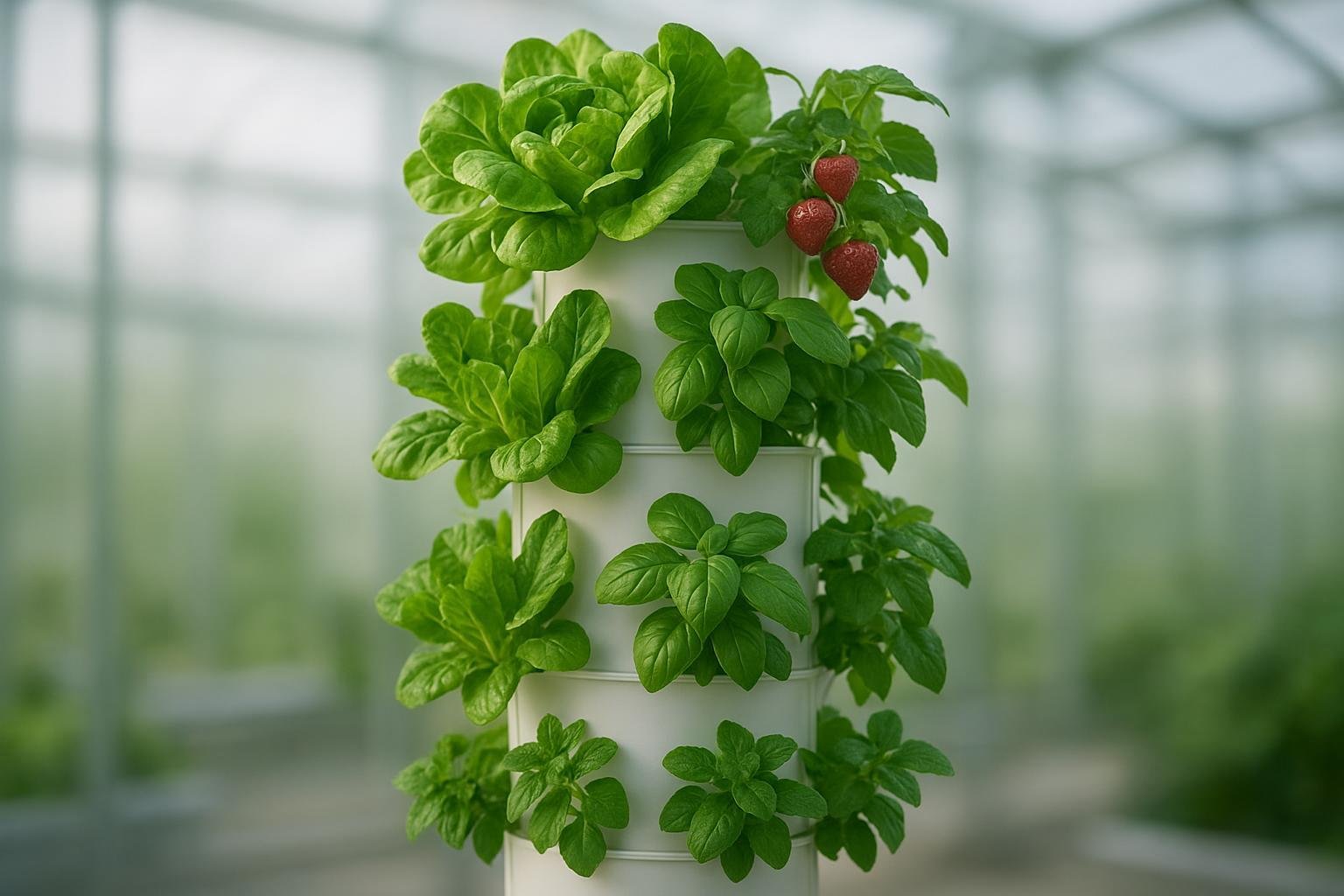 What Can You Grow in a Hydroponic Tower? 15 Best Plants for Vertical Growth
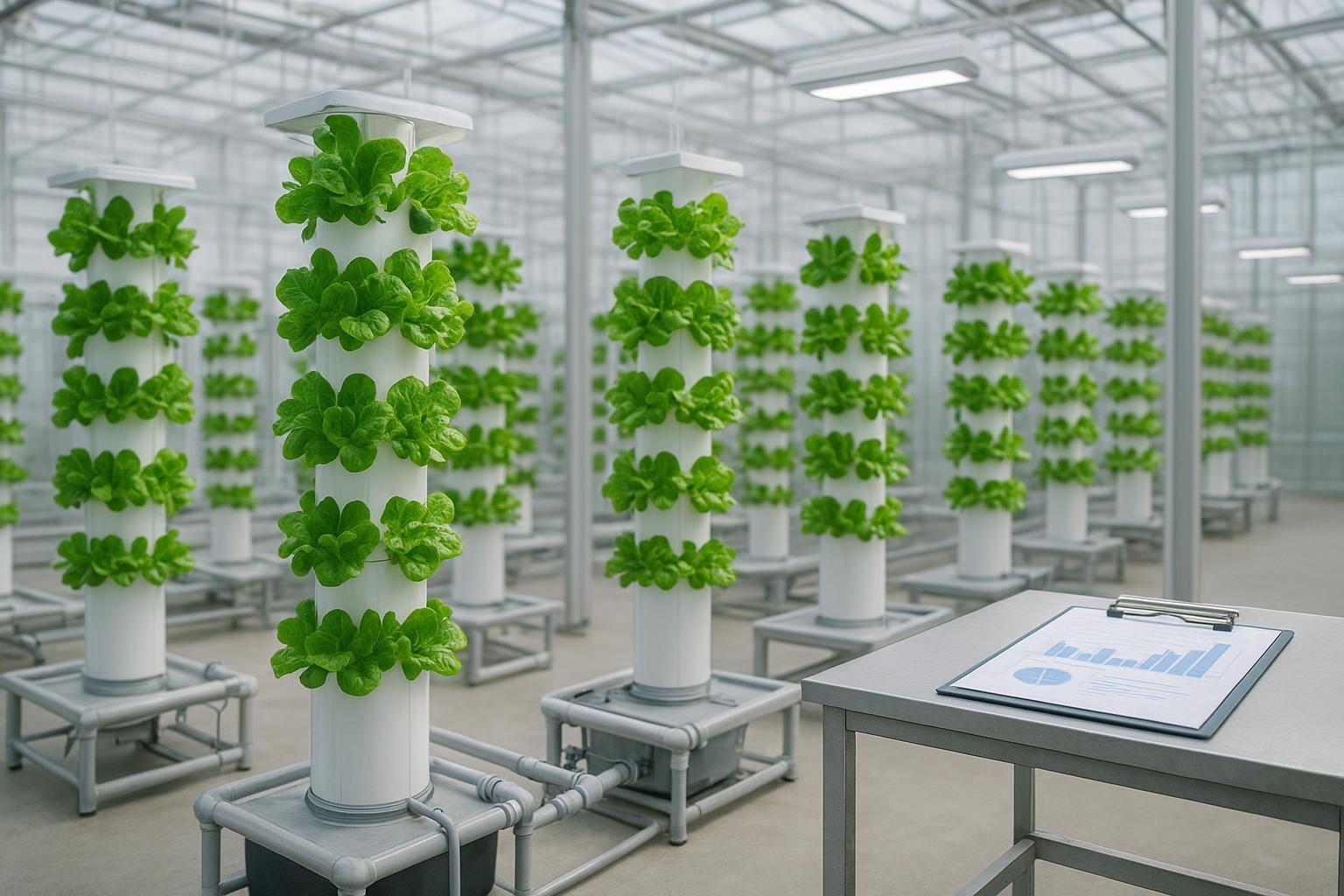 Hydroponic Tower Cost Analysis: Is It Worth the Investment? (Plus DIY Options)