
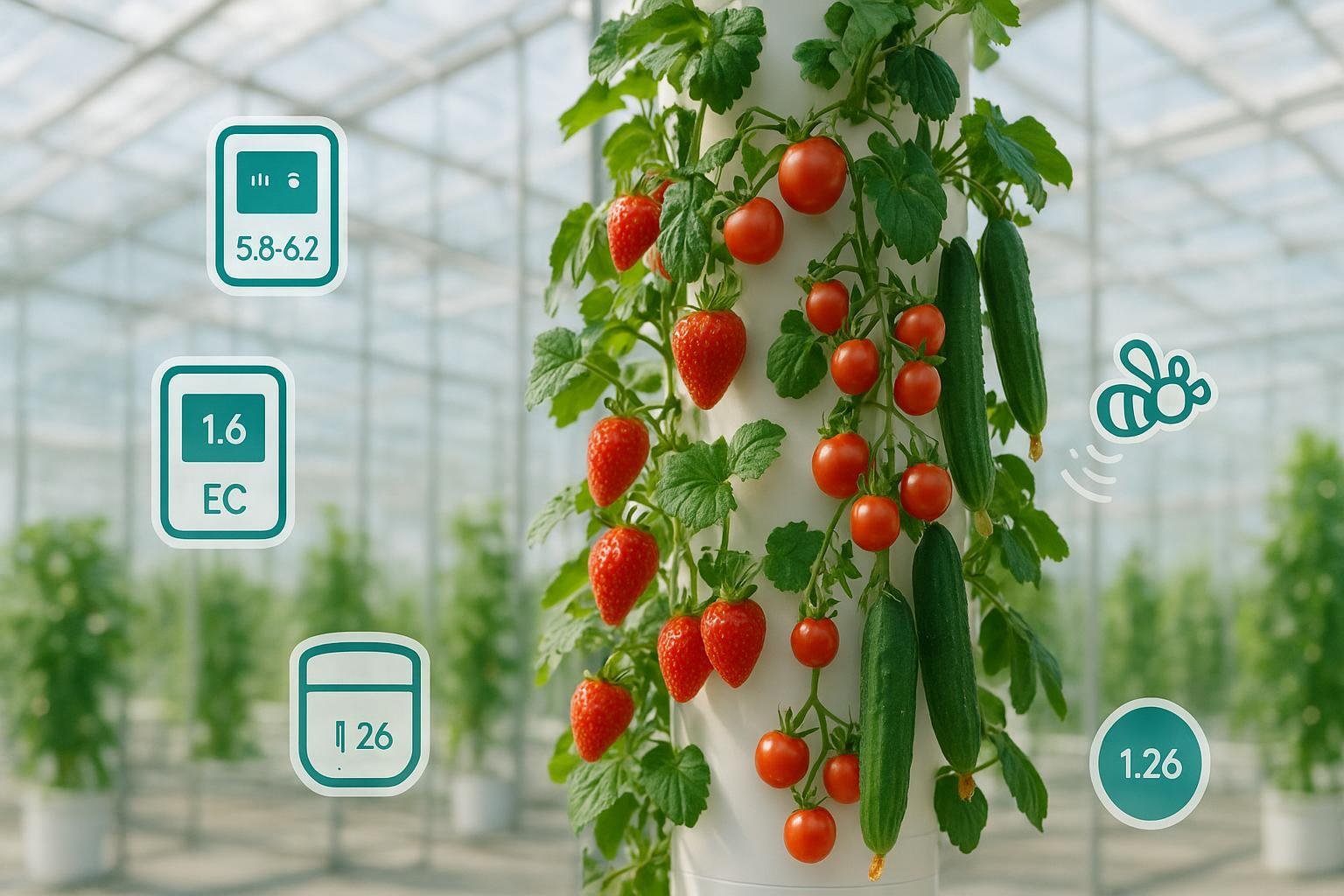
Hydroponic fruit production has gotten a quiet upgrade heading into 2026. New compact cultivars, more parthenocarpic options, smarter dosing/monitoring gear, and renewed focus on water efficiency make it easier to pick the right crops for towers, Dutch buckets, NFT, or DWC. Whether you manage a greenhouse or a home tower, this guide ranks the best options, shows pH/EC ranges, and flags pollination and training tasks so you can plan a smooth season.
If you’re choosing between strawberries, tomatoes, cucumbers, peppers, or a few “fun” fruits, the big levers are system compatibility, pollination labor, time to first harvest, and yield per footprint. Below you’ll find a quick matrix and standardized item cards to compare apples to…well, hydroponic fruit.
- Soft CTA: Want a one-page matrix you can pin on the wall? Download the Crop–System Match Checklist (PDF/CSV) to filter by time-to-harvest, pollination labor, and yield per column.
Key takeaways
- Strawberries remain the most reliable hydroponic fruit for towers, with fast cycles and moderate EC.
- For greenhouse pros, parthenocarpic cucumbers deliver rapid, heavy yields without pollination.
- Compact tomatoes and peppers can thrive in hydroponics, but media-based drip (Dutch buckets/grow bags) usually beats NFT for fruiting stability.
- Pollination matters indoors: vibration for tomatoes/peppers; gentle hand-assist improves strawberry uniformity; parthenocarpic cucumbers avoid the issue.
- Dial in the basics: pH and EC ranges by crop, adequate light (DLI/PPFD), and consistent root-zone conditions.
How we chose (methodology and scoring)
We ranked fruits using a weighted blueprint geared to 2026 hydroponic realities:
- Hydroponic suitability (20%)
- Tower system compatibility and vertical training (18%)
- Pollination complexity (12%)
- Time to first harvest and crop cycle (12%)
- Yield density and quality per footprint (18%)
- Environmental tolerance and stability (10%)
- Market demand or home enjoyment value (10%)
Data sources include university extension guides, peer‑reviewed studies, and vetted grower resources. We note ranges because cultivars and environments vary. Where extension/peer-reviewed numbers were limited, we provide conservative, clearly labeled estimates.
Disclosure: SPRINGS FAITH is our product. We evaluated it using the same criteria as other options in this list. When we mention SPRINGS FAITH towers, it’s to explain tower compatibility and closed‑loop irrigation in practical terms, supported by external evidence on water efficiency.
Quick comparison matrix (hydroponic fruit)
Values are typical ranges; your results will vary by cultivar and environment.
| Fruit | Best for | System types | Pollination | pH | EC | Time to first harvest | Yield potential | Difficulty |
|---|---|---|---|---|---|---|---|---|
| Strawberries | Home & commercial towers | Tower, NFT, drip | Self; hand-assist indoors | 5.5–6.0 | 1.0–1.8 | 6–10 weeks from transplant | ~0.5–1.8 lb/plant | Moderate |
| Tomatoes (compact/cherry) | Greenhouse; compact in towers | Dutch bucket/media drip; tower (compact) | Self; vibration | 5.8–6.5 | 1.5–2.5 | 50–100 days | High per area; variable by system | Moderate–Advanced |
| Cucumbers (parthenocarpic) | Greenhouse/high tunnel | Dutch bucket/media drip; DWC/NFT | No pollination (parthenocarpic) | 5.5–6.0 | 1.2–2.0 | 45–70 days | ~20–25 lb/plant/12 weeks | Moderate |
| Peppers (sweet/chili) | Greenhouse media systems | Dutch bucket/media drip | Self; vibration helps | 5.5–6.5 | 2.0–3.0 | 80+ days typical | Moderate per area | Advanced |
| Dwarf/mini melons | Greenhouse with trellis | Dutch bucket/media drip; DWC | Insect/hand | 5.8–6.5 | 1.2–2.5 | 70–90+ days | Moderate per plant | Advanced |
| Blueberries | Advanced growers | Drip in coco/perlite | Insect/hand | 4.5–5.5 | 1.5–2.0 | Long lead time | Low early; increases as plants mature | Advanced |
| Eggplant (compact) | Experienced greenhouse growers | Dutch bucket/media drip | Self; vibration | 5.5–6.5 | 2.5–3.5 (mature) | 80–100+ days | Moderate per plant | Advanced |
| Beans (bush) | Home trials | NFT/DWC; compact in towers | Self | 6.0–6.5 | 1.8–2.4 | 50–60+ days | Low–moderate | Easy–Moderate |
| Peas (sugar/snap) | Cool-season home trials | NFT/DWC; compact trellis | Self; assist | 6.0–7.0 | 0.8–1.8 | 60+ days | Low–moderate | Easy–Moderate |
| Ground cherry (Physalis) | Novelty/home | Dutch bucket/media drip | Self; vibration helps | 5.5–6.5 | 1.2–2.0+ | 70–90+ days | Moderate | Moderate |
Pollination and training primer
- Tomatoes and peppers are self-fertile but benefit from vibration or tapping to improve fruit set indoors and in sealed greenhouses; a simple battery tool or a tap on the trellis works.
- Strawberries are self-fertile, yet gentle hand-assist inside towers often improves shape and reduces deformities when natural airflow and insects are absent.
- Parthenocarpic cucumbers set fruit without pollination, making them exceptionally dependable indoors.
- Training: Compact/bush tomatoes and peppers can live in tower pockets with regular pruning and external clips/trellis lines. Cucumbers and melons require dedicated trellis lanes; thin fruit to manage weight. Keep canopies open for airflow and even light.
System compatibility and quick decision aid
- Towers shine for strawberries and other compact plants because they maximize vertical density with recirculating drip. Systems like SPRINGS FAITH towers are engineered for steady nutrient delivery, which can support more consistent fruit set in continuous production; closed-loop irrigation can also reduce water use versus soil at comparable output, with a 2021 glasshouse tomato comparison reporting roughly 3× higher water-use efficiency for DWC vs soil: glasshouse tomato water-use efficiency comparison.
- Media-based drip (Dutch buckets/grow bags) typically outperforms NFT for heavy fruiting crops (tomatoes, peppers) due to larger root volume and more forgiving moisture dynamics; Virginia Tech Extension outlines why media systems are generally preferable for fruiting crops: media systems vs NFT for fruiting crops.
- NFT and DWC are strong for leafy greens and some compact “fun” fruits (trial beans/peas) but can be less forgiving for long-cycle, heavy-fruiting vines.
Mini-choice framework (text version):
- If you want the fastest win with low pollination labor in towers, choose day-neutral strawberries.
- If you need heavy, fast greenhouse yields with minimal pollination work, select parthenocarpic cucumbers in media drip with trellis.
- If your market wants tomatoes/peppers, use compact cultivars in towers or, better, Dutch buckets/media drip with vibration pollination.
- If you’re an advanced grower seeking novelty, trial dwarf melons or ground cherry in media systems.
The best hydroponic fruits for 2026 (ranked)
1) Strawberries (day-neutral/everbearing)
- Positioning: The most reliable hydroponic fruit for towers and greenhouses; quick cycles and consistent quality when EC is kept modest.
- Best for: Home and commercial towers; greenhouse benches.
- Systems: Tower, NFT, drip to recirculating reservoir.
- Pollination: Self; hand-assist indoors improves shape.
- Training/space: Compact; manage runners; occasional pruning.
- Optimal ranges: pH 5.5–6.0; EC ~1.0–1.8 (conservative programs keep EC at or below ~1.0–1.2 early) supported by Ohio State’s controlled environment berry guidance.
- Time to first harvest: About 6–10 weeks from transplant; continuous picking.
- Yield potential: Commonly ~0.5–1.8 lb per plant per cycle depending on cultivar and environment.
- Difficulty & pitfalls: EC creep and heat stress; indoor pollination labor; runner management.
- Variety picks: Albion, Seascape, San Andreas; alpine types for novelty.
- Pros/cons: Pros—fast ROI cycles, tower-friendly. Cons—pollination/runner management; periodic replanting.
- Evidence: Ohio State University CE Berry fertigation guidance (pH/EC): OSU indoor berry fertigation.
2) Cucumbers (parthenocarpic; English/Beit Alpha)
- Positioning: The most dependable greenhouse vine crop for hydroponics; prolific and pollination-free.
- Best for: Greenhouse/high tunnel; experienced home growers indoors.
- Systems: Dutch bucket/media drip, DWC/RDWC; NFT for small-fruited types with care.
- Pollination: Parthenocarpic (no pollination needed).
- Training/space: Strong trellis; prune laterals; isolate from seeded cucumbers.
- Optimal ranges: pH ~5.5–6.0; EC ~1.2–2.0.
- Time to first harvest: About 45–70 days from sowing/transplant depending on system and climate.
- Yield potential: Roughly 20–25 lb per plant over a 12‑week spring crop in greenhouse culture.
- Difficulty & pitfalls: Heat/humidity management; powdery mildew; trellis labor.
- Variety picks: Parthenocarpic greenhouse slicers and minis from reputable suppliers.
- Pros/cons: Pros—high yield, no pollination labor. Cons—training and climate vigilance required.
- Evidence: Alabama Extension greenhouse guideline on yield range.
3) Tomatoes (compact/bush/cherry)
- Positioning: High-demand hydroponic fruit; compact types suit towers, while media drip excels for sustained production.
- Best for: Greenhouse pros; compact cherry types for towers/home.
- Systems: Dutch bucket/media drip; compact in towers with support.
- Pollination: Self; vibration tool or trellis tapping indoors.
- Training/space: Prune for airflow; trellis lines/clips; choose determinate/compact or dwarf for towers.
- Optimal ranges: pH 5.8–6.5; EC ~1.5–2.5 with stage-based adjustments.
- Time to first harvest: Roughly 50–100 days depending on type and environment.
- Yield potential: High per area in controlled greenhouses; varies by cultivar, CO₂, and trellising method.
- Difficulty & pitfalls: Blossom drop under stress; pruning labor; balanced K/Ca to avoid BER.
- Variety picks: Dwarf tomatoes; determinate cherries; compact truss types.
- Pros/cons: Pros—strong demand and continuous harvests. Cons—training and climate precision needed.
- Evidence: Penn State Extension nutrition overview.
4) Peppers (sweet/bell & chili)
- Positioning: Profitable but management-intensive; best in media systems with careful EC and climate control.
- Best for: Greenhouse producers targeting specialty peppers; advanced home growers.
- Systems: Dutch bucket/media drip preferred.
- Pollination: Self; vibration improves set indoors.
- Training/space: Stake or trellis; prune for canopy airflow.
- Optimal ranges: pH ~5.5–6.5; EC ~2.0–3.0.
- Time to first harvest: Commonly 80+ days; longer for large bells.
- Yield potential: Moderate per area; media systems generally outperform NFT for fruiting crops.
- Difficulty & pitfalls: Sensitive to temperature and EC swings; risk of blossom-end rot.
- Variety picks: Compact bells, snack peppers, jalapeño/serrano for smaller plants.
- Pros/cons: Pros—premium SKUs; strong market. Cons—longer crop time and climate sensitivity.
- Evidence: Virginia Tech Extension on media vs NFT for fruiting crops.
- Soft CTA: Not sure whether tomatoes or peppers pencil out in your space? Book a short consult to review feasibility and a simple ROI snapshot for your site.
5) Dwarf/mini melons
- Positioning: Advanced but rewarding in greenhouses with good trellis and fruit thinning.
- Best for: Experienced growers, specialty markets.
- Systems: Dutch bucket/media drip; DWC/RDWC in skilled hands.
- Pollination: Insect or hand; schedule labor during bloom.
- Training/space: Strong trellis; net heavy fruits; thin for quality.
- Optimal ranges: pH 5.8–6.5; EC ~1.2–2.5 (often higher during fruiting in some programs).
- Time to first harvest: About 70–90+ days.
- Yield potential: Moderate per plant; quality over quantity highly cultivar-dependent.
- Difficulty & pitfalls: Powdery mildew; heat and humidity; hand pollination.
- Variety picks: Mini cantaloupe types, personal-size melons.
- Pros/cons: Pros—high flavor/novelty. Cons—labor-heavy and climate sensitive.
6) Blueberries (advanced; acid-loving)
- Positioning: A niche hydroponic option needing very acidic conditions and patience.
- Best for: Advanced growers with pH control experience.
- Systems: Drip in coco/perlite; not suited to towers.
- Pollination: Insect or hand.
- Training/space: Shrub habit; allocate space; long-term crop.
- Optimal ranges: pH 4.5–5.5; EC ~1.5–2.0; peer‑reviewed work summarizes hydroponic adaptability when acidity and substrate are controlled.
- Time to first harvest: Long establishment period; multi‑year investment.
- Yield potential: Low early; increases with maturity.
- Difficulty & pitfalls: pH drift and iron deficiency; slow ROI.
- Variety picks: Southern highbush suited to protected culture.
- Pros/cons: Pros—premium fruit; controlled fertigation helps quality. Cons—slow and unforgiving on pH.
7) Eggplant (compact cultivars)
- Positioning: Solid hydroponic performer for experienced growers; high EC at maturity and sturdy trellis required.
- Best for: Greenhouse media systems.
- Systems: Dutch bucket/media drip.
- Pollination: Self; vibration can help.
- Training/space: Stake and clip; prune to maintain airflow; support heavy fruit.
- Optimal ranges: pH 5.5–6.5; EC ~2.5–3.5 at maturity.
- Time to first harvest: About 80–100+ days.
- Yield potential: Moderate per plant; steady over a long window.
- Difficulty & pitfalls: Spider mites and thrips; nutrient balance during fruiting.
- Variety picks: Compact Asian types; small-fruited hybrids.
- Pros/cons: Pros—steady harvest; tolerant of warmth. Cons—pest vigilance and higher EC.
8) Beans (bush types) — for home trials
- Positioning: Easy, fast, and fun for home systems; best in NFT/DWC; limited extension-backed hydro data.
- Best for: Beginners and home experimenters.
- Systems: NFT/DWC; compact trellis if needed.
- Pollination: Self; flowers open and accessible.
- Training/space: Minimal for bush types; keep canopy open.
- Optimal ranges: pH ~6.0–6.5; EC ~1.8–2.4 (industry consensus ranges; verify for your cultivar).
- Time to first harvest: About 50–60+ days.
- Yield potential: Low–moderate; more about enjoyment than ROI.
- Difficulty & pitfalls: Limited hydro-specific guidance; watch for root oxygen.
- Variety picks: Bush French beans; compact snaps.
- Pros/cons: Pros—fast and forgiving. Cons—lower yield per footprint vs strawberries/cukes.
9) Peas (sugar/snap) — cool-season, home trials
- Positioning: Cool-season vines that can fit winter rotations in NFT/DWC with low EC.
- Best for: Home towers/channels in cool rooms or shoulder seasons.
- Systems: NFT/DWC; light trellis.
- Pollination: Self; hand-assist may help indoors.
- Training/space: Short trellis; avoid heat stress.
- Optimal ranges: pH ~6.0–7.0; EC ~0.8–1.8 (light feeders).
- Time to first harvest: About 60+ days.
- Yield potential: Low–moderate; pleasant snack crop.
- Difficulty & pitfalls: Warm rooms reduce set; watch powdery mildew.
- Variety picks: Dwarf sugar snaps and snow peas.
- Pros/cons: Pros—low EC, fun winter crop. Cons—limited ROI.
10) Ground cherry (Physalis) — novelty for experienced home growers
- Positioning: Tomato-adjacent flavor bomb with compact habit; best in media drip.
- Best for: Experienced indoor hobbyists.
- Systems: Dutch bucket/media drip.
- Pollination: Self; vibration helps.
- Training/space: Prune lightly; support as needed; manage suckers.
- Optimal ranges: pH ~5.5–6.5; EC ~1.2–2.0 early, higher in fruiting.
- Time to first harvest: About 70–90+ days.
- Yield potential: Moderate; steady snackable fruit.
- Difficulty & pitfalls: Light intensity must be adequate; sprawl without pruning.
- Variety picks: Pineapple ground cherry; Aunt Molly’s.
- Pros/cons: Pros—unique flavor/novelty. Cons—less documented hydro data.
Pricing and ROI notes for commercial growers
- Inputs: Factor in seed/starts, media, trellis hardware, nutrients, IPM, and energy. Strawberries often use fresh plantings for consistency; cucumbers and tomatoes run longer cycles with stage-based dosing.
- Throughput: Estimate yield per plant and per tower column or per linear meter of trellis. For towers, standardize on “per column per month” for planning.
- System choice: Media drip generally offers a wider operating window for fruiting crops than NFT. In towers, keep irrigation steady, manage EC drift, and provide external supports where needed.
- Water efficiency: Closed-loop hydroponics can substantially reduce water use versus soil at comparable outputs; a glasshouse tomato study measured roughly threefold higher water-use efficiency for DWC tomatoes compared with soil, supporting closed-loop strategies for fruiting crops.
- Simple payback sketch: If a 6‑column strawberry tower averages 1.0 lb/plant/month and holds 24 plants, that’s ~24 lb/month. At $4.00/lb wholesale, gross is ~$96/month per tower column; subtract nutrients, energy, and labor to estimate payback for your location.
FAQ
- What hydroponic fruit is easiest for beginners? Day-neutral strawberries in towers are the simplest blend of fast harvests, modest EC, and compact training. Parthenocarpic cucumbers are also straightforward in greenhouses with trellis.
- Can hydroponic fruits set without bees? Tomatoes and peppers are self-fertile and benefit from vibration indoors; parthenocarpic cucumbers set without pollination.
- Are towers good for strawberries and cucumbers? Towers excel with strawberries. Cucumbers are better in media drip with dedicated trellis; compact minis may fit towers only with careful support.
- What pH and EC should I use for strawberries and tomatoes? Strawberries commonly run pH 5.5–6.0 with conservative EC, while tomatoes run pH 5.8–6.5 with EC ~1.5–2.5.
- How long until harvest for hydroponic strawberries and tomatoes? Strawberries can produce in about 6–10 weeks from transplant; tomatoes usually take 50–100 days depending on type and conditions.
- Which hydroponic fruits are most profitable? It depends on market and labor. Strawberries and parthenocarpic cucumbers often balance yield density, cycle time, and price well; peppers and tomatoes can be strong with the right cultivars and market.
Next steps
- Download the Crop–System Match Checklist to pick fruits by time-to-harvest, pollination labor, and yield-per-footprint.
- If you’re planning a greenhouse or large home array, schedule a quick feasibility and ROI review to validate crop mix and system choice.
- If you’re comparing vertical tower systems for strawberries and other compact hydroponic fruit, you can learn more about SPRINGS FAITH vertical tower systems at the official site: SPRINGS FAITH.
Related Posts
 Organic Hydroponics Explained: Definition, Compliance, and Practical Steps
 How to Boost Your Outdoor Hydroponic Harvest in 2026
 Salad Tower Secrets for Easy Kitchen Choices